


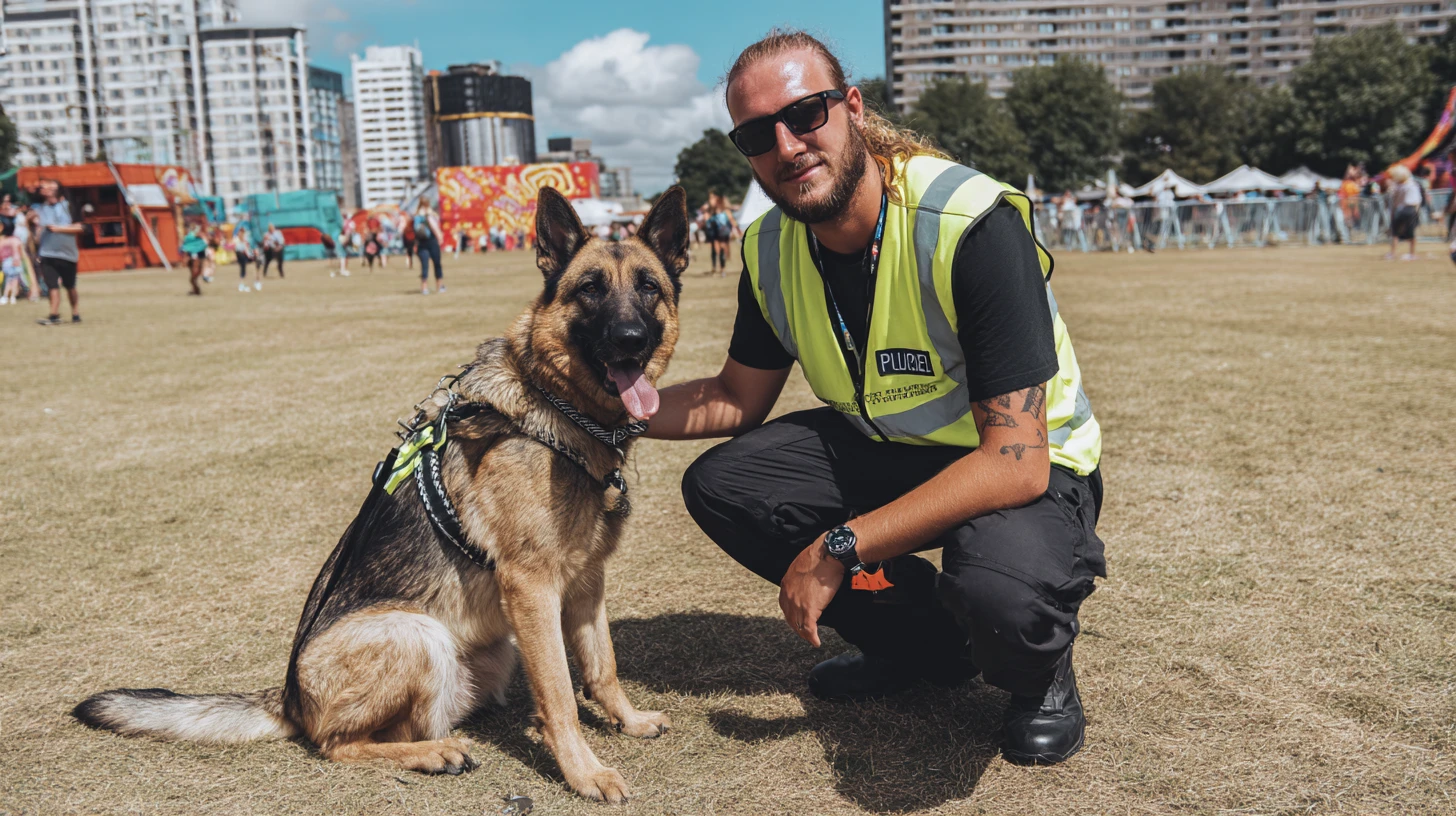

Organising a successful event involves far more than booking venues, arranging entertainment, and selling tickets. Beneath the surface of every well-run event lies a carefully constructed framework of access control, screening, and perimeter management the invisible architecture that keeps attendees, staff, and performers safe. Whether you are planning a music festival, a corporate conference, a sporting fixture, or a community gathering, understanding how to design and deliver robust event security is not optional. It is fundamental.
This guide provides event organisers and event managers with a comprehensive, practical overview of how to approach access control, security screening, and perimeter protection. Drawing on established best practices, regulatory guidance, and real-world applications, it covers everything from conducting a thorough risk assessment to deploying the right mix of technologies and trained personnel on the day. It also connects you to a series of deeper supporting guides covering specific aspects of event security in greater detail.
Why Access Control and Security Matter
The importance of security services for events has never been greater. Tragic incidents at public venues in recent years including the 2017 Manchester Arena bombing, the Las Vegas music festival shooting, and the 2021 Astroworld crowd compression disaster have fundamentally reshaped how the events industry approaches safety. These events make clear that traditional approaches to venue security are no longer sufficient on their own. Modern events demand a multilayered defence combining physical barriers, strict access control, screening procedures, integrated communications, and advanced surveillance.
The Link Between Access Control and Guest Confidence
Beyond the obvious duty of care, getting access control right also enhances the attendee experience. Long queues, confusing entry processes, and poorly managed entry points create frustration before the event even begins. Conversely, well-designed entry and exit systems that move people efficiently through entry points instil confidence, reduce anxiety, and set the tone for an enjoyable experience. The goal is always the same: a secure environment that feels seamless to everyone attending.
Protecting Your Organisation's Reputation and Compliance
From a commercial standpoint, having a comprehensive security plan also protects your organisation's reputation, satisfies safety regulations and insurers, and provides valuable attendee data for future events.
Starting with a Thorough Risk Assessment
Every effective security strategy begins with a risk assessment. Before selecting any technology, briefing security staff, or designing entry points, event organisers must first understand the specific risks their event faces. This is not a box-ticking exercise it is the foundation upon which every other decision rests.
The BSI Framework for Structured Security Risk Management
The PAS 127:2014 guidance on checkpoint security screening, published by the British Standards Institution on behalf of the Home Office, makes this clear. It outlines a structured risk management process that considers the organisation's vulnerabilities, the types of threats it may face, the likelihood of a malicious attack, and the potential impact such an attack could have including loss of life, serious injury, financial loss, disruption, and reputational damage. Crucially, this guidance warns that insufficient or inappropriate security measures may not only be ineffective but may in some cases increase risk. Excessive measures, on the other hand, result in unnecessary cost and can interfere with the normal functioning of the event.
A Thorough Event Risk Assessment Should Include The Following Key Considerations:
| Risk Factor | Key Consideration |
|---|---|
| Event size, type & profile | A music festival attended by tens of thousands carries a very different risk profile to a private corporate dinner. |
| Venue layout | Understanding where natural bottlenecks, blind spots, and vulnerable access points exist is essential to designing an effective security plan. |
| Attendee profile | General admission crowds, VIPs, performers, media, and staff all have different access requirements and risk considerations. |
| Historical threat intelligence | Working with local law enforcement and security advisers to understand whether the event or venue has been targeted previously or faces elevated potential threats. |
| Weather, time & external factors | Outdoor events and large-scale events at night present additional risk management challenges. |
Once the risk assessment is complete, its findings should be formally recorded as the basis for the security plan. This documentation is also valuable for post event analysis, insurance purposes, and planning future events.

Designing an Effective Access Control System
Access control is the practice of regulating who can enter, exit, and move within an event site. When designed and implemented well, access control achieves three things simultaneously: it keeps unauthorised access out, it keeps authorised attendees and staff moving efficiently, and it provides real time data about crowd flow and behaviour.
Scaling Security to Your Event's Size and Risk Profile
The scale and complexity of an access control system should always be proportionate to the event's size and risk profile. An effective event security plan will detail the requirements, as a small community event may require nothing more than ticket checking at a single entry point and basic crowd management. A large event such as a stadium concert or multi-day festival will require a sophisticated system integrating credential verification, multiple entry points, dedicated VIP and staff lanes, restricted areas, and digital tools for real time monitoring.
Choosing the Right Credential Ticket Verification System
The choice of which ticket and guest List verification to implement is one of the most consequential decisions in event management. Each option carries trade-offs between security, cost, speed, and the attendee experience.
Mobile ticketing using QR codes or event apps has become the dominant approach for many events, offering convenience, low cost, and easy integration with event management software. Attendees receive credentials on their smartphones, reducing the need for physical ticket distribution and enabling real time analytics on entry flow.

RFID Technology and the Future of Access Management
RFID technology embedded in wristbands or badges offers a higher level of functionality. RFID wristbands can be scanned rapidly at access points, track individual movements across the site, support cashless payments, and manage access to restricted areas with different clearance levels. Although RFID technology has historically been the more expensive option, costs have been falling significantly, and it is increasingly within reach for medium and smaller events. At a large trade show with over 10,000 attendees, for example, the introduction of an RFID system integrated with event management software reduced average check-in time by 50 per cent and provided organisers with detailed real time analytics on crowd behaviour.
Why Tyvek Still Has a Place in Event Access Control
Tyvek wristbands remain a staple festival access control solution for lower-risk events. They are inexpensive and easy to distribute, but they rely on visual verification by security staff, which requires more thorough training and clear colour-coding to distinguish between different access levels. Clear signage at every access point explaining which credentials are accepted at that point is essential confusion about credentials creates queues, conflict, and potential security gaps.
Barcoded lanyards or tickets sit between Tyvek and RFID in terms of capability. They can be scanned to generate attendee data, but barcodes can fade or become damaged, increasing the risk of failed scans and lengthening queues at busy entry points.
Physical tickets are the least secure option and are increasingly rare at professional events. They can be easily lost, damaged, counterfeited, or transferred to unauthorised individuals.
Planning Entry Points and Venue Layout
The venue layout must be carefully mapped before access control points are positioned. Event organisers need to understand where the natural flow of attendees will be, where bottlenecks are likely to form, and how emergency exits and evacuation routes connect to entry and exit points. This spatial planning directly influences how many access points are needed, where they should be located, and how staffing should be distributed across them.

Key questions to address include:
- How many people are expected during peak entry periods?
- Does the layout accommodate this volume without creating dangerous crowding?
- Are there dedicated entry and exit lanes?
- Are there separate routes for staff, VIPs, performers, and service vehicles?
- Is there clear signage throughout to guide attendees efficiently?
Limiting the total number of access points is generally advisable, as it reduces the number of locations that require security coverage and makes managing entry easier. However, too few entry points at a large event will create dangerous overcrowding outside the venue. The right balance depends on expected throughput at peak times.
Staffing Ratios and the Smart Use of RFID Data
Each access point or queue lane should have at least one to two event staff capable of checking credentials and managing crowd flow. If RFID technology is in use, the real time data gathered during the event can inform staffing decisions at future events by showing exactly when and where demand peaks occur.
VIP, Staff, and Restricted Areas
Managing access to VIP restricted areas is one of the most operationally complex aspects of event security. VIP guests, performers, backstage crew, media, contractors, and senior staff all require different levels of access, and these distinctions must be enforced consistently throughout the event.

Dedicated lanes for VIPs and special access attendees at entry points prevent these individuals from queuing with general admission crowds, ensuring a smoother experience and reducing the risk of credentialling errors. Backstage and production areas should be mapped and all access points including delivery doors, loading docks, and storage spaces should be monitored or secured. RFID wristbands or colour-coded badges with holographic overlays provide a practical and difficult-to-counterfeit means of managing these multiple access tiers.
For high-profile events involving public figures or dignitaries, outer perimeter controls should be supported by dedicated close protection personnel, and strict media control measures and camera restrictions may be appropriate. Staff working in sensitive areas should also have undergone relevant background checks.
Screening People and Their Belongings
Screening people and their belongings at entry points reduces the likelihood of explosive devices, weapons, and other hazardous or prohibited items being brought into the event site. It is one of the most visible elements of event security, and how it is handled has a direct impact on both safety and the attendee experience.
As PAS 127:2014 and the National Protective Security Authority (NPSA) guidance on combining person search and search of possessions both make clear, no single screening method addresses all threat types. Event organisers need to understand the limitations of each available approach and, where necessary, deploy a combination of methods to achieve the required level of assurance.
Manual Searches
Manual searches of people and their personal belongings remain the most adaptable screening method available. They require no technology, can in principle detect any threat item, and can be scaled up or down in thoroughness to match the threat level. However, they are staff intensive, time consuming, and can feel invasive to attendees if not conducted with care and professionalism. Best practice requires that manual searches of people are conducted by security staff of the same gender as the person being searched, which means event organisers must ensure their security teams have the correct gender balance.
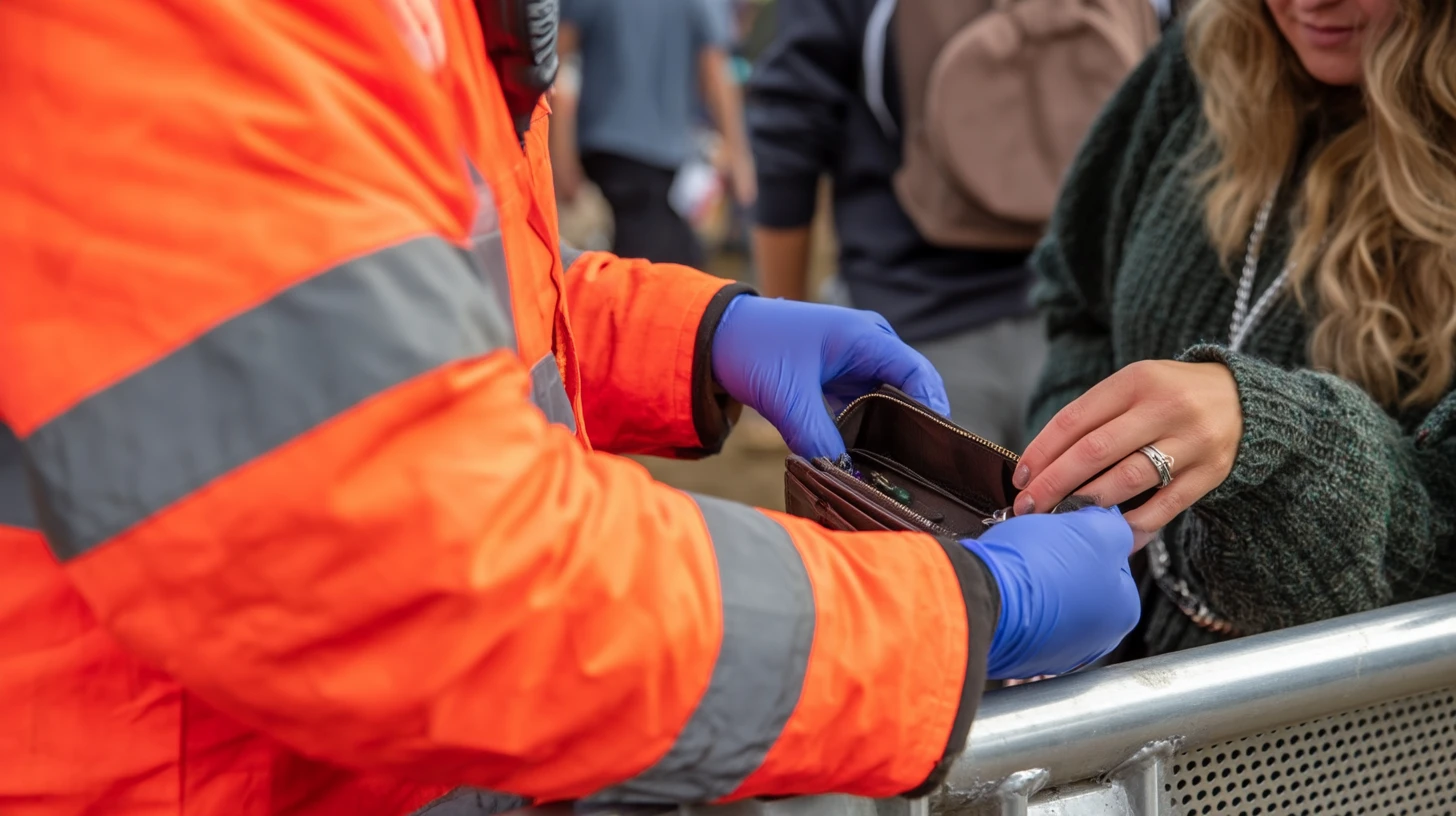
Manual bag searches are most effective when staff have an adequate work surface to lay out and inspect contents, and when searchers have received sufficient training to identify disguised or concealed threat items. For lower-risk events with limited bags and belongings, a manual search approach may be all that is required.
Walk-Through Metal Detectors
Walk-through metal detectors (WTMDs) are the most widely deployed technology at events requiring enhanced security at entry points. They are fast, automatic, and capable of detecting both large and small metallic objects, including firearms and knife blades. Their sensitivity can be adjusted to match the specific threat profile of the event.
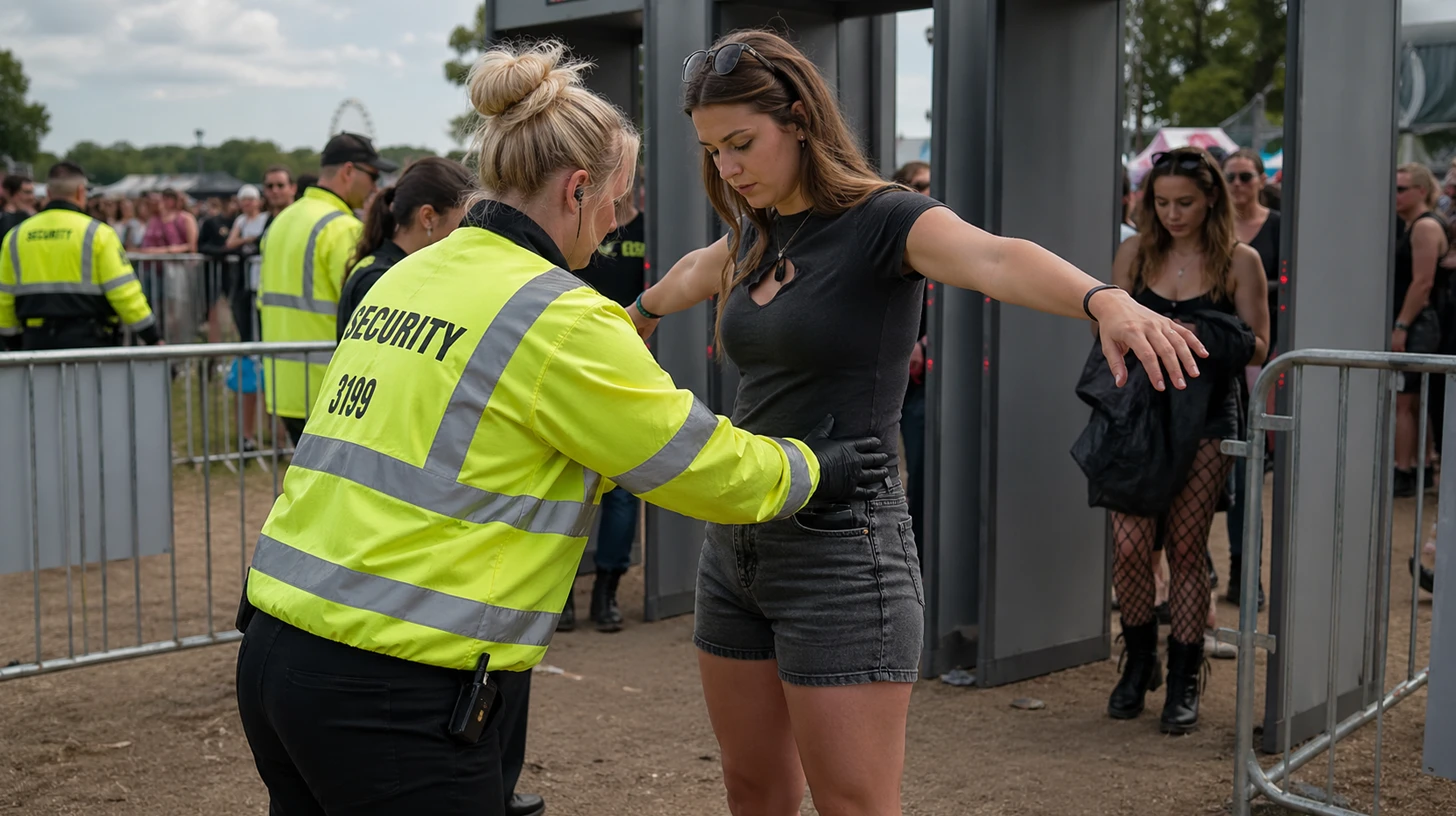
WTMDs do not detect non-metallic threat items, so they are most effective when combined with other screening methods. They also generate alarms that require resolution, typically through hand-held metal detector (HHMD) follow-up or, where higher assurance is needed, a full manual search.
The proportion of attendees triggering alarms is heavily influenced by sensitivity settings and the presence of everyday metallic items such as belt buckles or mobile phones known as nuisance alarms. Managing this effectively requires well-trained personnel and a clear, efficient alarm resolution process to prevent queue build-up at entry points. For a closer look at how these systems are deployed in practice, see our guide to metal detector security screening at UK events and venues.
Hand-Held Metal Detectors
Hand-held metal detectors are most commonly used as a secondary screening tool to resolve WTMD alarms, allowing security staff to locate metallic items on a person's body precisely. They can also be used as a primary screening tool in lower-throughput settings where speed is less critical. Like WTMDs, they do not detect non-metallic threats and require correct operator technique to be effective.
Body Scanners
Body scanners including millimetre wave imagers and X-ray backscatter systems offer the most comprehensive screening capability for people, detecting both metallic and non-metallic concealed objects. They are particularly suited to high-risk deployments where the level of threat justifies the additional investment and operational complexity.
Body scanners have higher purchase and running costs than metal detectors, take up more space, and require comprehensive operator training. Throughput is relatively slow. Privacy considerations must also be addressed, though newer automated systems no longer display actual body images, instead highlighting regions of concern on a generic outline.
X-Ray Screening for Bags
X-ray screening of bags and possessions offers a significant capability advantage over manual searches, as it can detect disguised or concealed threat items that might not be found through visual or physical inspection. It is the preferred method for higher-risk events with larger or more complex bags. X-ray equipment requires specially trained operators, regular safety checks, and a clear manual search process to resolve any alarms flagged by the system.
Explosives Trace Detection
Explosives Trace Detection (ETD) systems can be used as a secondary screening technique following X-ray or manual bag checks to provide additional assurance that no explosive threat items are present. ETD involves collecting particulate material from the surfaces of bags or personal belongings such as mobile phones or wallets and analysing them for traces of explosive compounds. A trace detection alarm does not necessarily indicate a bulk explosive device is present, and ETD systems do not address non-explosive threats. They require specially trained operators.
Combining Screening Methods
The NPSA guidance on combining person search and search of possessions provides a practical framework for thinking about which combinations of methods are appropriate in different scenarios. High-demand, lower-risk events with limited bags and a focus on larger metallic threats are generally well-served by WTMD with HHMD resolution. Higher-risk events with more complex bags and a need for high assurance across all threat types will typically require WTMD combined with X-ray bag screening and, in some cases, ETD as a further layer. Event organisers should work through this logic systematically in their security planning, documenting the rationale for the screening approach selected.
Importantly, as both PAS 127 and the NPSA guidance emphasise, technology alone does not make screening effective. Suitably trained and motivated security guards are essential regardless of which technologies are deployed.
Perimeter Security for Outdoor and Large Scale Events
For outdoor events, perimeter security forms the first and most fundamental layer of protection. A well-defined and properly secured event perimeter security establishes clear boundaries between the public space and the event site, channels attendees through designated entry points where they can be screened and credentialled, and prevents unauthorised access through unmonitored gaps.

Defining and Securing the Perimeter
Before any other security measure is considered, the physical boundary of the event site must be clearly defined. This involves identifying all points at which the perimeter might be breached not just the main entry gates, but service entrances, fire exits, vehicle access routes, and any natural gaps or weak points in temporary fencing.

Establishing and Managing Your Event Perimeter
Temporary fencing and crowd control barriers are the most common perimeter tools for outdoor events. For large scale events, the standard is significantly higher: perimeter fencing of eight to ten feet with anti-climb features and vehicle barriers built to recognised standards. Controlled entry points with double fencing and separation zones can further reduce the risk of unauthorised access. The number of access points in the perimeter should be limited to make monitoring manageable.
All perimeter access points including vehicle access routes, delivery areas, and emergency exits must be actively managed or secured at all times during the event. Any gap in coverage represents a potential vulnerability. Regular perimeter patrols should be assigned to identify tampering, unauthorised entry attempts, or structural issues with fencing or barriers.
Surveillance and Technology
Modern perimeter security increasingly relies on a combination of physical measures and technology. AI-enabled camera systems can monitor entrances, perimeters, and car parks in real time, allowing security teams to detect suspicious behaviour at an early stage, before a situation escalates. Mobile surveillance towers can be repositioned to adapt to changing conditions at outdoor events where the site layout evolves across multiple days.

Using Technology to Monitor and Respond to Threats
Real time monitoring through a centralised command function allows security teams to adjust the deployment of personnel and resources in response to emerging patterns. Digital tools and mobile apps increasingly enable real time communication between security operatives, enabling faster coordinated responses to incidents. Perimeter sensors and motion detectors can trigger immediate alerts in the event of a breach.
Facial recognition technology is an increasingly discussed tool in event security. While it offers significant capability in identifying individuals of concern, its use at public events is subject to evolving legal and ethical considerations that event organisers must carefully assess in their jurisdiction before deployment.

Coordinating with Emergency Services
Effective perimeter security cannot be planned in isolation from emergency response. Emergency exits and evacuation routes must be clearly marked, accessible, and known to all security staff and event personnel. Emergency protocols covering scenarios including medical emergencies, security breaches, fire, and extreme crowd pressure must be agreed and rehearsed before the event.
Working closely with local law enforcement and emergency services is an essential element of any comprehensive security plan for a large event. Their presence acts as a deterrent and provides critical additional resource in an incident. Formal agreements, regular planning meetings, and shared incident reporting systems help ensure that coordination during the event is effective rather than improvised.
Staffing, Training, and Communication
No access control system, no matter how sophisticated, can function effectively without well-trained and motivated people. Security staff are the front line of event security: they manage entry and exit, resolve screening alarms, identify suspicious behaviour, support crowd management, and execute emergency protocols. Their professionalism directly affects both the event's safety and the attendee experience.
Calculating Staffing Requirements
Staffing levels must be carefully calculated based on the number and location of access points, expected attendee flow at peak times, the screening methods being deployed, and the overall security strategy. Too few staff at entry points leads to longer queues and reduced screening effectiveness; too many represents an unnecessary cost and can create a disproportionately intimidating atmosphere.
Each access point or lane should have a minimum of one to two members of event staff present. Where WTMD or X-ray screening is in use, additional staff will be required for alarm resolution and bag collection. Where manual searches are being conducted, the gender balance of the security team must reflect the requirement for same-gender searching. Venue layout should also be considered mobile patrol teams covering perimeter sections or internal restricted areas supplement the fixed staffing at access points.
Training
Training is not optional. Effective screening requires trained personnel who understand both the technology they are operating and the procedures they are following. Walk-through metal detector operators must understand how to set sensitivity levels and manage alarm resolution efficiently. X-ray operators require specialist training with regular refresher courses directly relevant to the bag types and threat items specific to their deployment. Manual searchers require training in technique, health and safety when sharp items may be present, and the professional, respectful conduct that is essential to maintaining a positive relationship with attendees.
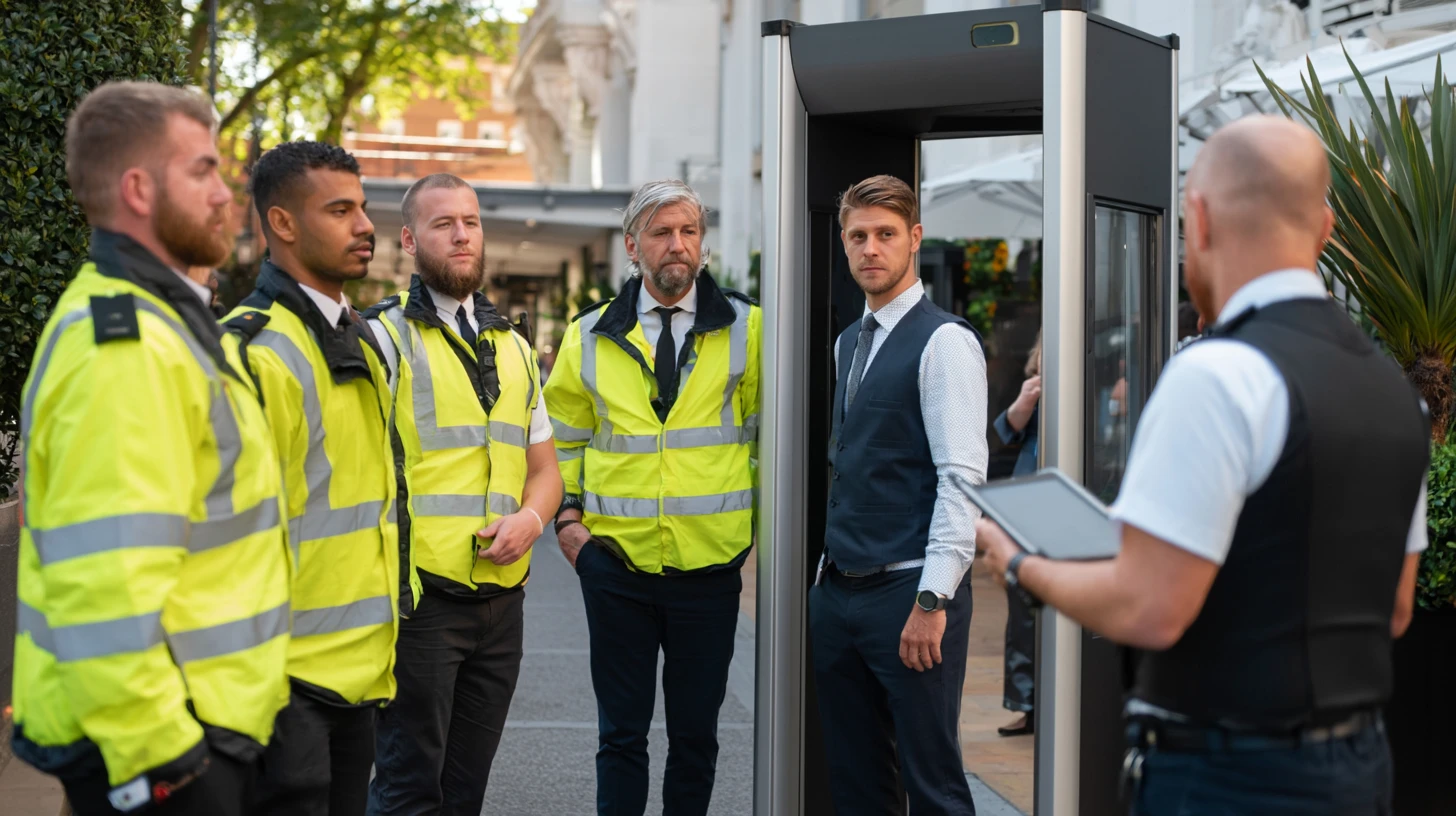
Security teams must also be trained in conflict resolution, crowd control, and communication under pressure. The ability to de-escalate a tense situation at an entry point, handle a suspicious behaviour report calmly and effectively, or direct a crowd safely during an emergency is as important as any technical skill.
Communication Systems
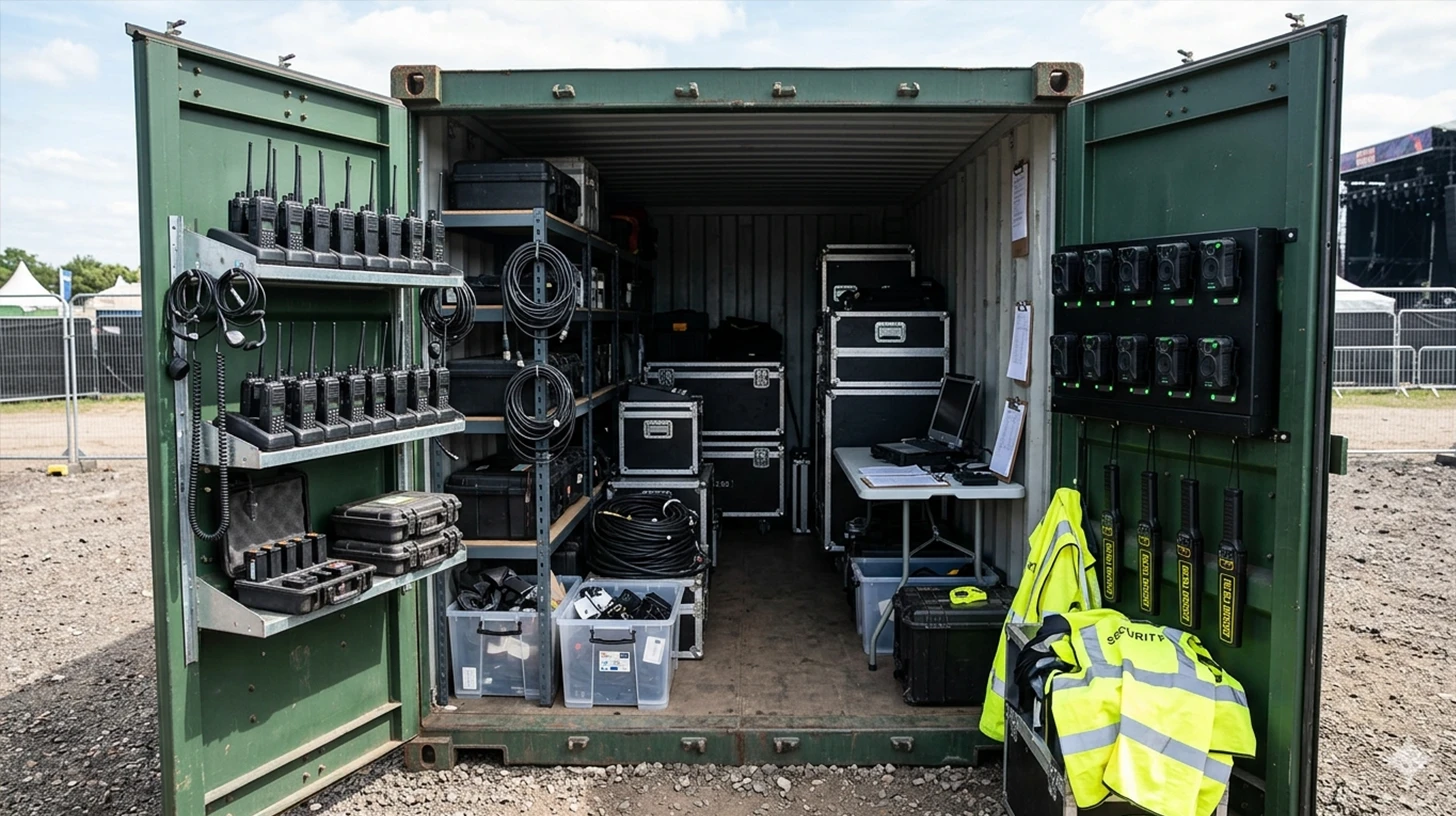
Reliable, real time communication between security personnel, event staff, and emergency services is the backbone of effective event security. Two-way radio systems remain standard for most events. Larger and more complex deployments increasingly supplement radios with digital tools and mobile apps that enable message sharing, real time location tracking of personnel, and rapid escalation to command staff. Whatever system is used, all personnel must be briefed on communication protocols and emergency call signs before the event begins.
Post-Event Analysis and Continuous Improvement
The work of the security team does not end when the last attendee leaves. Post event analysis is a critical discipline that allows event organisers to understand what worked, what did not, and how to strengthen security strategies for future events.

Reviewing Security Performance
Security logs, incident reports, and alarm data from screening points should be reviewed systematically after every event. Key questions include: Were there any unauthorised access attempts, and how were they handled? Did any entry points become dangerously congested? Were there bottlenecks at access points that slowed screening throughput? Were any security protocols triggered, and did the response follow the agreed emergency procedures?
If RFID technology was in use, the attendee data generated provides a detailed picture of crowd movement across the site when and where peaks occurred, how long attendees spent at entry points, and which restricted areas were accessed by whom. This data is one of the most powerful tools available to event managers for planning future events more efficiently.
Gathering Feedback
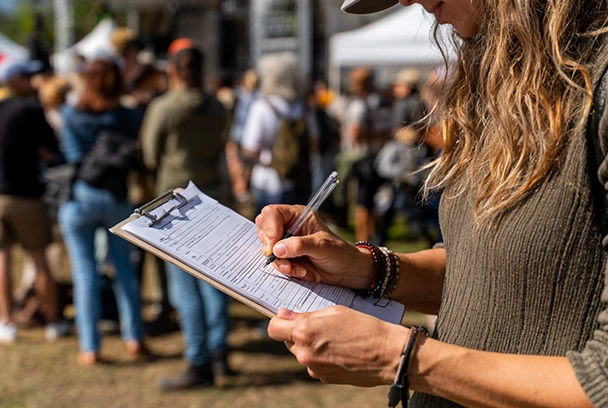
Attendee experience is closely linked to how well the entry and security process was managed. Gathering feedback through post-event surveys or follow-up emails provides valuable insight into how access control and screening were perceived whether queues felt excessive, whether signage was clear, and whether staff were professional and approachable. This feedback should sit alongside the internal security review, giving organisers both the operational and experiential dimensions of performance.
Gathering feedback from security staff and operational teams is equally important. Frontline personnel will often identify practical issues such as equipment limitations, communication gaps, or procedural ambiguities that are not visible from a command or management perspective.
Documenting and Updating the Security Plan
A well-documented security review is an asset that extends beyond planning future events. It demonstrates to insurers, regulators, and local authorities that risks were identified and actively managed, which supports compliance with safety regulations and may reduce insurance premiums. It also provides a defensible record in the event of any legal challenge arising from the event.
The security plan itself should be treated as a living document that is updated after every event, incorporating lessons learned, changes in threat intelligence, and improvements in available technology or staffing approaches. Event security is not a static discipline the threat environment, attendee expectations, and available tools all continue to evolve.