


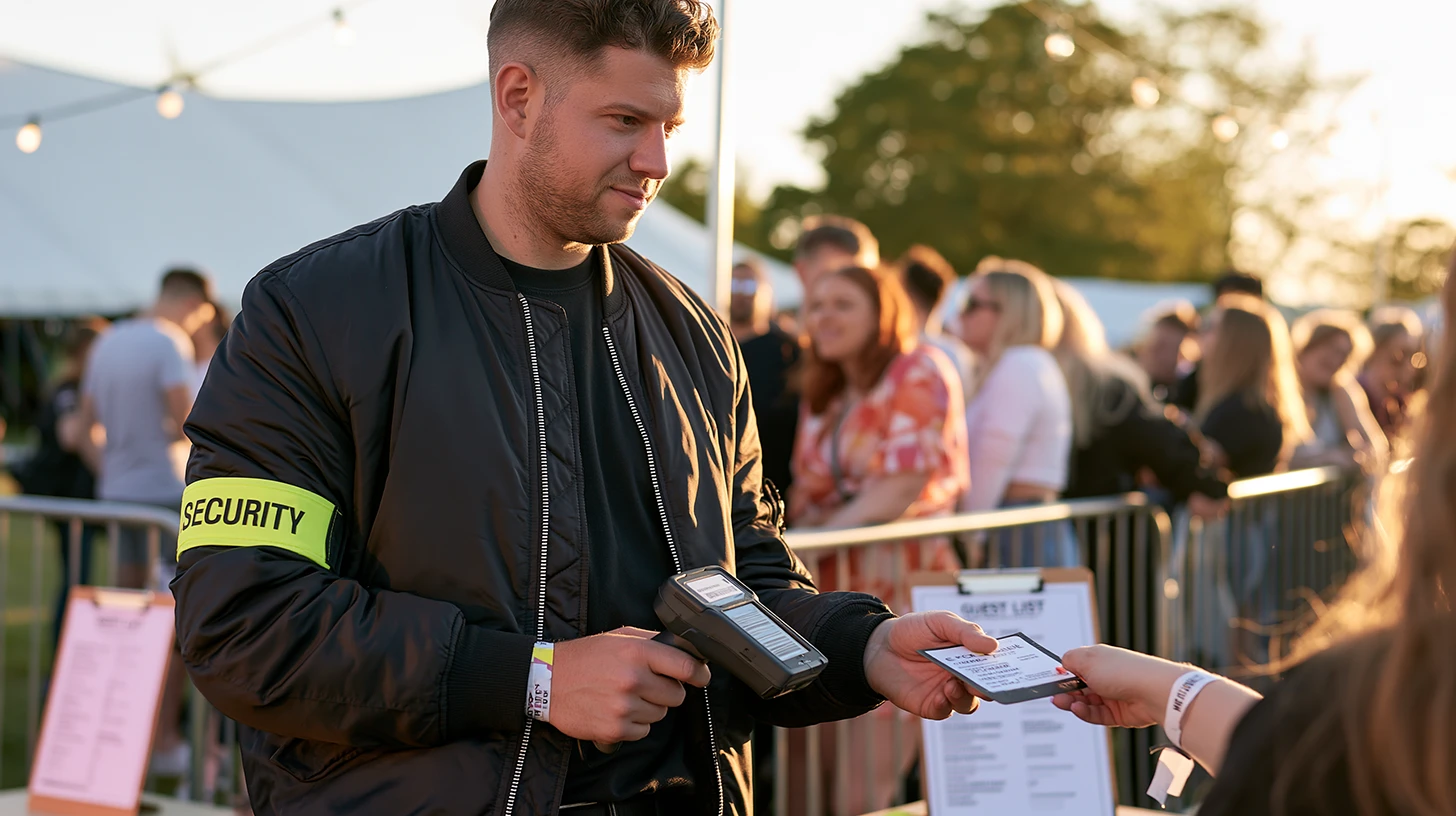

The First Impression Starts at the Door
Why Entry Matters More Than You Think
Whether it is a sold-out arena concert at Co-op Live in Manchester, a summer festival on a farm in Somerset, or an exclusive private members' event in Mayfair, the experience of attending a UK event begins long before the main act takes the stage. It begins at the door. How efficiently and securely an organiser can verify tickets and manage their guest list is not simply an operational concern it directly shapes the tone of everything that follows.
A Market That Demands Getting It Right
The UK live events industry is enormous and growing. Total ticket sales are forecast to reach approximately £6.5 billion by 2028, and with that scale comes complexity. Events of all sizes must now contend with sophisticated ticketing fraud, long queues, and the expectation of a seamless, professional welcome. Getting event security ticket verification and guest list management right is no longer optional; it is a fundamental part of event delivery.
The Ticket Verification Challenge in the UK
Understanding What Needs to Be Confirmed
Ticket verification at UK events involves confirming three distinct things: that a ticket is genuine, that it is being presented by the person it was issued to, and that it has not already been used. For smaller gatherings, a quick scan of a QR code may be sufficient. For large-scale events, the registration process is far more layered.

The Fraud Problem Facing UK Events
The scale of fraud in the UK market makes this particularly pressing. According to UK government data published in 2025, British consumers lost more than £1.6 million to concert ticket scams in 2024 alone, more than double the figure from the previous year. Around 3,700 fraud reports were made to Action Fraud, with almost half of those relating to fake offers circulating on social media. Young people in their twenties were the most common victims, often driven by the fear of missing out on sold-out shows like the Oasis reunion tour or major festival headline slots.
How Fraudsters Operate
The tactics used by fraudsters have become increasingly sophisticated. Counterfeit paper tickets can carry convincing barcodes and holograms that only fail at the scanner. Digital tickets shared as screenshots may look authentic until the moment guests arrive at the door. Scam resale sites mimic the branding of legitimate platforms with alarming accuracy. For event organisers and security staff, the challenge is not simply to spot fakes it is to do so rapidly and reliably when hundreds or thousands of attendees are queuing to get in.
How UK Organisers Are Verifying Tickets Today

Dynamic QR Codes
The most widely adopted technology in the UK for ticket scanning is the dynamic QR code. Unlike a static barcode that can be photographed and duplicated, a dynamic QR code refreshes at regular intervals, making it effectively impossible to screenshot and reuse. Ticketmaster's SafeTix system, which has been rolled out across major UK festivals and venues including Download, Reading and Leeds, Latitude, and Wireless, operates on this principle. Every ticket generates a unique, refreshable barcode tied to a verified account, which stops touts and fraudsters from passing off copies as the real thing.

NFC Technology
NFC technology is also gaining ground. Contactless entry via NFC allows attendees to hold their phone or wristband near a reader for near-time access. This method not only increases speed at the door but significantly reduces the risk of duplication. RFID wristbands, long popular at multi-day festivals, serve a similar function: they carry guest data, can be programmed to allow access only to specific areas, and create a digital trail that helps organisers track arrivals and manage capacity in real time.

Dedicated Event Apps and On-the-Ground Scanning
For events using dedicated apps, the ticket, the schedule, site maps, and merchandise purchasing all live in a single, user-friendly interface. Staff used handheld scanning devices to process 5.8 million fans across over 660 events during the 2025 summer season alone, contributing to one of the busiest and most digitally integrated live event summers the UK has seen. Platforms that support unlimited devices ensure that even large teams working across multiple entry points can scan tickets simultaneously without performance issues or data conflicts.

Setting Up Entry Points for Smooth Arrivals
At entry points themselves, the physical setup matters enormously. Multiple check-in lanes prevent bottlenecking. Events handling thousands of attendees per day benefit from ticket redemption points where staff verify ID documents alongside digital tickets before exchanging them for wristbands. Keeping printed backup lists or enabling offline scanning modes is also essential; an unreliable internet connection at a rural festival site can bring an entire digital operation to a standstill. Any capable check-in app should handle offline attendance tracking and sync automatically once connectivity is restored.
The UK Legal Framework Around Ticket Fraud
Key Legislation Event Organisers Should Know
The UK has developed a reasonably robust legal infrastructure to address ticketing fraud. The Fraud Act 2006 makes it a criminal offence to sell fake tickets or obtain them by deception, carrying penalties of up to ten years' imprisonment. The Consumer Rights Act 2015 and the Digital Economy Act 2017 together imposed stricter transparency requirements on secondary ticketing platforms, while the Breaching of Limits on Ticket Sales Regulations 2018 criminalised the use of automated software to bulk-purchase tickets beyond the limits set by event organisers.
Online Safety and Resale Reform
The Online Safety Act 2023, as it continues to come into force, places further obligations on social media platforms to prevent fraudulent ticket listings from being advertised to users. Given that nearly half of all UK ticket fraud reports in 2024 referenced social media as the point of contact, enforcement on this front is particularly important. The UK government also announced in 2025 its intention to introduce a price cap on resold tickets for concerts, live sport, and other events, a move intended to reduce the incentive for large-scale touting.
Football and Specialist Rules
For football specifically, reselling tickets outside designated channels remains a criminal offence under Section 166 of the Criminal Justice and Public Order Act 1994, with fines of up to £5,000 and potential banning orders for those convicted. Event teams working at football grounds need to be particularly well-versed in these rules, as the consequences of mismanagement at the door extend well beyond a bad guest experience.
Guest List Management at VIP Areas
The Culture of the Guestlist in the UK
Beyond the general admission flow, most UK events of any significant scale also operate one or more VIP or guestlist areas, and managing these requires an entirely different set of skills and tools. In London's nightclub scene, the guestlist is practically its own culture. Venues from Mayfair to Shoreditch to Brixton operate on the basis that entry to the most exclusive spaces is by name only. Guests typically need to know the specific list they have been added to and must present valid government-issued ID. The door staff have final discretion over entry regardless of list status. Being on the list is an invitation to be considered, not a guarantee of access.

VIP Management at UK Arenas and Festivals
At larger events and arenas, VIP management takes on greater operational complexity. Premium hospitality areas at venues such as the Royal Albert Hall, Co-op Live, and OVO Hydro in Glasgow offer tiered experiences from private suites and dedicated lounges to fast-track entry lanes and pre-show dining.
Managing access to these spaces requires the guestlist to be both tightly controlled and efficiently verified, particularly during peak arrival windows when general admission queues are also at their busiest. Custom tags can be assigned to different guest categories within a digital system, so staff always know at a glance who gets access to which area and what perks come with their ticket type.
Digital Tools for Managing Guests
Digital tools have transformed the way UK event teams manage guests. Platforms designed specifically for event management allow organisers to create public or private lists, assign different access tiers such as VIP, press, and backstage, and receive notifications the moment high-priority guests arrive. When a notable guest checks in, a discreet alert can be sent to a dedicated host or team lead so that the appropriate welcome is prepared without making other attendees feel overlooked.
Real-time synchronisation across multiple devices means that a guest checking in at one entrance is immediately updated across the whole system, preventing the kind of duplication and confusion that paper lists inevitably create. The ability to search the guestlist by name or custom tag at speed also matters enormously in practice; when a queue is forming and guests are arriving quickly, nobody has time to scroll.
| Topic | Description | Risk Level |
|---|---|---|
| Fake or Duplicated Tickets | Counterfeit paper tickets, screenshotted digital tickets, and static QR/barcodes can all be copied or reused undetected | 🔴 High |
| Scam Resale & Social Media Fraud | Fake listings and scam resale sites mimicking legitimate platforms; nearly half of 2024 fraud reports originated on social media | 🔴 High |
| Illegal Bulk-Buying & Unauthorised Resale | Bot-driven bulk purchases and unauthorised football ticket resale both carry criminal penalties under UK law | 🔴 High |
| GDPR / Data Protection Breach | Mishandled guest data (names, contact details, biometrics) risks legal and reputational damage | 🔴 High |
| Paper-Only Guest Lists | No real-time sync between entry points, prone to duplication and confusion | 🔴 High |
| Weak Entry Setup & Staffing | Single check-in lanes, no backup plan, insufficient staff briefing, and unmanaged plus-ones/uninvited guests all slow entry and increase error | 🟡 Medium |
| Verified Digital Ticket Tech | Dynamic QR codes (e.g. SafeTix), NFC, and RFID wristbands all resist duplication and speed up entry | 🟢 Low |
| Integrated Event Apps & Scanning | Dedicated apps with handheld scanning, offline mode, and real-time guest list sync centralise data and prevent duplicate check-ins | 🟢 Low |
| Pre-Registration for Guests | Advance sign-up speeds up VIP check-in and improves the arrival experience | 🟢 Low |
Pre-Registration and the Arrival Experience
Pre-registration is increasingly encouraged at UK events as a way to streamline the VIP arrival experience. Guests who have submitted their details in advance through a digital invitation, an RSVP link, or an event page on an event management platform, can be checked in within seconds on arrival. Some platforms also support badge printing at the door, allowing personalised lanyards or passes to be produced on the spot, adding a polished touch to the registration process that reinforces the sense that guests are genuinely expected and valued.
Positioned well, pre-registration feels less like a bureaucratic step and more like a bespoke welcome. A well-worded invitation might frame it as: "To ensure your seamless check-in experience on the night, please register your details here." That framing makes a real difference to how guests perceive the event before they have even set foot through the door.

Practical Considerations for UK Event Teams
Staffing, Training, and Back-Up Plans
Several practical principles underpin effective ticket verification and guest list management at UK events, regardless of scale. Hiring security guards for event entry points is non-negotiable. A meticulous team member should manage data and paperwork; someone with strong interpersonal skills should handle face-to-face check-in. Technology must always be backed up. A dedicated 5G hotspot, an offline mode on the check-in app, and a printed secondary list are not signs of poor planning they are signs of professional contingency management.
Staff briefings before the event opens are essential. Running through difficult scenarios, practising how to handle uninvited guests or plus-ones politely, and ensuring that every team member understands what to do if something goes wrong all contribute to a smoother experience on the day. Clear signage at entry points helps direct the flow of arrivals and deters queue-jumping, which can quickly sour the atmosphere before an event even begins.
Collecting and Protecting Guest Data
On the data side, UK events must remain compliant with GDPR and the UK Data Protection Act 2018. Guest data collected during registration, including names, contact details, and in some cases biometrics, must be handled securely, stored lawfully, and deleted promptly once it is no longer needed. Attendees have the right to know how their details are being used, and any breach can carry serious reputational and financial consequences.
Post-event, many organisers use data gathered during registration and check-in to inform future planning. Export features within event management platforms allow teams to analyse attendance patterns, identify which sessions or areas were most popular, and refine their approach for subsequent events. This kind of ongoing review is what separates events that simply happen from events that consistently improve.