


The Growing Case for Smarter Screening
Why the Conversation Has Changed
Walk into a major stadium, festival, or nightclub in the UK today and the security process is becoming increasingly familiar: bag checks, a potential pat-down, and, in growing numbers of venues, a walk-through metal detector arch. Yet compared to airports and high-profile government buildings, where event security screening has been standard for decades, the broader UK events and venues sector has been relatively slow to adopt metal detection technology at scale.
That is changing rapidly. Rising knife crime, heightened terrorism threat levels, and the landmark passing of the Terrorism (Protection of Premises) Act 2025, widely known as Martyn's Law, are together reshaping what responsible event security looks like across the country. For event organisers, venue operators, and security professionals, understanding the role of walk-through and handheld metal detectors is no longer optional. It is becoming central to how we think about public safety in public spaces.
What Are Walk-Through and Handheld Metal Detectors?

Walk-Through Metal Detectors
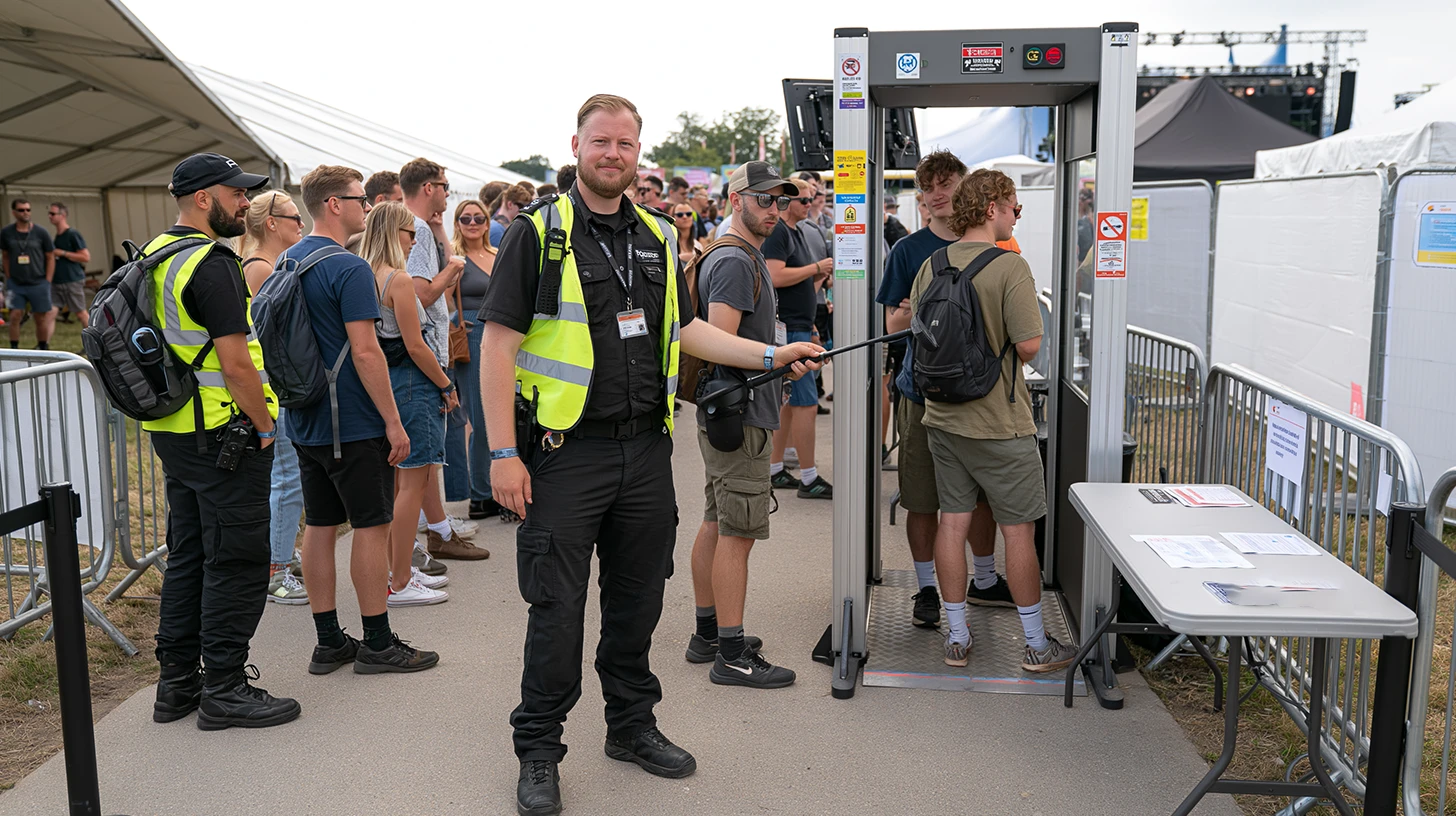
Security metal detectors for events broadly fall into two categories. Walk-through metal detectors, sometimes referred to as knife arches or search arches, are the upright archway frames placed at entry points through which individuals pass.
They operate using low-frequency electromagnetic fields: the unit emits a signal, and when metallic objects pass through it, the field is disrupted, triggering an alert.

Zone Detection and Sensitivity
Modern units such as the Garrett PD6500i offer multi-zone detection with up to 33 independent zones, enabling security personnel to pinpoint the exact location on the body where metal has been detected, from a jacket breast pocket to a trouser leg, rather than simply knowing that a detection has occurred.
High-end models also allow sensitivity settings to be adjusted, meaning security teams can configure the arch to flag concealed weapons like knives and firearms while ignoring everyday items like keys, belts, and small coins, keeping false alarms to a minimum.

Handheld Metal Detectors
Handheld metal detectors serve as the secondary screening tool. Once a walk-through arch triggers an alarm signal, or when a targeted check is required, a security officer uses a handheld wand to sweep the individual and precisely locate the source of the alert.
These reliable metal detectors detect ferrous, non-ferrous, and stainless steel metal objects and are designed with 360-degree detection coverage, self-calibrating technology, and dual alarm modes, both audible and silent vibration, for noisy or discreet environments. Their ergonomic design makes them practical for long operational hours, allowing security personnel to carry out thorough screening without fatigue.

Working Together as a System
Together, the two technologies form a complementary system. The arch acts as the fast, high-throughput first line of detection; the handheld wand provides the targeted follow-up that resolves alarm signals without requiring individuals to re-enter the primary screening system, which would create significant queuing delays. This pairing represents effective screening solutions that enhance safety without sacrificing the smooth flow of people through entry points.
Martyn's Law and the UK Legal Landscape
A Landmark Piece of Legislation
A significant driver behind the uptake of security screening equipment in the UK is the Terrorism (Protection of Premises) Act 2025, Martyn's Law, which received Royal Assent on 3 April 2025. Named in memory of Martyn Hett, one of the 22 people killed in the Manchester Arena bombing in May 2017, the Act represents the most significant shift in venue security legislation in the UK for a generation and signals a proactive approach to protecting the public from terrorism.
The Tiered System Explained
The Act introduces a tiered system of legal requirements. Venues and events with an expected capacity of between 200 and 799 people fall under the standard tier and must implement appropriate public protection procedures. Larger premises and events with a capacity of 800 or more come under the enhanced tier, with additional security requirements to actively reduce vulnerability to terrorist attacks. Appropriate measures under the enhanced tier may include security screening, bag search policies, CCTV, and access control. The Security Industry Authority has been named as the regulator overseeing compliance, with enforcement expected to begin around April 2027.
What the Law Means in Practice
While the Act does not mandate the use of metal detector equipment specifically, it creates a clear legal imperative for venues and organisers to critically assess their entry point security. For many in the enhanced tier, walk-through metal detectors will form a logical and proportionate response to that duty, sitting naturally alongside existing security measures rather than replacing them.
Beyond terrorism legislation, the National Police Chiefs' Council has established knife screening standards for public places, and the Centre for the Protection of National Infrastructure provides best-practice guidance on security screening and operations. Although compliance with these frameworks is not currently compulsory, they are widely regarded as best practice across the industry and inform how responsible operators plan their security solutions.

Do UK Events Actually Need Metal Detectors?
The Arguments in Favour
This is a legitimate question, and the honest answer is that it depends on the event. Not every village fête or charity fun run requires a security arch. However, for a wide and growing range of UK events and venues, the case is compelling.
Knife crime remains a persistent concern across the UK, and the presence of knife arches acts as a powerful deterrent even before a single wand is raised. Venues that have implemented screening, including schools, colleges, concert halls, cricket grounds, and football stadiums, report not only improved detection of prohibited items but a tangible improvement in the sense of safety felt by attendees, staff, and the wider community.
In one documented case in London, a group of colleges introduced permanent metal detector arches after a serious incident. The result was a significant reduction in hostile incidents, with students expressing appreciation for the secure environment the measures helped to create.
Public Confidence and Operational Efficiency
There is also the matter of public confidence. Attendees at large-scale events in the UK are increasingly expecting to see visible, professional security measures as part of their entry experience. Walk-through metal detectors and trained security staff at entry points signal that an organiser takes safety seriously, something that matters to attendees, performers, and sponsors alike.
Modern security metal detectors are also significantly faster and less intrusive than they once were. High-throughput models are designed to keep queues moving, and advanced multi-zone detection reduces unnecessary secondary screening. Properly deployed systems can actually improve operational efficiency at entry points by providing a structured, defined screening process that keeps crowds moving with minimal disruption.
Addressing the Concerns
The counterarguments deserve fair consideration. Metal detector costs are a real factor for smaller events. However, the availability of flexible rental options from numerous UK providers, offering short-term hire with delivery, setup, and ongoing support included, means that purchasing reliable equipment outright is not a requirement. Portable metal detector hire is accessible and cost-effective, making professional screening achievable even for temporary events or one-off occasions at temporary security checkpoints.
Balancing Security and Atmosphere
There is also the question of atmosphere. Introducing visible security screening can change the feel of an event, potentially making attendees feel they are entering a high-risk environment. The key is proportionality: the equipment, its placement, and the manner in which security staff operate it should be calibrated to the nature of the event. A well-briefed, professional team operating a clean, modern arch is far less unsettling than heavy-handed manual searches.
Finally, metal detectors cannot stand alone. They are most effective as part of a layered approach that also includes trained SIA-licensed security personnel, bag checks, CCTV coverage, access control systems, and clear incident response protocols. Security screening equipment operated without supporting measures will not deliver the outcomes that event organisers and the public expect.
Best Practices for Metal Detector Screening at UK Events
Placement and Access Control
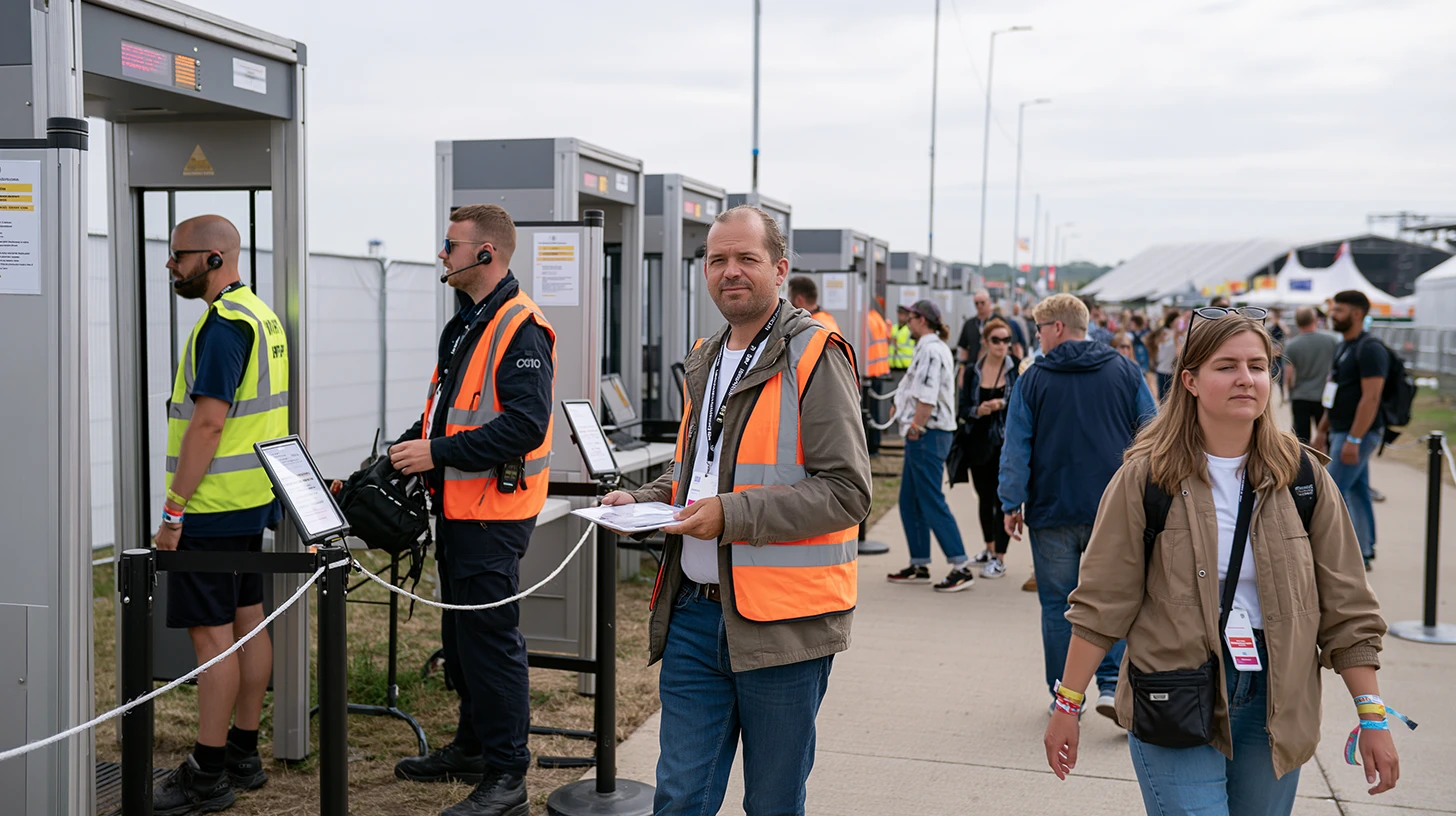
Walk-through metal detectors should be positioned at all primary entry points, creating complete coverage of the venue perimeter. Avoid placing arches where crowding could create a bottleneck before screening, as this itself creates a security risk. Sufficient space should be allocated for a secondary screening area adjacent to each arch, allowing an event security guard to conduct targeted checks discreetly and professionally without obstructing the flow of other attendees.
The arches should also be integrated thoughtfully with access control systems and any ticketing or bag check processes already in place. Seamless integration between these layers of security ensures that the overall entry experience is smooth and efficient rather than fragmented.
Staff Training and Briefing
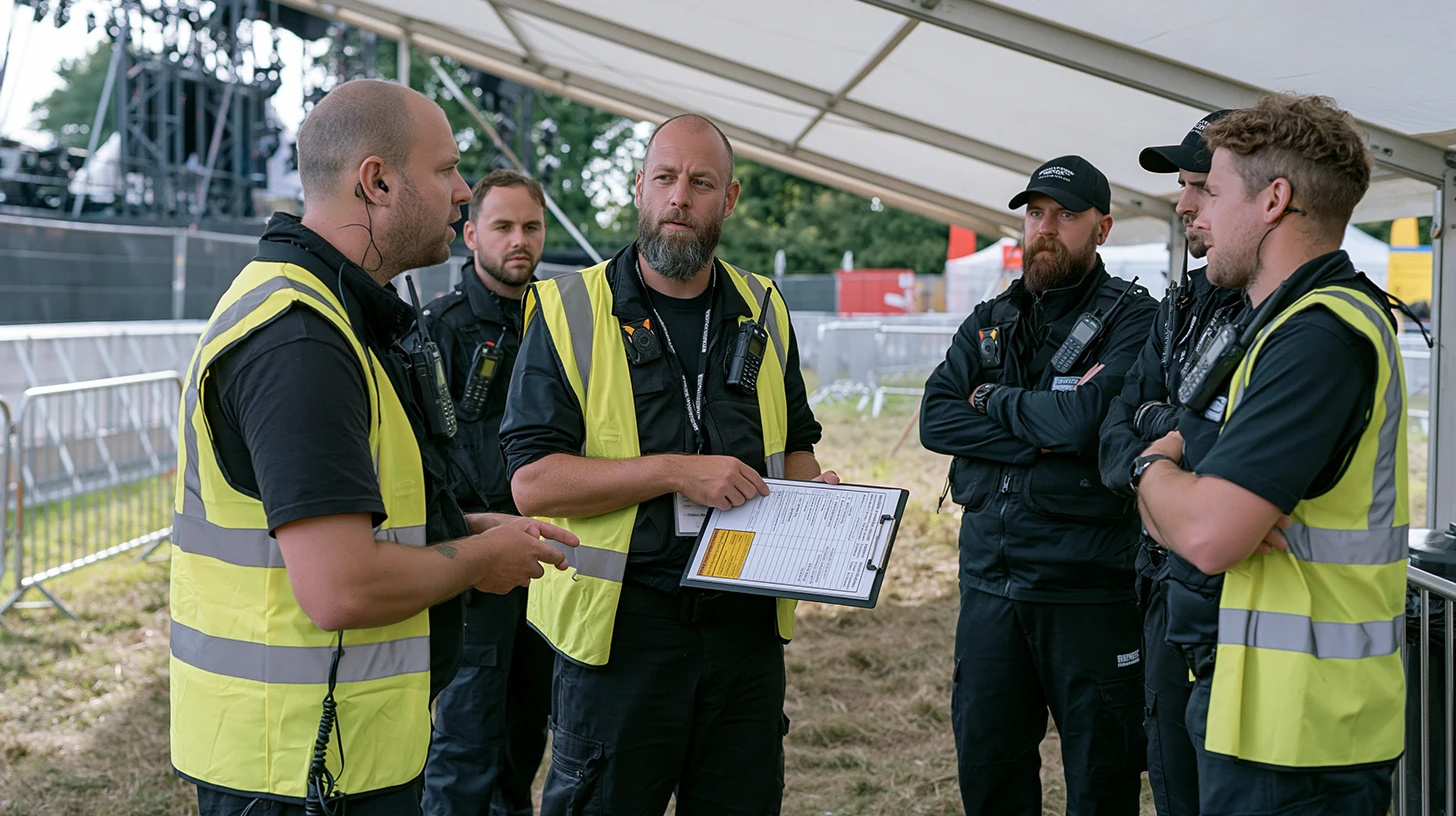
Security staff operating walk-through arches and handheld metal detectors must be thoroughly trained before deployment. This includes understanding sensitivity settings and how to calibrate the equipment for the specific security requirements of the event, how to interpret alarm signals and zone information, the correct wanding technique for secondary screening, how to conduct searches within legal and dignity guidelines, and how to de-escalate situations that arise at screening points. Many equipment suppliers in the UK provide staff training as part of a hire package.
Public Communication and Signage
Attendees should be informed in advance, through event communications and ticketing information, that security screening will take place. Clear, visible signage at the entry approach helps manage expectations, reduces queuing anxiety, and prevents the discovery of prohibited items from creating unnecessary confrontation at the arch. Verbal communication from security personnel helps guide individuals through the process calmly and efficiently.
Calibration and Sensitivity
The sensitivity settings of a walk-through detector should be calibrated appropriately for the event's threat profile. A music festival will have different considerations to a football stadium or a corporate conference at a transport hub. Work with your equipment provider to configure the device before the event opens, ideally running a calibration test under real-world conditions to establish a baseline that minimises false alarms while ensuring potential threats are reliably detected.
Secondary Screening and Situational Awareness
When an arch triggers, a handheld wand operator should be immediately available to conduct secondary screening. The process should be professional and respectful, and gender-appropriate search protocols must be maintained at all times. Security teams should maintain strong situational awareness throughout, communicating clearly with one another so that any developing issue at an entry point is escalated promptly and managed calmly.
Remote monitoring capabilities, available on many modern walk-through systems, allow supervisors to track screening data and alarm signals in real time, supporting situational awareness across multiple entry points simultaneously.
Post-Event Review
After every event, security teams should debrief to assess what worked, where queues built, how many secondary checks were performed, and whether any incidents occurred at screening points. This operational learning is invaluable for refining future deployments and ensuring that security solutions continue to improve event by event.
Looking Ahead
The direction of travel in the UK is clear. Security metal detectors, once associated exclusively with airports and courthouses, are becoming a standard feature of the responsible event security toolkit across a far wider range of venues and public events. Martyn's Law has crystallised the legal accountability that venue operators and event organisers have always held in moral terms. The technology itself has never been more capable, more portable, or more cost-effective.
For event organisers navigating this landscape, the question is no longer simply whether walk-through metal detectors are necessary. It is how to deploy them intelligently, in a way that enhances genuine safety, creates a safe and secure environment, supports the enjoyment of the event, and demonstrates the kind of professional, proactive approach to public safety that both the law and the public now rightly expect.