


A comprehensive resource for event organisers across the United Kingdom
Introduction
Whether you are organising an intimate corporate dinner for 50 guests or a city-wide festival drawing tens of thousands of attendees, event security is one of the most important decisions you will make as an organiser. The right security team can mean the difference between a successful event that runs without incident and a situation that ends in injury, legal liability, or reputational damage.
This guide is designed to give UK event organisers a thorough understanding of the event security landscape from how much event security costs and what to look for in a security company, to your legal obligations and the questions you should ask before signing any contract. Whether you are new to organising events or a seasoned professional looking to tighten up your security planning, this guide covers what you need to know.
Why Event Security Matters: Understanding Your Obligations
In the United Kingdom, event security is not merely a best practice it is a legal and regulatory requirement in many circumstances. Depending on the nature and scale of your event, you may be subject to legislation including the Private Security Industry Act 2001, health and safety legislation, premises licence conditions, and guidance from local authorities and safety advisory groups.
Event organisers are legally responsible for the safety and welfare of everyone who attends or works at their event. Failing to provide adequate security can expose you to significant financial and reputational risk, including civil claims from injured parties, enforcement action from licensing authorities, and even criminal prosecution in serious cases.
The private security industry in the UK is regulated by the Security Industry Authority (SIA), the body established under the Private Security Industry Act 2001. The SIA sets the standards that all frontline security operatives must meet, and it is a legal requirement for most event security personnel to hold a valid SIA licence before working in a paid security role.
Key point: As an event organiser, you have a legal duty of care to your guests, staff, and the wider public. Failing to secure adequate security services is not just poor practice it can be a criminal offence.
The Private Security Industry Act 2001
The Private Security Industry Act 2001 is the cornerstone of UK security regulation. It established the SIA and created the framework for licensing security operatives. Under this legislation, anyone carrying out regulated security activities including door supervision, security guarding, CCTV operation, and close protection must hold an appropriate SIA licence. Working without such a licence, or employing unlicensed operatives, is a criminal offence.
Event organisers must ensure that every member of the private security company they engage is properly licensed. You can verify any operative’s credentials using the SIA’s licence status checker service, which is available online and allows you to confirm whether an individual holds a valid, current licence.
Premises Licences and Temporary Event Notices
If your event involves the sale of alcohol, regulated entertainment, or late-night refreshments, you will likely require a premises licence or, for smaller one-off events, a temporary event notice (TEN). Both carry conditions that may specify the type and number of security officers required on site.
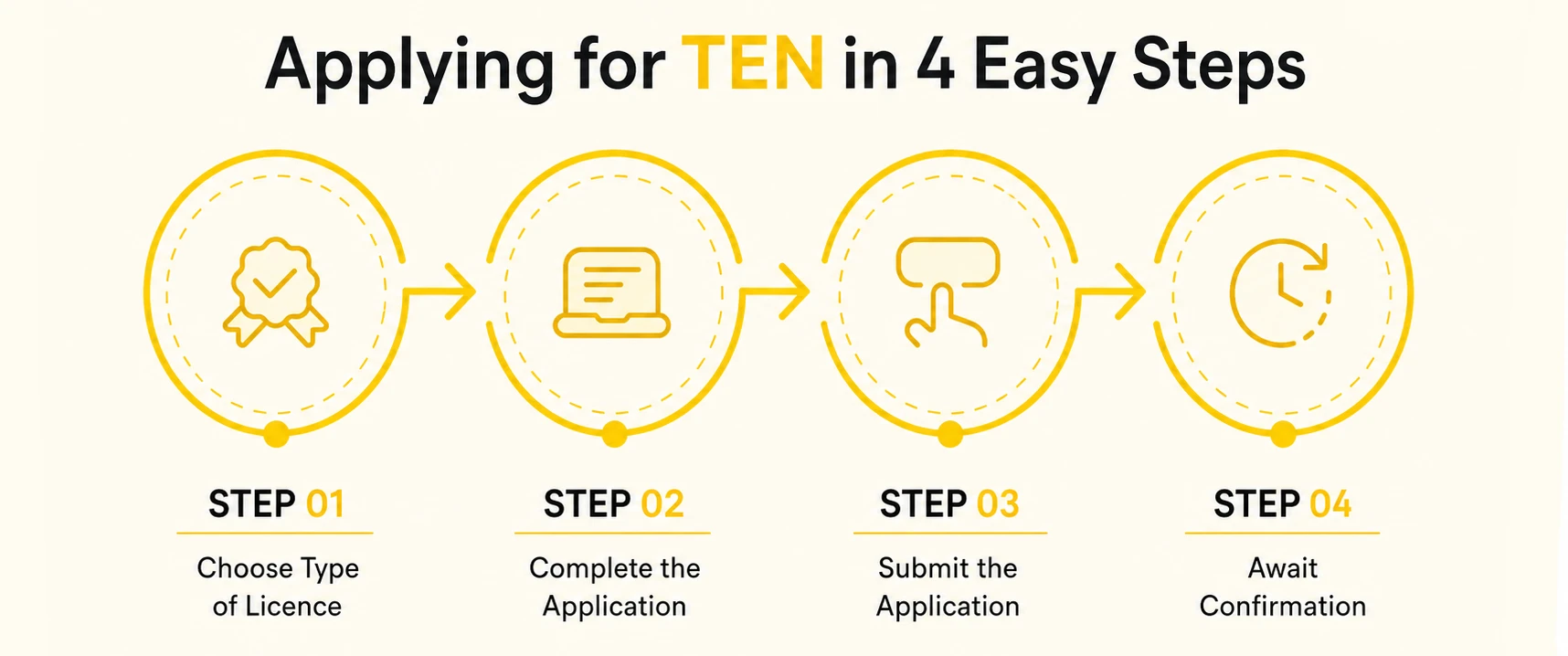
For licensed venues, the premises licence will often include a prescribed local statutory provision relating to security, such as a requirement to employ door supervisors with a door supervisor licence on the SIA’s front line licence category. If your event takes place at a venue that holds a club premises certificate, a bingo premises licence, or a casino premises licence, the licence conditions will outline specific security requirements you must meet.
Meeting Licence-Specific Security Requirements at Licensed Venues
When in doubt about your legal obligations, it is important to seek independent legal advice and engage with your local authority’s licensing team at the earliest possible stage.
Safety Advisory Groups
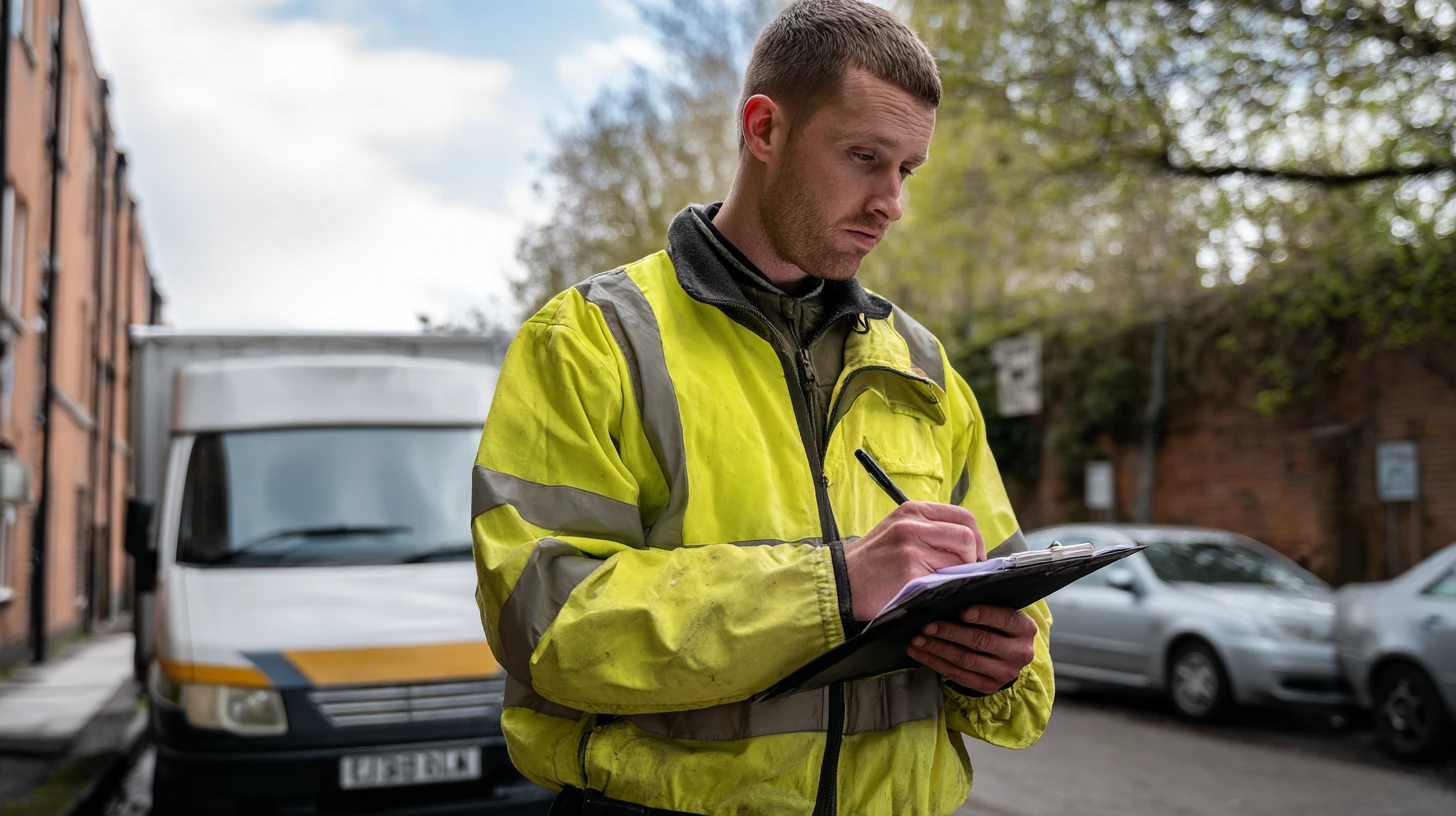
For larger public events, local authorities often require engagement with safety advisory groups (SAGs). These multi-agency bodies bring together representatives from the police, fire service, emergency services, and other stakeholders to review and advise on the safety arrangements for major events. If your event is likely to attract a large crowd, you should consult your local authority to determine whether a SAG review is required.
Understanding SIA Licensing: What It Means for Your Event
One of the first things any event organiser should understand is the SIA licensing framework. The Security Industry Authority issues licences to individuals working in frontline private security roles. For event security specifically, the two most relevant licence types are the security guard licence and the door supervisor licence.

Security Guard Licence
A security guard licence allows an operative to carry out static guarding duties: patrolling, access control and responding to incidents. Security guards holding this licence can work at many event types, particularly where the role does not involve working on licensed premises.

Door Supervisor Licence
The door supervisor licence is the most versatile and most commonly required licence for event security work. It covers all the duties of a security guard but also permits the holder to work on licensed premises venues with a premises licence for the sale of alcohol or regulated entertainment. If your event involves a bar, a licensed venue, or any area where alcohol is served, you will almost certainly require door supervisors. In some circumstances, a door supervisor licence applies across a wider range of environments than a standard security guard licence.
Close Protection Operatives
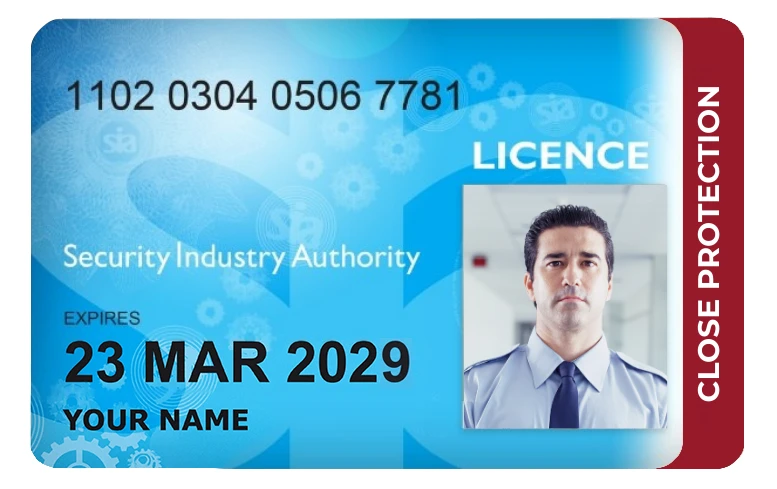
For high-profile events involving VIP guests, public figures, or situations where specific individuals require personal security, you may need close protection operatives. Close protection is a specialist role requiring its own SIA licence and advanced training. New mandatory refresher training requirements for close protection licences came into force in April 2026, meaning any operative renewing their licence must complete updated modules covering counter-terrorism threat awareness and first aid facilities standards.
CCTV Operative
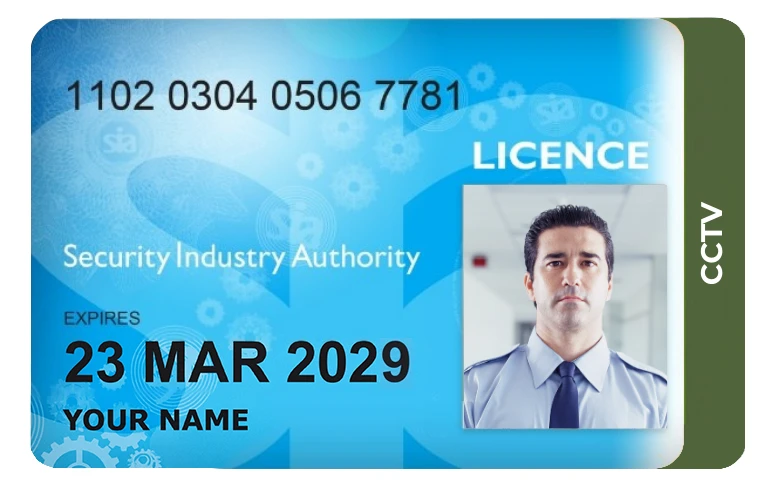
A CCTV operative holds a Public Space Surveillance (CCTV) licence issued by the Security Industry Authority, which is required at any event where a control room is staffed and cameras are actively monitored for crowd management, incident response, or the protection of people from assault and disorder. Unlike door supervisors or security guards, who may only use CCTV to identify a trespasser or protect property, a dedicated CCTV operative can track individuals across a site, coordinate ground-level responses in real time, and ensure all footage meets evidential integrity standards should it be required by police or used in legal proceedings.
The Approved Contractor Scheme
When selecting a private security company for your event, look for firms that hold approved contractor scheme (ACS) status, awarded by the SIA. ACS status is a mark of excellence that demonstrates the company meets higher standards than basic licensing requires. It covers areas including staff vetting, training, management systems, and service delivery. Engaging an ACS-accredited provider reduces your financial and reputational risk and gives you confidence that the security staff supplied will be properly vetted and managed.
Tip:
Always ask any security company you are considering to confirm their SIA approved contractor scheme status and to supply evidence of their operatives’ SIA licences before you sign a contract.
How Much Does Event Security Cost in the UK?
Understanding event security costs is essential for planning a realistic budget. The short answer is that security costs vary considerably depending on a wide range of factors but event organisers should generally expect to pay between £15 and £25 per hour per security officer for standard roles, with specialist roles commanding higher rates.
Standard Hourly Rates by Role
As a general guide, current UK rates are approximately:
| Security Role | Rate |
|---|---|
| Event Steward | £14 – £15 per hour |
| General Security Officer | £16 – £19 per hour |
| Door Supervisor | £18 – £21 per hour |
| Door Supervisor (Licensed Areas) | £18 – £25 per hour |
| Car Park & Traffic Management | £16 – £18 per hour |
| CCTV Operative | £20 – £22 per hour |
| Cash & Valuables Security | From £22 per hour |
| Close Protection Operative | From £30 per hour |
These figures are illustrative. The actual cost you will pay depends on the specific factors outlined below.
Key Factors That Influence Security Cost
When budgeting for event security, the following factors will directly affect your overall security cost:

Night-time or Weekend Shifts: Premium rates often apply for unsociable hours, weekends, and bank holidays.

Equipment Requirements: If your security provider needs to supply security equipment such as radios, barriers, or personal protective equipment, these costs may be passed on to you.

Specialist Roles: Close protection, trained first aid facilitators, or operatives with counter terrorism awareness training will cost more than standard door supervisors.

Number of Access Control Points: Events with multiple entry points require more security officers to manage access, which increases overall costs.

Event Size & Type: The number of security officers required scales with your expected attendance, the type of event (festival, corporate event, private party, sports match), and the complexity of the site layout.

Event Duration: Security is typically priced on an hourly basis, so longer events naturally cost more. Be sure to factor in set-up and pack-down time when calculating required hours.

Location: Events in London and other major urban centres where crime rates are higher typically attract higher hourly rates than those in less densely populated areas.

Security Experience & Qualifications: More experienced security staff command higher rates, but the investment is usually worthwhile for complex or high-risk events.
Hidden Costs to Budget For
Many event organisers are surprised by costs that are not always detailed in the initial quote. When comparing security quotes, be alert to potential additional charges including:
- VAT (if the provider is VAT-registered)
- National insurance contributions for security staff
- National minimum wage uplifts for shift work
- Equipment hire or personal protective equipment provision
- Management and supervisory fees for larger deployments
- Travel and accommodation for security personnel travelling to your event
A detailed service-level agreement should make all of these items transparent before you sign any contract. Always request a full, itemised breakdown of the quote rather than accepting a single headline figure.
What Drives the Gap Between a Guard’s Pay and Your Invoice?
Event organisers sometimes query why the price they pay is significantly higher than the wage the security operative receives. This gap reflects the considerable overhead that a reputable security provider carries: employer national insurance contributions, holiday pay, uniform or appropriate equipment, training costs, SIA licence renewal fees, insurance, management infrastructure, and the cost of maintaining the approved contractor scheme accreditation. When you understand these costs, it becomes clear why choosing a provider purely on price can be a false economy.
Budget guidance: A small event of up to 150 guests with one or two door supervisors might cost between £150 and £350 for a single evening. A mid-size festival of 1,000 attendees requiring 8–10 security officers over a full day could cost £2,000 to £5,000 or more. Always obtain at least three quotes and compare on like-for-like terms.
Small vs Large Event Security: Matching Cover to Your Needs
One of the most common mistakes event organisers make is either over-providing or under-providing security relative to their actual event needs. Understanding the difference between what a small event requires and what a large event demands is fundamental to smart budgeting and effective safety planning.
Security at Small Events
For small events private parties, intimate corporate events, community gatherings, or weddings of up to 150 guests one or two trained, SIA-licensed security officers will typically suffice. Their primary responsibilities will include:
Responding to any incidents, including medical emergencies
Monitoring the behaviour of guests, particularly where alcohol is served
Protecting the event space and any valuables or equipment
Front door control and guest list management
Liaising with venue staff if issues arise
Even at a small event, your security presence serves a vital function. A trained security officer on the door sets a professional tone, deters gate-crashers, and provides a calm, trained response if problems arise. First aid facilities and basic emergency planning are as important at a 50-person function as they are at a large festival.
Security at Large Events
As your event grows in scale, the complexity of the security operation grows with it. A large event typically one attracting more than 500 attendees requires a fully structured security team with clearly defined roles, effective communication systems, and a detailed event planning guide. The key requirements for large-scale event security management include:
Contingency planning for scenarios including medical emergencies, fire evacuation, lost children, and crowd surges
Counter terrorism awareness training ( ACT ) among the security team for high-profile public events to help safeguard
Crowd control measures including barriers, designated walkways, and clearly signposted entry and exit routes
Mobile patrols operating throughout the event site to identify and respond to incidents
A central command point with radio communications linking all security personnel
Coordination with local authorities, emergency services, and venue management
A dedicated security team with a senior supervisor or event security manager overseeing all operatives
Multiple access control points staffed by door supervisors conducting ticket checks and unauthorised or illegal items searches
Large events may also require specialist security operatives such as close protection for VIP guests, dedicated cash and valuables security, and nominated individuals with advanced first aid qualifications.
Staff-to-Attendee Ratios
While there is no single universal ratio mandated in UK law for all event types, industry guidance and local authority requirements typically suggest the following as a starting point for planning:
| Scenario | Ratio |
|---|---|
| Lower-risk events | 1 security officer per 50–100 attendees |
| Higher-risk events (alcohol-led, late-night, or large outdoor festivals) | 1 security officer per 25–50 attendees |
| Entry / exit points | Additional operatives per dedicated point |
| Large deployments | 1 supervisor per 8–10 security officers |
These ratios should be treated as a minimum starting point. Your appointed security provider should carry out a full risk assessment specific to your event before recommending final staffing numbers.
What to Look for When Hiring an Event Security Company
Choosing the right security company is one of the most consequential decisions you will make as an event organiser. The wrong choice whether that means unlicensed staff, poor training, or inadequate planning can have serious consequences for your guests and significant legal and financial implications for you.
Experience in Event Security Management
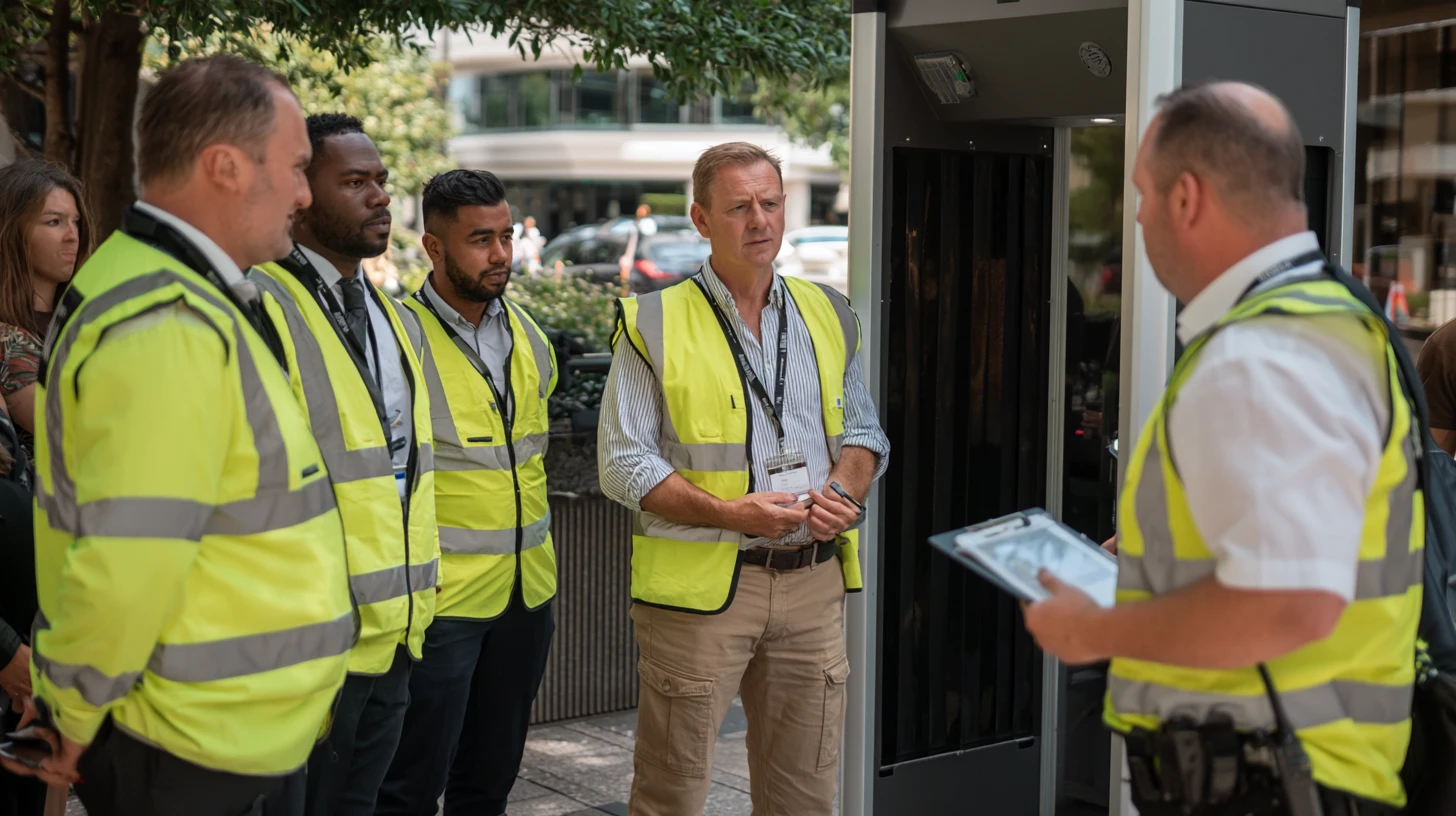
Experience is the single most valuable quality in an event security company. Event security management is a specialised field that differs significantly from static site guarding or retail security. An experienced provider will have a proven track record of managing events of a similar scale and nature to yours. Ask for case studies, references from previous clients, and details of the types of events they have secured.
More experienced companies will also be better positioned to identify the vulnerabilities of a specific event space and to anticipate potential problems before they occur. This proactive approach to risk assessments is worth considerably more than a reactive team that only responds once incidents have already developed.
Proper Licensing and Accreditation
Every member of the security team deployed at your event must hold a valid SIA licence appropriate to their role. Do not assume this is the case ask the provider to confirm in writing that all security staff they intend to deploy are fully licensed, and use the SIA’s licence status checker service to verify individual licences if you have any concerns.
Beyond individual SIA licensing, look for a provider that holds SIA approved contractor scheme status. This accreditation demonstrates that the company as a whole operates to the highest industry standards, not merely that its individual staff are licensed.
Also confirm that the company holds appropriate employer and public liability insurance. Without this cover, any incident at your event could leave you personally exposed.
Reputation and Client Retention
A company’s reputation is one of the most reliable indicators of the quality of its security services. Look for verified online reviews, and ask directly for testimonials from previous event clients. A company with a strong client retention rate one where the same event organisers rehire them year after year is a strong indicator of consistent, high-quality service delivery.
Also consider whether the security staff themselves are trained to represent your event professionally. Security officers at a corporate event or a wedding should be courteous and presentable; those at a music festival need to be robust and experienced in crowd management. The best providers will tailor the character and approach of the team to fit your event.

Bespoke Risk Assessment and Planning
Avoid any security company that offers a one-size-fits-all quote without first conducting a thorough assessment of your event. A reputable provider should carry out detailed risk assessments specific to your venue, expected attendance, event type, and identified risks before providing a quotation. They should be able to present you with a clear event security management plan that covers staffing levels, role assignments, communication protocols, access control arrangements, and emergency procedures.
Transparency in Pricing
Request a complete rate breakdown that clearly sets out all costs, including VAT, security equipment provision, supervisory fees, and any additional charges. Beware of below-market pricing that comes with no explanation this is often a warning sign of underqualified staff, inadequate insurance, or a lack of proper training and vetting procedures. The cheapest quote is rarely the best value when it comes to event security.
Local Knowledge
Where possible, engage a security company with detailed knowledge of the area in which your event is taking place. Local companies will often have existing relationships with local authorities and emergency services, enabling them to coordinate more effectively in the event of an incident. They will also be familiar with the specific challenges of local venues, from access and parking to known local risks.
Event Security Contracts: What to Include and What to Watch Out For
Once you have identified the right security provider for your event, it is essential that the terms of your engagement are set out clearly in a written contract. A well-drafted contract protects both parties and ensures that there is no ambiguity about what is expected before, during, or after the event.
What a Good Contract Should Include
OPERATIONAL TERMS
1
Scope of services:
The contract should set out a precise description of the services to be delivered, including the number of security staff, their specific roles, assigned duties, and the exact hours of coverage required. Ambiguity here is one of the most common causes of under-staffing disputes on the day.
2
SIA licence confirmation:
Every operative must hold a valid Security Industry Authority licence appropriate to their role. Door Supervisor, CCTV Operative, or otherwise. The contract should specify the licence type required for each position, and the provider should confirm that no unlicensed personnel will be deployed.
3
Staff confirmation process:
There should be a clear procedure for the organiser to receive the names and SIA licence numbers of all assigned staff in advance of the event. This allows for independent verification and ensures no last-minute substitutions go unchecked.
4
Communication and incident escalation:
The contract should define how incidents during the event will be managed, including reporting lines, escalation thresholds, and how the organiser will be kept informed in real time. Clear protocols prevent confusion during high-pressure situations.
LEGAL & COMPLIANCE TERMS
5
Pricing and cost transparency:
An itemised breakdown of all costs should be included, along with a clear statement of how additional hours or supplementary services will be charged. Vague or open-ended pricing terms are among the most common sources of post-event disputes.
6
Insurance cover:
The provider must confirm that it holds adequate public liability insurance and employer's liability insurance. Organisers should request copies of the relevant certificates rather than accepting a written assertion alone.
7
Cancellation, postponement, and force majeure:
The terms governing cancellation or postponement by either party should be explicitly stated, including any notice periods and financial consequences. Force majeure provisions should define which circumstances release each party from its obligations.
8
Data protection arrangements
Where CCTV is in operation or any personal data will be processed, the contract must address data protection responsibilities. This includes specifying who acts as data controller, how footage will be stored and retained, and compliance with applicable data protection law.
What to Watch Out For
Be cautious about contracts that are vague about the specific individuals who will be deployed. Some providers operate as labour provision sub-contracting businesses, supplying operatives through third parties. If this is the case, ensure the contract confirms that all the security operatives regardless of how they are supplied hold the required SIA licences and meet the same standards as directly employed staff.
Watch out for clauses that limit the provider’s liability to an extent that leaves you exposed, and ensure the contract clearly states that the provider will supply security operatives with the appropriate uniform or appropriate equipment required for your specific event. If you have any doubts about the legal implications of a security contract, seek independent legal advice before signing.
Common Mistakes Event Organisers Make with Security
Even experienced event organisers make avoidable mistakes when it comes to hiring security. Understanding these pitfalls in advance can save you significant time, money, and stress.
Leaving Security Planning Too Late
Reputable security companies book up quickly, particularly during the summer festival season and the Christmas party period. If you leave hiring security until the final weeks before your event, you may find that the best companies are already committed elsewhere, leaving you with fewer options or less qualified providers. Build security planning into your event timeline from the very start ideally at the same time as you book your venue.
Choosing on Price Alone
It is tempting to select the cheapest quote, but this approach carries real risks when it comes to event security. Cheap security services may indicate unlicensed operatives, poorly trained staff, inadequate insurance, or a company with a poor track record. The consequences of inadequate security at your event both for your guests’ safety and your legal liability will far outweigh any savings made on the booking fee.
Underestimating Your Numbers
Many organisers underestimate the number of security officers they need, either because they are trying to minimise costs or because they have not properly assessed the risks of their event. A thorough risk assessment is not optional it is the foundation on which all good event security management is built.
Poor Communication with Your Security Team
Even the best security team cannot perform well if they arrive without a full briefing. Your security provider should be given detailed information about your event in advance, including the venue layout, guest numbers, the nature of the event, any known risks, and emergency evacuation procedures. A pre-event walk-through with the security supervisor is invaluable.
Ignoring Legal Compliance
Failing to verify the licensing and legal compliance of your security provider is one of the most serious mistakes an event organiser can make. If unlicensed security staff are found working at your event, you may face enforcement action from the SIA, fines from local authorities, and significant legal liability. Always check SIA licences, insurance, and accreditation before any contracts are signed.
No Emergency Planning
Every event, regardless of size, must have a clear emergency plan. Your security team should know the locations of all fire exits, the nearest first aid facilities, how to contact emergency services, and their specific roles in the event of an evacuation, medical emergency, or major incident. This planning should be documented and rehearsed in advance.
10 Questions to Ask Your Event Security Provider Before Hiring
Before booking event security, use these ten questions to assess any security company you are considering:
| # | Question | What to look for |
|---|---|---|
| 1 | Are all your security operatives SIA licensed, and can you provide licence numbers in advance for verification using the licence status checker service? | Ask for licence numbers in advance and verify each one using the official SIA licence status checker before the event day. |
| 2 | Does your company hold SIA Approved Contractor Scheme status? | ACS status signals the company meets a recognised quality standard. Prioritise ACS-approved firms. |
| 3 | Can you provide a detailed risk assessment and event security management plan specific to our event? | The plan should be tailored to your event — venue, crowd size, audience type, entry/exit points, and foreseeable risks. |
| 4 | What experience do you have with events of a similar size and type to ours? | Ask for examples with comparable scale and venue. A company familiar with your event type will anticipate problems others miss. |
| 5 | Do your staff receive counter-terrorism awareness training and updated emergency procedure training? | Look for evidence of CT awareness training (e.g. ACT Awareness) and that briefings reflect current threat levels. |
| 6 | Do you carry adequate public liability and employer's liability insurance, and can you provide certificates? | Request certificates, not just confirmation. Public liability should typically be £5m minimum, covering your event date and venue. |
| 7 | How do you handle staffing shortfalls on the day, and what is your contingency plan if operatives do not attend? | A professional firm will have standby staff, supervisor protocols, and a clear escalation process if numbers drop. |
| 8 | Can you supply references or testimonials from previous event clients? | Ask for references from similar events. A brief call with a previous client is more revealing than a written testimonial. |
| 9 | Is your pricing fully inclusive, or are there additional charges for VAT, equipment, supervision, or overtime? | Clarify whether the quote includes VAT, supervisor charges, equipment, briefing time, and overtime rates. Hidden costs are common. |
| 10 | How will you communicate with our event management team during the event, and who is our point of contact? | Establish your named contact, communication channels (radio, phone), and how incidents will be escalated to your team. |
Cost-Effective Ways to Manage Your Security Budget
While security should never be cut to the bone, there are sensible ways to manage your security budget without compromising on safety or legal compliance.

Book Early
Booking your security provider early not only ensures availability but also gives you more negotiating leverage on pricing and allows more time for planning. Last-minute bookings often attract premium rates.
Combine Security with Technology
In appropriate circumstances, you can reduce the number of on-site security staff by supplementing your physical security presence with technology such as CCTV surveillance, access control systems, and perimeter monitoring. This hybrid approach works well for events where site traffic is relatively predictable and where fixed security systems can replace some mobile patrol requirements.

Consider Mobile Patrols for Perimeter Monitoring
Rather than stationing static guards across all areas of a large outdoor site, mobile patrol services can cover more ground with fewer operatives. This approach is effective for monitoring car parks, perimeter fencing, and lower-traffic areas of your event site.

Negotiate Bundled Services
Some security companies offer bundled services that combine event security with risk assessments, security consulting, and post-event reporting at a reduced overall rate. If your event programme includes multiple events or recurring engagements, negotiating an ongoing contract rather than individual event bookings can also reduce your per-event cost.

Be Precise About Your Requirements
The more precisely you can define your security needs the number of access control points, the hours of cover required, the specific roles needed the more accurately your provider can quote and the less likely you are to be over-serviced or under-serviced.
Raising Security Industry Awareness Among Your Team
A successful event depends on more than the security team alone. Your event management team, venue staff, volunteers, and all other personnel working at the event should have a basic understanding of event security protocols and their own responsibilities.
This includes knowing who to contact if they witness suspicious behaviour, understanding the evacuation procedure, knowing the location of first aid facilities, and being aware of the prohibited items policy. Raising security industry awareness among your wider team is a low-cost, high-impact measure that significantly improves your overall event safety.
For larger public events, you may also wish to encourage event security management briefings that include counter terrorism awareness training for all staff, not just security personnel. The UK’s ACT Awareness training, developed by Counter Terrorism Policing, is free to access and designed specifically to help event staff and volunteers understand how to identify and respond to suspicious activity.