


The Standard Behind the Security
When thousands of people gather at a music festival, a corporate awards evening, a sporting final, or a large-scale public celebration, the security personnel standing between order and chaos are not just bodies in high-visibility jackets. They are trusted professionals given access to crowds, venues, backstage areas, cash handling points, and in many cases, vulnerable members of the public. The question that every event organiser and security company must ask is: how well do you actually know the people you are putting on the ground?
That question is precisely what BS 7858 was designed to answer.
What the British Standards Institution Created
BS 7858, formally known as BS 7858:2019 Security Screening of Individuals Employed in a Security Environment: Code of Practice is the British Standard published by the British Standards Institution (BSI) that sets out the benchmarks for vetting individuals working in security-sensitive roles across the United Kingdom.
Originally introduced to raise and maintain standards for the security sector, BS7858 screening was created to ensure that those working in sensitive areas, or in the interests of public safety, are properly vetted. The standard was significantly updated in 2019, with the old version formally withdrawn on 31st March 2020.
For event security teams specifically door supervisors, crowd safety marshals, stewards, festival security officers, and venue security guards BS 7858 vetting for UK events is not merely a box-ticking exercise. It is the foundation of a trustworthy, professional, and legally defensible workforce.
What BS 7858 Vetting Actually Involves
To understand why this screening standard matters in the event security space, it helps to know what it actually requires. BS 7858 is more rigorous and specifically tailored for sensitive roles, requiring a full five-year employment history and stricter verification standards compared to general background checks.

Identity and Employment History
The screening process covers several key areas. Candidates must confirm their name, date of birth, and address history through official documentation such as a passport or driving licence. Right-to-work checks are also included, often supported by utility bills and digital identity verification tools.

Employment History Checks
require every employer for a minimum of five years to be verified, and all gaps in employment must be accounted for. Any employment gap longer than 31 days must be explained and documented, whether through personal references, travel records, or benefits documentation. In the event security world, where staff often move between agencies, freelance work, and short-term contracts, this initial screening stage can be particularly revealing.

Criminal Records, Financial Checks and Watchlists
A Basic DBS check through the Disclosure and Barring Service is conducted to flag relevant past convictions. For SIA-licensed staff, the Security Industry Authority itself conducts criminal records checks as part of the licensing process, but the BS 7858 framework ensures these are assessed against the specific role.

Financial Integrity Checks
Examine County Court Judgements, bankruptcies, and Individual Voluntary Arrangements. The 2019 update places stronger emphasis on risk assessment, with screening checks now actively looking for financial risk factors such as bankruptcy, large debt, or financial misconduct, all of which are relevant for staff handling cash, wristbands, or restricted-access credentials at events.

The Updated British Standard
Introduced a sanctions and watchlist component, screening individuals against national and international databases to ensure they are not flagged in connection with criminal activities, financial fraud, or terrorist activity. Additionally, social media checks are now assessed both before and after a period of employment, reflecting growing awareness of what employees working in secure environments post online.
For event security providers operating at SIA-licensed venues, music festivals, sporting events, and high-profile corporate functions, conducting background screening across all personnel in accordance with BS 7858 is considered best practice and, in many cases, a contractual requirement.
Why It Matters Specifically for Event Security
Events are uniquely high-risk secure environments. Unlike a static office or a secure facility with a fixed perimeter, events are dynamic, often temporary, and involve rapid deployment of large numbers of staff at short notice. A music festival may require hundreds of security staff mobilised over a single weekend.
A stadium concert may bring in door supervisors from multiple agencies simultaneously. Corporate award ceremonies may involve a rotating cast of venue security, close protection, and ancillary staff many of whom have never worked together before.
The Risks of an Unvetted Team
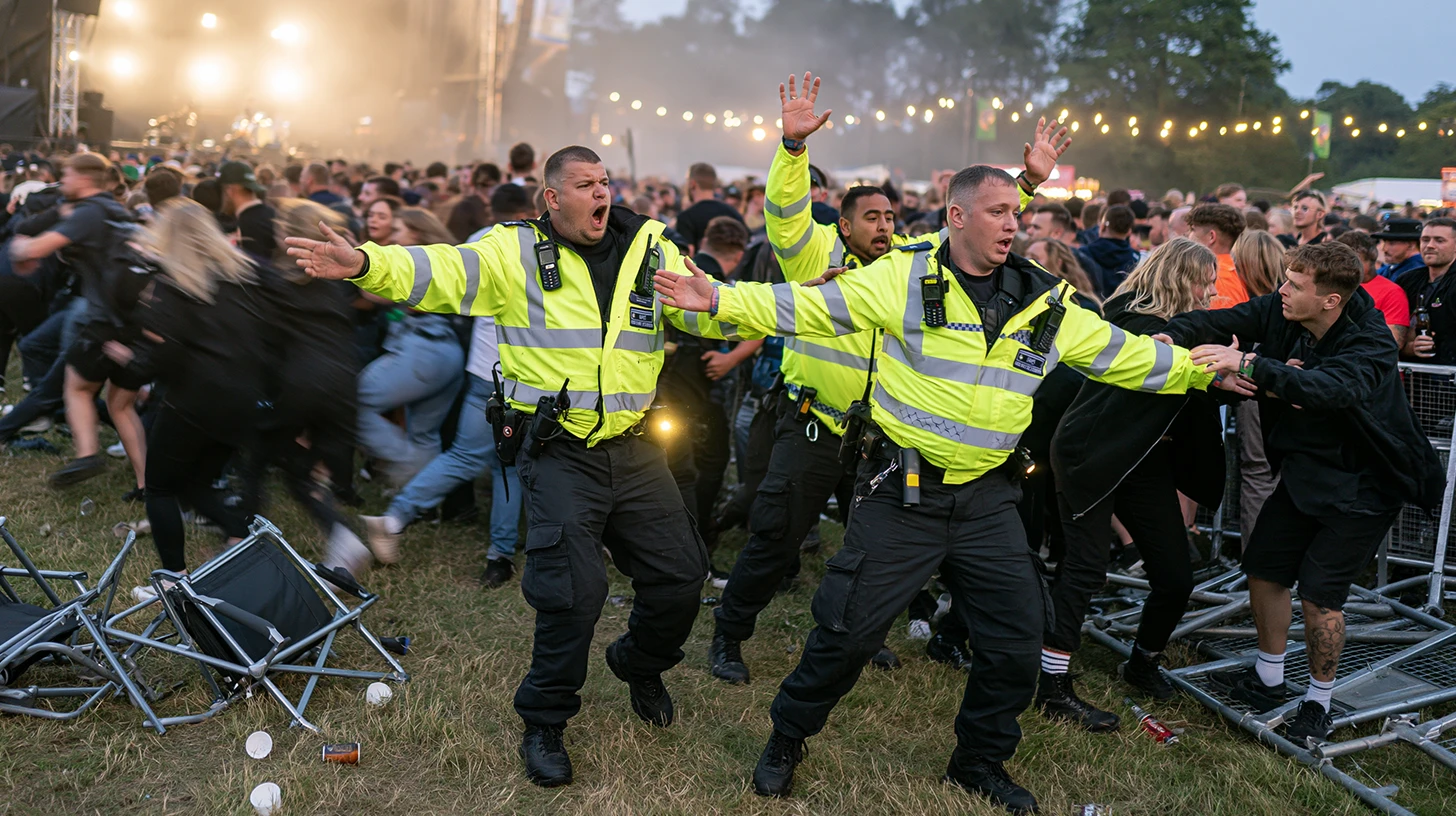
This operational reality creates significant vulnerabilities. Without a consistent, thorough vetting process, event stewarding and security teams can unknowingly include individuals with fraudulent employment history, undisclosed criminal records, active financial pressures that make them susceptible to corruption, or connections to criminal networks.
BS 7858
Background checks covering BS 7858 are specifically recommended for Security Industry Authority SIA-regulated roles such as event security personnel and door supervisors, as well as CCTV operators and staff working at restricted or notable venues for public events, concerts, and functions.
The consequences of failing to properly vet individuals employed in these roles go far beyond a single incident. A security operative with a hidden violent history assaulting an attendee, staff members facilitating drug access backstage, or a team member exploiting access to secure areas for criminal purposes each of these scenarios carries devastating reputational, financial, and legal consequences for event organisers and security services providers alike.
The Pros: Why You Should Vet Your Event Security Team
Genuine Risk Reduction and Compliance
BS7858 screening reduces risks and identifies potential issues before they become a problem. In an environment where security failure can have very public and very serious consequences, catching a red flag before someone steps on-site is far preferable to managing a crisis after the fact. It also supports compliance with SIA licensing requirements and provides employers peace of mind when deploying staff into sensitive roles.
Proper Vetting
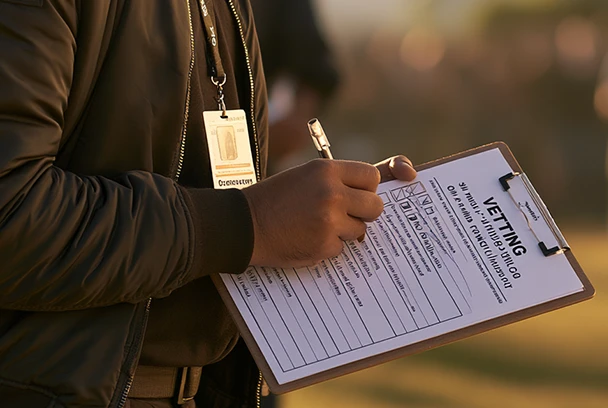
Event organisers, local authorities, and venue owners are increasingly demanding evidence of proper vetting when awarding contracts. Holding BS 7858-compliant processes, particularly if your company is part of the SIA Approved Contractor Scheme, demonstrates that you are a professional, accountable operator. Organisations seeking to join the Approved Contractor Scheme must demonstrate adherence to industry standards, including BS 7858.
Higher Quality Hires and Stronger Teams
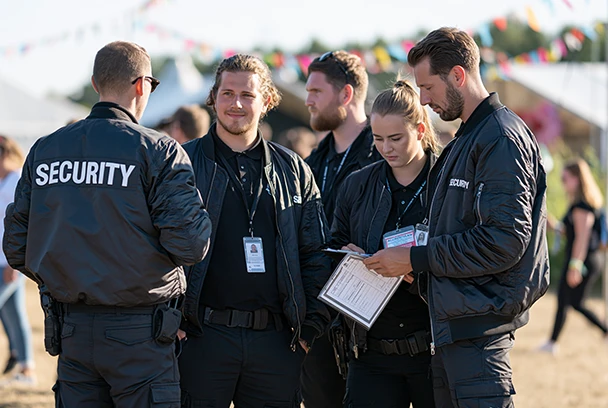
With a thorough screening process in place, you can be confident that your employees are reliable and have the qualifications and experience they actually claim to have. The event security industry has historically struggled with fraudulent CVs, inflated experience claims, and forged SIA licences. Thorough background screening removes this risk systematically.
Knowing that all staff members go through rigorous event security vetting and screening checks also makes the workplace safer and gives employees confidence that their wellbeing is taken seriously. Attendees and vulnerable adults at events are better protected when the team managing their safety has been properly assessed to the same standards every time.
Legal Protection and Reputational Safeguarding
In the event of an incident, a fully documented BS7858 screening process demonstrates due diligence. It provides evidence that the organisation took all reasonable steps to assess each candidate's suitability a critical consideration in any subsequent investigation, civil claim, or licensing review.
Security breaches, fraud, or misconduct of any kind do not look good to clients or stakeholders. A single high-profile incident linked to an unvetted member of your security team can end contracts, permanently damage your company's reputation, and in extreme cases, result in the loss of your operating licence.
The Cons: The Challenges of BS 7858 Vetting for Event Security
Honesty requires acknowledging that BS 7858 vetting, while essential, is not without its practical difficulties, particularly in the fast-moving event security space.

Turnaround Times and Operational Pressure
Completing thorough background checks generally takes an average of two weeks, and can take longer depending on the evidence required. In event security, where staff are often booked at short notice sometimes days before a large event this turnaround can create real pressure.
Agencies may find themselves stretched between the need to fill rosters quickly and the requirement to complete screening before deployment. The absence of a fast turnaround option remains one of the most common frustrations raised by event security companies managing large-scale bookings.
Cost and Administrative Burden
Smaller companies typically face higher costs due to lower volumes of vetting, and face additional challenges when accessing external services such as credit check firms and third party contractors who specialise in specific elements of the process. In a sector where margins can already be tight, the cost of proper background screening for a large pool of event staff adds up significantly.
The event security workforce is also often made up of people with irregular working histories periods of self-employment, freelance work, travel, or caring responsibilities. A return to work after a period of caring for children, for example, will be identified during screening and must be explained, often with limited documentary evidence if no benefits were claimed during that time. For an industry that regularly draws on diverse, non-traditional career paths, this can slow onboarding considerably.

Not a Legal Requirement and That Is a Problem
BS 7858 is not a legal requirement, but it is considered best practice, especially for companies regulated by the Security Industry Authority or those working with critical infrastructure and sensitive information. This means that less scrupulous operators in the event security space can and sometimes do sidestep the process entirely.
Creating an uneven playing field for those who invest in doing it properly. Top management at professional security services firms must lead from the front on this issue, making BS7858 compliance a non-negotiable part of company culture rather than an optional extra.
| Vetting Component | What It Covers | Risk Level |
|---|---|---|
| Identity & Right-to-Work Checks | Passport/driving licence verification, address history, right-to-work confirmation | 🟡 Medium |
| 5-Year Employment History | Every employer verified for 5+ years; gaps over 31 days must be explained | 🟡 Medium |
| Criminal Records (Basic DBS) | Flags relevant past convictions relevant to the role | 🔴 High |
| Financial Integrity Checks | CCJs, bankruptcies, IVAs, and other financial risk factors | 🟡 Medium |
| Sanctions & Watchlist Screening | Checks against national/international databases for fraud, criminal or terrorist activity links | 🔴 High |
| Social Media Checks | Reviewed both before and after employment | 🟢 Low |
| No BS 7858 Vetting at All | Staff deployed with no verified history, criminal record, or financial background | 🔴 High |
Getting It Right: What Event Security Providers Should Do
Partner with Accredited Screening Services
The challenges above are real, but they do not change the fundamental argument that BS 7858 vetting is non-negotiable for any professional event security operation. The practical solution for many providers is to partner with accredited screening services rather than attempting to manage the process in-house.
Look for agencies holding NSI Gold or SSAIB certification, as these have been independently audited and have demonstrated the highest standards of compliance with the current British Standard. Screening practices at accredited agencies are regularly reviewed by appointed inspectors granted direct access to files to ensure full transparency and strict adherence to BS 7858:2019.
Build a Pre-Vetted Workforce
It is also worth investing in building a pre-vetted, pre-approved pool of event security staff that can be rapidly deployed, rather than scrambling to complete background checks for new candidates ahead of every engagement. This approach reduces time pressure, lowers per-head vetting costs, and ensures that your roster of reliable, cleared operatives from door supervisors and stewards to CCTV operators and event stewarding personnel is ready to go when a contract lands.
The Bottom Line
The event security industry operates at the intersection of public safety, reputation management, and regulatory compliance. BS 7858 vetting is not a bureaucratic inconvenience it is the single most effective tool available to ensure that the people representing your company at some of the UK's most visible events are exactly who they say they are, with the background and integrity the role demands.
For event organisers, it is a question you should always be asking your security provider: are your staff BS 7858 vetted? For security companies, it is a question you should already be able to answer with confidence. In a sector where trust is everything and the stakes are measured in public safety, cutting corners on screening is never worth the risk.