


A comprehensive guide for event organisers navigating SIA licensing, Martyn's Law, risk management, public liability insurance, and counter-terrorism compliance in the UK.
Introduction: Why UK Event Security Regulations Matter
Hosting an event in the UK whether a music festival, corporate conference, sporting event, charity fundraiser, or private celebration carries with it a web of legal responsibilities that every event organiser must understand. From ensuring your security staff hold the correct Security Industry Authority (SIA) licences, to preparing a Martyn's Law compliance plan, to securing appropriate public liability insurance, the regulatory landscape has never been more complex or more important.
The Risks Every Event Organiser Faces
Security risk management sits at the heart of every successful event. Accidents, anti-social behaviour, fire safety breaches, and even terrorist threats are real risks that require careful, structured planning. The good news is that with the right knowledge and preparation, event organisers can manage these risks effectively, protect the public, and avoid the potentially devastating legal and financial consequences of non-compliance.
This guide brings together the key legal requirements, best practice frameworks, and practical guidance that UK event organisers need to know. It covers the SIA licensing framework, Martyn's Law and its tiered compliance obligations, BS 7858 vetting for security teams, event licensing under existing laws, ACT counter-terrorism training, and the critical role of public liability insurance and other insurance policies in protecting your event and your business.
SIA Licensing: The Foundation of Event Security
The Security Industry Authority (SIA) is the statutory regulator of the UK's private security industry, operating as an independent executive non-departmental public body reporting to the Home Secretary under the Private Security Industry Act 2001. The Security Industry Authority SIA has two principal duties: the compulsory licensing of individuals undertaking designated security activities, and the management of the voluntary Approved Contractor Scheme, which benchmarks private security suppliers against independently assessed criteria.
What Is the Security Industry Authority?
For event organisers, understanding the SIA's role is not optional it is a legal necessity. Any security staff you hire who carry out licensable activities without a valid SIA licence are committing a criminal offence, and you as the event organiser may be held responsible if your security provider is non-compliant.
Who Needs an SIA Licence at Your Event?
The critical principle to understand is that it is not the job title that determines whether a licence is required it is the activity performed. The following activities at events are licensable under the Private Security Industry Act 2001 and require valid SIA documentation:
| Service | Description |
|---|---|
| Entry Screening | Screening individuals for suitability to enter a venue, including checking for signs of intoxication, drug use, or anti-social behaviour. |
| Searches | Searching people and property to prevent unauthorised or illegal items entering the event. |
| Incident Response | Responding to incidents within crowds or queues to control dangerous or anti-social behaviour. |
| Secure Area Protection | Protecting a designated secure area such as a pitch or backstage zone from unauthorised access. |
| Crime Prevention | Providing a security presence to prevent and detect crime within a defined area. |
| Property Guarding | Guarding property or equipment during event set-up and breakdown. |
| Perimeter Patrol | Patrolling the event perimeter to prevent unauthorised access. |
| Close Protection | Providing close protection for performers, VIPs, or corporate guests. |
| CCTV & Surveillance | Conducting CCTV monitoring or surveillance as part of a guarding role. |
Conversely, certain roles do not require an SIA licence, including customer service and ticketing staff who direct patrons, stewards responsible for crowd flow and evacuation procedures, and volunteers (provided they receive no financial benefit or reward).

2025 SIA Licensing Updates: What Organisers Must Know
The Security Industry Authority introduced the most significant overhaul to its licensing criteria in December 2025. Following a public consultation that received over 3,392 responses, the updated framework expanded the range of criminal offences considered in licensing decisions to include human trafficking, modern slavery, digital abuse offences, domestic violence, public order offences, tax evasion, and company law violations. Overseas criminal record checks were also extended from five to ten years.
Verifying SIA Licences and Refresher Training
Mandatory refresher training was introduced from April 2025 for door supervisors and security guards renewing their licences, covering updated security practices, legal changes, and modern technology applications. Event organisers should verify that any security staff engaged after this date have completed this training as part of their licence renewal.
For event organisers, the practical takeaway is straightforward: always verify that your security provider's staff hold a valid, current SIA licence before the event. You can check the SIA register online. If you are engaging an event security guard company, then verify their accreditation is current on the SIA website.
Choosing a Compliant Security Provider
Your choice of security provider has a significant impact on both the safety and the legal standing of your event. Before signing any contract, carry out due diligence including the following checks:
- Confirm the company has relevant experience at events similar in size and nature to yours
- Verify the company holds appropriate insurance policies, including public liability insurance
- Check whether the company is an SIA Approved Contractor if this is required for your event
- Request evidence of staff vetting procedures, assignment instructions, and contingency planning documentation
- Confirm VAT and PAYE compliance and request the company's registration numbers
- Clarify who is responsible for licensing checks if the provider uses subcontractors or labour providers
- Assess what counter-terrorism awareness training security staff have completed beyond the minimum required for licensing
It is worth noting that the events sector in the UK is valued at approximately £42.3 billion. Cutting corners on security requirements in such a significant industry is not only legally dangerous it carries severe reputational risks for event organisers.

BS 7858 Vetting: Screening Your Security Team
BS 7858 is the British Standard for the vetting and screening of individuals employed in a security environment. While SIA licensing addresses the legal right of an individual to work in a licensable security role, BS 7858 vetting goes further it establishes the process by which their background, identity, employment history, and character are assessed before deployment.
For event organisers in the security industry, BS 7858 vetting provides assurance that security staff are not only legally licensed but also genuinely trustworthy and appropriate for their role. Key elements of the vetting process include identity verification, five-year employment history checks, financial background screening, and criminal record checks beyond those required for SIA licensing alone.
Requiring BS 7858 Standards From Your Security Provider
Responsible event organisers should require that any security provider can demonstrate its staff have been vetted to BS 7858 standards. This is particularly important for roles involving access to cash handling, sensitive areas of a venue, or close proximity to vulnerable groups such as children. Fail to demand this standard, and you may find yourself held responsible for security staff who pose a risk to the public and your event.
Martyn's Law: New Terrorism Protection Requirements for Events
Martyn's Law formally the Terrorism (Protection of Premises) Act 2025 is landmark legislation introduced following the 2017 Manchester Arena attack that killed 22 people, including Martyn Hett after whom the law is named. The Act received royal assent in April 2025 and represents the UK government's most significant legislative response to terrorist threats at public venues and events.
What Is Martyn's Law?
Following royal assent, the government built in a mandatory implementation phase of at least 24 months before the law's requirements become legally enforceable. This means Martyn's Law compliance is expected to become legally required from approximately 2027, giving event organisers and venues time to prepare. During this implementation phase, the SIA is being established as the regulatory body responsible for enforcement, and the Home Office will publish statutory guidance to help organisations understand their obligations.

Who Does Martyn's Law Apply To?
Martyn's Law casts a wide net across public-facing organisations. It applies to qualifying premises locations with regular public access, at least one building, and that are used for activities listed in Schedule 1 of the Act (such as retail, entertainment, leisure, hospitality, education, or healthcare). The critical threshold is capacity: if it is reasonable to expect 200 or more people to be present at the same time (including staff), the premises falls within the scope of the Act.
Venues and Events Within Scope of Martyn's Law
Over 250,000 premises across the UK are estimated to fall within scope, including hotels, restaurants, bars, nightclubs, cinemas, museums, large shopping centres, hospitals, schools, major arenas, and sporting events venues. It is not limited to concert arenas or stadiums any business or organisation hosting significant numbers of people in publicly accessible spaces should assess whether Martyn's Law applies to them.
One-off events are also covered. Qualifying public events held outside permanent venues such as music festivals in parks or temporary outdoor gatherings will fall under Martyn's Law if they expect 800 or more attendees at any one time and have controlled entry such as ticketing or security checks. This ensures large open-air events carry the same security obligations as permanent venues.
The Tiered Framework: Standard and Enhanced Duties
Martyn's Law establishes a two-tier framework of obligations based on venue capacity:
Standard Tier (200–799 Capacity)
Venues and events in the standard tier are required to register with the SIA and have in place appropriate public protection procedures practical plans covering how staff should respond if a terrorist attack occurs on-site or nearby. These procedures must address four key areas:
Four Key Areas of Procedure
EVACUATION:
Swiftly moving people out of the venue to safety.
INVACUATION:
Sheltering people in a secure area on-site when evacuation isn't safe.
LOCKDOWN:
Securing the premises against external threats.
COMMUNICATION:
Informing and guiding people on the premises during an incident.
The standard tier focus is on planning and training rather than expensive physical upgrades. The law does not require standard-tier premises to install new security equipment. Developing an emergency action plan, training staff, and conducting evacuation procedures drills are the primary compliance measures. This mirrors the approach already familiar to most organisations through fire safety regulations.
What compliance looks like

Emergency Action Plan: A documented plan for staff to follow in the event of an attack.

Staff Training: Training relevant staff on procedures and their individual responsibilities.

Evacuation Drills: Conducting regular practice drills to test and refine procedures.
Enhanced Tier (800+ Capacity)
Enhanced duty premises venues or events where 800 or more people are expected simultaneously face significantly more demanding obligations. In addition to all standard tier requirements, enhanced-tier venues must implement public protection measures: tangible security steps to reduce vulnerability to terrorist attacks and limit harm if one occurs.
Public Protection Measures
CCTV:
Enhanced monitoring across the venue and surrounding perimeter.
BAG SCREENING:
Bag checks or metal detectors at entry points.
ACCESS CONTROL:
Stricter protocols governing who can enter restricted areas.
PERIMETER SECURITY:
Hostile vehicle mitigation barriers and boundary improvements.
Enhanced-tier venues must also produce a written security plan or risk assessment documenting the procedures and measures in place, which must be submitted to the SIA. Additionally, any organisation (other than a sole trader) operating an enhanced duty premises must appoint a senior leadership representative a senior manager as the responsible person for Martyn's Law compliance. This individual ensures the business meets its obligations under the Act.
Additional Compliance Obligations

Written Security Plan: A documented risk assessment of all procedures and measures, submitted to the SIA.

Responsible Person: A named senior manager accountable for Martyn's Law compliance (not required for sole traders).

SIA Registration: All enhanced-tier premises must register with the Security Industry Authority.
Enforcement and Penalties
Once the implementation phase concludes and Martyn's Law becomes enforceable, the SIA will have significant powers including issuing compliance notices, imposing financial penalties, and serving restriction notices that limit how a venue operates. Certain offences may also carry criminal liability for those held responsible for non-compliant premises. However, the SIA has stated its primary approach is to support and guide businesses toward compliance rather than to penalise minor failings.
Preparing for Martyn's Law Now
Event organisers should not wait until the implementation phase ends to begin preparing. Practical steps to take now include:
| Step | Action |
|---|---|
| 1 | Assess your event's typical and maximum capacity to determine which tier applies |
| 2 | Identify the responsible person in your organisation who will lead Martyn's Law compliance |
| 3 | Conduct a preliminary risk assessment considering how terrorist threats might materialise at your specific venue or event |
| 4 | Review your existing emergency plans and expand evacuation procedures to cover non-fire scenarios |
| 5 | Train staff in counter-terrorism awareness using free government-approved resources on ProtectUK |
| 6 | Begin documenting all security planning efforts — this will be required for enhanced-tier venues and is good practice for all |
| 7 | Integrate Martyn's Law planning into your existing risk management and safety planning frameworks |
Many organisations find that Martyn's Law planning aligns naturally with existing health and safety practices. The same principle of proportionate, reasonably practicable measures applies across fire safety, Martyn's Law, and general health and safety law meaning compliance need not be approached in isolation.
ACT Counter-Terrorism Training for Event Security Teams
The UK has experienced a number of terrorist attacks in crowded public spaces in recent years. The National Counter Terrorism Security Office (NaCTSO) has developed the Action Counters Terrorism (ACT) programme a comprehensive suite of counter-terrorism awareness training resources designed specifically for individuals working in public-facing environments including events.
The SIA requires that its Approved Contractors ensure their security staff are appropriately trained in counter-terrorism awareness. It is strongly recommended that all event organisers similarly ensure that their security staff and wider event teams have completed relevant ACT counter terrorism awareness training before deployment.
What ACT Training Covers
The ACT programme aims to achieve three core outcomes for event security teams and event organisers:
- Help participants understand the threat of terrorism in the UK and the nature of current terrorist threats
- Guide individuals on what to do if they become involved in a terrorist incident or encounter activity that appears to be planning for an attack
- Enable security staff and event personnel to recognise and report suspicious activity and suspicious behaviour
ACT training is available at multiple levels, from basic awareness for general staff to more detailed training for senior leadership and security managers. The ProtectUK platform hosts free, government-approved online training that is accessible to all organisations. The See, Check and Notify (SCaN) programme also provides targeted training to help staff identify suspicious activity in and around event venues.

Integrating Counter-Terrorism Awareness into Event Security Planning
Counter-terrorism awareness should be embedded into your security planning from the earliest stages of event preparation. This means including it within briefing documents for all security staff, incorporating threat level assessments into your risk assessment process, establishing clear procedures for reporting suspicious behaviour, and ensuring security staff understand the specific vulnerabilities of your event site.
As part of your contingency planning, it is good practice to run tabletop exercises that test how your security team would respond to a terrorist incident. These exercises do not need to be elaborate even a simple discussion of roles and responsibilities during a simulated attack scenario improves preparedness significantly and demonstrates a good faith effort toward appropriate public protection procedures.
Risk Assessment and Security Risk Management
Why Risk Assessment Is Central to Event Safety
Under the Health and Safety at Work Act 1974 and the Management of Health and Safety at Work Regulations 1999, event organisers must conduct detailed risk assessments to safeguard both workers and attendees. Failure to carry out appropriate risk assessments can result in significant fines, legal penalties, and personal liability if something goes wrong at your event.
A thorough risk assessment is also the foundation of effective security risk management. Without a clear understanding of the risks specific to your event from crowd management challenges and anti-social behaviour to fire safety risks, equipment failures, and hostile vehicle threats it is impossible to put in place proportionate and appropriate security measures.
Key Areas Your Risk Assessment Should Address
Comprehensive risk assessment for events should cover the following key areas:
| Risk category | Description | Risk level |
|---|---|---|
| Crowd management | Assessing how crowds will flow through your venue, identifying potential bottlenecks, and determining how you will respond to overcrowding or crushing. | 🔴 High |
| Fire safety | Identifying fire risks, evacuation routes, and fire safety equipment requirements. | 🔴 High |
| Terrorist threats | Considering the threat level relevant to your event type and location, and identifying vulnerabilities that could be exploited. | 🔴 High |
| Medical emergencies | Planning for first aid provision and establishing emergency response protocols. | 🔴 High |
| Anti-social behaviour | Assessing the likelihood and potential impact of unruly behaviour, disorder, or violence among attendees. | 🟠 Medium |
| Suspicious behaviour | Establishing how staff will identify and report concerns regarding suspicious individuals or activity. | 🟠 Medium |
| Equipment failure | Considering the impact if critical systems such as communications, lighting, or PA fail during the event. | 🟠 Medium |
| Weather conditions | For outdoor events and music festivals, assessing risks posed by adverse weather and environmental conditions. | 🟢 Low |
| Vulnerable attendees | Considering the specific risks posed to children, elderly attendees, or people with disabilities. | 🟢 Low |
Contingency Planning: Stress-Testing Your Event
Risk management does not end with risk assessment it must also include contingency planning to prepare for worst-case scenarios. Contingency planning, sometimes called stress-testing, involves running through hypothetical emergency scenarios to clarify how your security staff and event team would respond.
Standard scenarios
Plan for include terrorist incidents, serious crime, natural disaster, medical emergency, missing persons, equipment failure, and loss of communications. For most events, there may not be an opportunity for a live exercise, but tabletop exercises with your security team and event management team are valuable for identifying gaps and ensuring everyone understands their roles and responsibilities during an emergency.
Every security staff member should have a clear job description detailing the activities they are responsible for, their licensable status, and the locations within your event where they will be working. Clear roles reduce confusion in emergencies and support more effective emergency response.
Event Licensing and Legal Permissions
Beyond security-specific regulation, event organisers must navigate a range of licensing and legal permissions under UK law. The Licensing Act 2003 governs the sale of alcohol, regulated entertainment, and late-night refreshments in England and Wales. If your event includes any of these activities, you will need to hold or operate under a valid premises licence, or apply for a Temporary Event Notice (TEN).
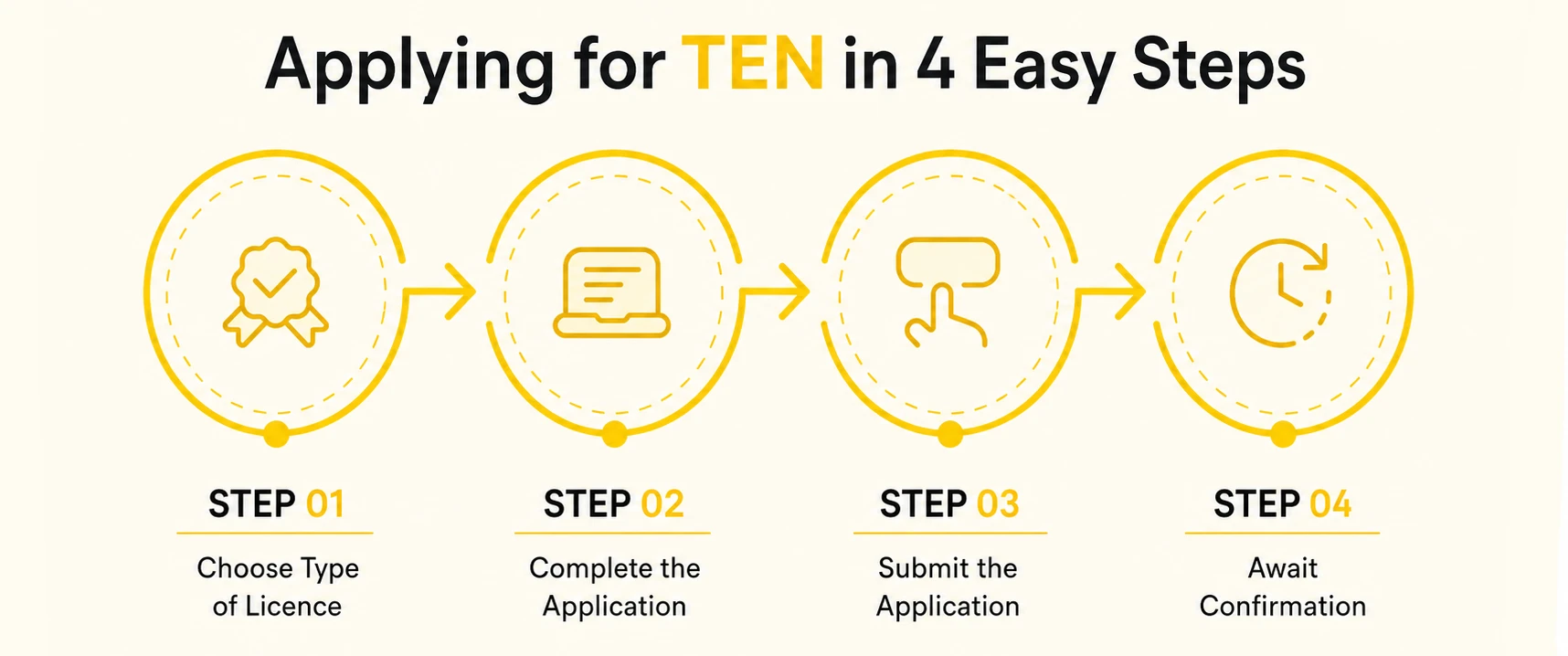
TENs, Deadlines, and When Existing Licences Are Not Enough
Many venues already hold premises licences that cover standard activities. However, if you are taking your event to an unlicensed venue, hosting in a public space such as a park, or operating outside the conditions of an existing licence, you will need to apply for a TEN. Applications for TENs must be submitted to the local authority at least ten working days before the event. In London and other major cities, event licences for larger events on public land may require a longer lead time and more detailed planning documentation.
Additional permissions that may be required for your event include:
| Permission Type | When Required |
|---|---|
| Premises licence | Permanent venues serving alcohol or hosting regulated entertainment |
| Temporary Event Notice | Events outside existing licensed premises |
| Street trading licence | Outdoor food and retail stalls |
| Road closure order | Events affecting public highways |
| Planning permission | Temporary structures or large-scale outdoor events |
| Public entertainment licence | Certain jurisdictions |
Event organisers should also be aware that some local authorities particularly where events are held on council land require proof of appropriate public liability insurance and evidence of a risk assessment before granting permission. Public events like festivals or fireworks displays on public land may require coverage of at least £5 million as a condition of the permission.
Public Liability Insurance: Protecting Your Event and Your Business
What Is Public Liability Insurance?
Public liability insurance is a type of insurance in the UK designed to protect businesses, event organisers, and individuals if a member of the public makes a claim against them for injury or property damage caused by their activities. Public liability is one of the most critical forms of protection for anyone organising an event, regardless of its size or nature.
While public liability insurance is not in itself a legally required form of coverage for most events (unlike employers liability insurance, which is legally required if you have employees), it is very strongly recommended and, in practice, frequently required by venues, local authorities, and event partners. Many venues will not allow you to hold an event on their premises without proof of an appropriate public liability insurance policy. Many organisations and councils that own public spaces similarly insist on adequate public liability before granting permission.
What Does Public Liability Insurance Cover for Events?
An event public liability insurance policy provides protection for you, your employees, and your organisation against claims from third parties including attendees, vendors, or venue managers in the event of accidents at your event where you are at fault. Specifically, public liability insurance for events typically covers:
| Coverage Type | What It Protects Against |
|---|---|
| Accidents and injuries | Bodily injury claims from attendees, vendors, or third parties caused by event activities |
| Property damage | Claims where a third party's belongings or property are damaged as a result of your event |
| Legal fees | Cost of legal representation and defence if a claim is made against you |
| Compensation costs | Compensation payable to a claimant if a claim is upheld |
Unlike standard business public liability insurance, which applies to your usual workplace settings, event-specific public liability cover is tailored for gatherings held outside your regular business premises. If hosting events is a core part of your business, this type of insurance policy provides the specialised protection you need.
How Much Public Liability Cover Do You Need?
The level of public liability cover you need will depend on a range of factors including the size of your event, the number of attendees expected, the nature of the activities involved, and the requirements of your venue or local authority. For public events held on council land, many authorities require a minimum of £5 million in public liability insurance. For larger events with thousands of attendees, £10 million or higher may be appropriate.
When determining the right level of cover, factor in the associated risks of your specific event type. A music festival with large crowds carries different risks to a corporate conference or private party. Your insurer or insurance broker can help you assess the appropriate level of public liability cover based on your event profile.
Optional Extras and Additional Insurance Cover
Many insurers offer event-specific insurance policies that combine public liability with a range of additional coverage options. These optional extras are worth considering depending on the nature and scale of your event:

Event Cancellation Insurance
Event cancellation insurance protects you if your event is cancelled, postponed, or curtailed due to unforeseen circumstances beyond your control such as extreme weather, a key performer pulling out, or a public safety emergency. Without this cover, you could face significant financial losses from non-refundable venue deposits, supplier payments, and lost revenue.

Employers Liability Insurance
Employers liability insurance is legally required for most businesses with employees in the UK. It provides cover for damages and legal defence costs if an employee including temporary event staff becomes ill or injured while working at your event. If you are hiring security staff, catering teams, or any other paid workers for your event, employers liability insurance is a legal obligation, not merely an option.

Equipment Cover
Equipment cover protects your event equipment against theft or damage, including repair or replacement costs for items ranging from tables and chairs to specialist audio and lighting equipment. For events with significant technical infrastructure, this protection is particularly valuable. In the event of equipment damage that disrupts your event, equipment cover reduces the financial impact by covering repair or replacement costs.

One-Off Event Insurance
Many insurers offer one-off event insurance also known as temporary public liability insurance specifically designed for single events or short-term situations. This type of policy is ideal for event organisers who are not in the business of running regular events, providing comprehensive protection for a specific duration, which could range from a single day to several months. One-off events like private parties, community gatherings, and charity events can all benefit from this flexible cover.
How Much Does Event Insurance Cost?
The cost of event insurance varies considerably depending on factors including:
- More attendees = higher risk = higher premium
- Event type = festivals, sports, and outdoor events are higher risk than conferences or indoor parties
- Amount of public liability cover needed
- Duration = single day, multi-day, or annual
- Add-ons = e.g. cancellation cover or employers liability
| Event Type | Attendees No. | Cover Level | Estimated Cost | Risk Level |
|---|---|---|---|---|
| Private Party / Birthday | Up to 50 | £1,000,000 | From £25 – £46 | 🟢 Low |
| Children's Party / Wedding Reception | Up to 250 | £2,000,000 | £50 – £90 | 🟢 Low |
| Indoor Exhibition / Conference | ~200 | £1,000,000 | ~£65 | 🟢 Low |
| Community Fête / Charity Fundraiser | 100 – 500 | £2,000,000 | £60 – £120 | 🟡 Medium |
| Street Party / Public Outdoor Event | 100 – 500 | £5,000,000 | £80 – £150 | 🟡 Medium |
| Corporate Event / Product Launch | Up to 500 | £5,000,000 | £100 – £200 | 🟡 Medium |
| Outdoor Music Event / Live Concert | Up to 2,000 | £5,000,000 | £200 – £350 | 🔴 High |
| Sporting Event | 500 – 2,000 | £5,000,000 | £150 – £400 | 🔴 High |
| Music Festival (Multi-Day) | 2,000+ | £10,000,000 | £500 – £1,500+ | 🔴 High |
| Fireworks Display | Any size | £10,000,000 | £200 – £800+ | 🔴 High |
As a rough guide, small events such as birthday parties may start from around £25. Medium-size events such as weddings and conferences typically cost between £50 and £200. Large events such as festivals or major sporting events may cost £1,500 or more. Event organisers should obtain quotes from multiple providers and compare policy terms carefully.
Public Liability vs. Employers Liability vs. Professional Indemnity
It is worth understanding how the main types of business insurance differ and how they relate to event management:
Public liability insurance covers claims from third parties attendees, visitors, or members of the public who suffer injury or property damage due to your event activities. This is the primary insurance protection for event organisers.
Employers' liability insurance protects your business against claims from your own employees or paid staff who experience work-related injury or illness. In the UK, this is legally required for businesses with employees.
Professional indemnity insurance protects businesses against claims arising from professional advice or services that result in financial loss for a client. This is more relevant to event management companies and consultants than to one-off event organisers.
Security Planning and Crowd Management Best Practice
Building Your Event Security Plan
Effective security planning is not something to address in the days before your event it should be integrated into your event planning from the very earliest stages. A comprehensive event security plan documents your risk assessment findings, your security arrangements, your staffing plan, your emergency response procedures, and your contingency planning.

Key elements of a robust event security plan include:
- Site Map: A site map identifying all access and exit points, security checkpoints, and emergency evacuation routes
- Roles & Responsibilities: Clear roles and responsibilities for all security staff, stewards, and event management personnel
- Crowd Management: Strategies including how queuing, entry, and movement within the venue will be managed
- Emergency Response: Protocols for a range of scenarios including medical emergencies, fire, and terrorist incidents
- Communication: Arrangements including how security staff will communicate with each other and with emergency services
- Evacuation: Procedures covering primary and secondary evacuation routes and assembly points
- Vulnerable Attendees: Arrangements for managing those with disabilities or additional needs
- Suspicious Behaviour: Procedures for identifying and reporting suspicious behaviour and activity
Crowd Management: Protecting Public Safety
Crowd management is one of the most technically demanding aspects of event security, particularly for large events and outdoor music festivals. Poor crowd management has led to some of the most tragic incidents in UK events history from the Hillsborough disaster to the crowd crush at the Astroworld festival in the United States. Understanding how crowds behave, how pressure builds, and how to manage flow safely is essential.
Effective crowd management strategies include careful monitoring of entry and exit flows, defined capacity limits, trained stewards positioned to observe and manage crowd behaviour, real-time communication between security teams, and clear public safety messaging. Technology increasingly plays a role here AI-based crowd tracking, drone monitoring, and real-time analytics can help security teams identify risks before they escalate.
Fire Safety at Events
Fire safety is a legal obligation and a core component of public safety at any event. Event organisers must ensure that all temporary structures, staging, and installations comply with fire safety regulations, that adequate fire exits and evacuation procedures are in place, that fire safety equipment is appropriately positioned and maintained, and that all staff are briefed on fire evacuation procedures. Fire safety risk assessments must be documented and should be reviewed as part of your broader event risk management process.
Staff Training: Building a Safety-Conscious Event Team
Security measures are only as effective as the people implementing them. Staff training is therefore a critical investment for any event organiser. All event staff not just security staff should receive basic briefings covering emergency response procedures, evacuation routes, and how to recognise and report suspicious behaviour. Security staff should receive more detailed training appropriate to their specific roles and responsibilities.
SIA-licensed security staff are required to have completed training to obtain their licence, including first aid qualifications. Beyond this baseline, responsible event organisers should ensure their security teams have also completed ACT counter-terrorism awareness training. Senior leadership within your security operation should additionally be familiar with Martyn's Law obligations and the specific requirements of your event's tier classification.
Bringing It All Together: A Compliance Checklist for Event Organisers
Navigating the full range of UK event security regulations can feel overwhelming. The following checklist provides a high-level overview of the key compliance areas every event organiser should address. This is intended as a guide to key areas it is not exhaustive, and appropriate independent legal or professional advice should be sought for your specific circumstances. Navigate to our full comprehensive event planning guide for a more in-depth checklist and further in-depth event security regulations and compliance.

SIA Licensing
- Confirm all security staff performing licensable activities hold valid SIA licences
- Verify the licence status of each individual through the SIA online register
- If using an SIA Approved Contractor, confirm their accreditation is current
- Ensure security staff renewing licences from April 2025 have completed mandatory refresher training
BS 7858 Vetting
- Require your security provider to confirm all security staff have been vetted to BS 7858 standard
- Pay particular attention to vetting for staff in sensitive roles involving access to vulnerable groups or restricted areas
Martyn's Law
- Assess your event capacity and determine whether standard tier or enhanced tier obligations apply
- Identify the responsible person for Martyn's Law compliance in your organisation
- Develop or update your terrorism emergency response plan covering evacuation procedures, evacuation, lockdown, and communication
- For enhanced duty premises, prepare a written security plan to submit to the SIA when required
- Register with the SIA when the notification requirement comes into force
- Access free training and guidance through ProtectUK
ACT Counter-Terrorism Training
- Ensure all security staff have completed counter-terrorism awareness training
- Provide wider event staff with basic ACT awareness through ProtectUK online resources
- Conduct tabletop exercises to test your team's response to terrorist scenarios
Event Licensing
- Confirm whether your event requires a premises licence, TEN, or other local authority permissions
- Apply for all required permissions with adequate lead time
- Check local authority requirements for public liability insurance levels on public land
Risk Assessment
- Conduct and document a comprehensive risk assessment covering all identified risks
- Include crowd management, fire safety, anti-social behaviour, and terrorist threats in your assessment
- Develop contingency plans for identified worst-case scenarios
- Review and update your risk assessment as your event planning evolves
Public Liability and Event Insurance
- Secure adequate public liability insurance for your event minimum £5 million for most public events
- Consider additional cover including event cancellation, employers liability, product liability, and equipment cover
- If you have paid employees, ensure employers liability insurance is in place this is legally required
- For one-off events, consider temporary public liability insurance policies tailored to short-term needs
- Check your insurance policies carefully to ensure they cover all activities planned at your event