


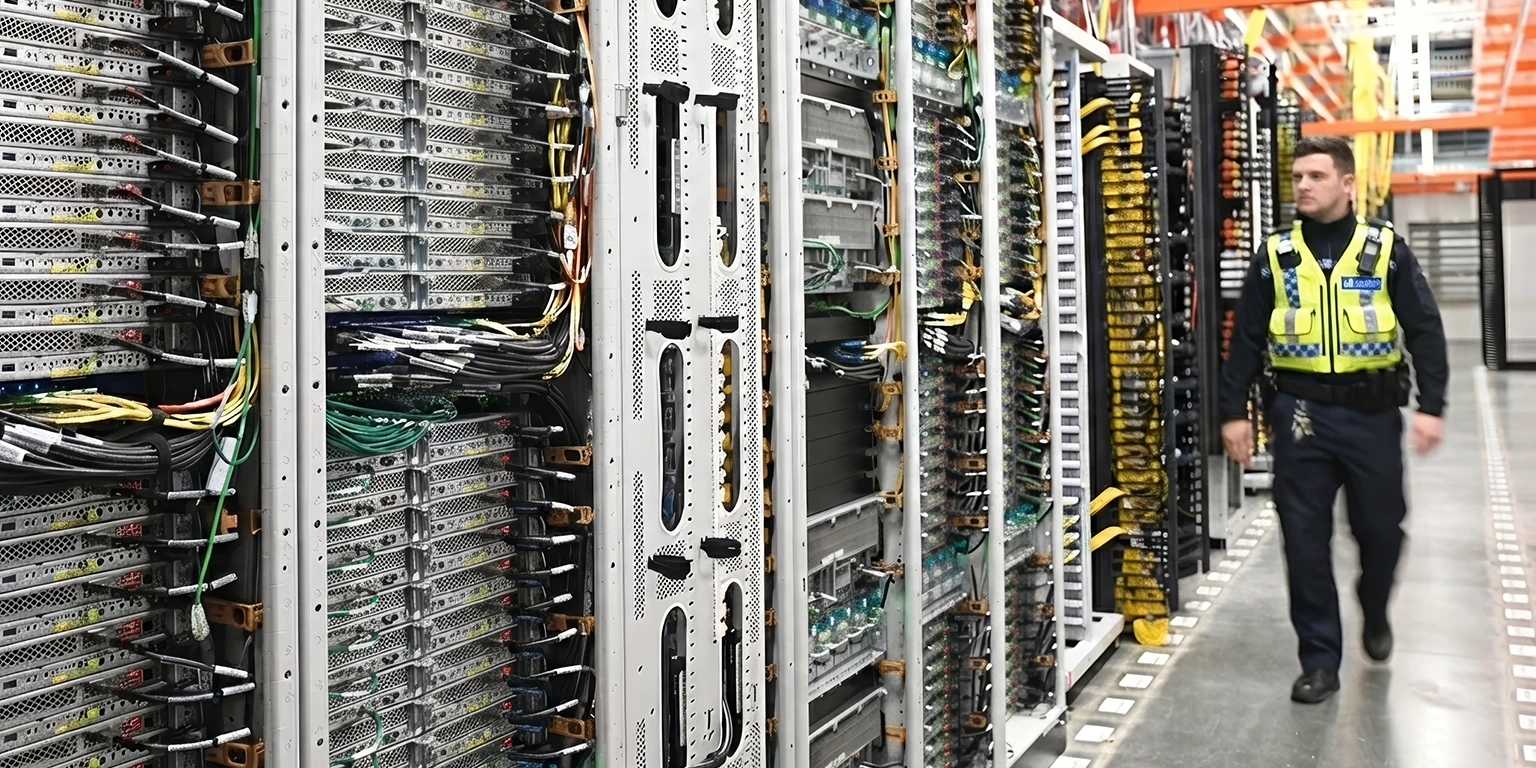

When you walk into a corporate office, a hospital, or a government building, one of the first things you encounter is a security guard. That security guard does not allow just anyone to walk through the doors. They check credentials, control access, watch for suspicious behaviour, and respond swiftly to any breach that threatens the safety of the building and the people inside. Now consider your organisation's data. Approaching data security with the same discipline, vigilance, and clear set of protocols as a skilled security guard is not merely a useful analogy; it is the very mindset that underpins robust data security in today's digital landscape.
Data is one of the most valuable assets any organisation holds. Whether it is customer data, financial records, medical files, or intellectual property, sensitive information must be guarded with the same seriousness that a professional security guard applies to protecting physical assets. Without the right security measures in place, data breaches can result in enormous financial loss, damaged reputations, and significant consequences for both individuals and businesses alike. The good news is that by adopting structured data security best practices, organisations can dramatically reduce the risk of data loss and unauthorised access.
Understanding the Threat Landscape
A security guard does not stand idle, waiting for trouble to arrive. They actively scan for potential threats, assess risk, and take preventative action. In the same way, a proactive approach to data security requires organisations to understand the full range of cyber threats they face. In today's digital landscape, threats evolve rapidly from sophisticated cyber attacks and ransomware to insider threats from disgruntled employees. Recognising these dangers is the first step towards building a resilient information security framework.
Data breaches can occur in many ways. Cybercriminals may exploit software vulnerabilities, conduct phishing attacks to steal login credentials, or compromise personal devices to gain a foothold within an organisation's network. Once inside, they can exfiltrate sensitive data, including personal data relating to customers and employees, confidential data such as trade secrets, and critical data that underpins critical systems. The consequences of such data breaches extend far beyond the immediate disruption they can trigger data protection laws violations, legal consequences, and lasting reputational damage.
Insider threats are a particularly nuanced category of security threats. Just as a corrupt security guard who knows the building's layout could be more dangerous than an outside intruder, employees who have legitimate data access can pose significant risks if they misuse their privileges, whether intentionally or through negligence. Businesses rely on their staff to handle sensitive information responsibly, which means that human behaviour is itself a critical variable in any data security programme.
Physical Security: The First Line of Defence
A security guard's most visible role is protecting physical assets the building, its equipment, and the people within. For organisations, physical security is equally a fundamental aspect of good governance. Servers, workstations, backup drives, and filing cabinets containing confidential information must all be physically secured against unauthorised access. Locked server rooms, access-controlled data centres, CCTV monitoring, and strict visitor management protocols are all essential components of a comprehensive physical security strategy.
It is easy to overlook the physical dimension of information security in an era focused on cyber threats, but the risks remain very real. A thief who walks out with an unencrypted laptop has potentially gained access to a treasure trove of sensitive information. Similarly, an employee who leaves a screen unlocked and unattended in a public area may inadvertently expose confidential data to unauthorised users. Physical security measures including clean desk policies, secure printing, endpoint protection protocols, and the proper disposal of physical assets are every bit as important as digital safeguards.
A reputable security company understands that protecting physical assets and digital assets are two sides of the same coin. When security professionals design a comprehensive security programme for a client, they consider both dimensions together. Organisations should do the same, ensuring that physical access to areas where stored data resides is restricted to authorised personnel only, with robust audit trails that record every entry and exit.

Access Controls: Knowing Who Gets Through the Door
One of the most fundamental aspects of a security guard's role is access control. They ensure that only those with valid credentials can enter restricted areas. In the digital world, access controls serve exactly the same purpose they determine who can interact with company systems, which resources they are permitted to use, and what actions they may perform. Robust access controls are a cornerstone of data security best practices and play a vital role in preventing unauthorised access to sensitive information.
Role-based access control (RBAC) is one of the most effective methods for managing access within an organisation. Rather than granting every employee broad access to all systems and data, role-based access control ensures that each individual can only access data relevant to their job function. A member of the finance team, for example, should be able to access financial records but not personnel files; an HR manager should be able to access employee data but not critical systems related to network infrastructure. This principle of least privilege significantly reduces the attack surface available to cybercriminals and also limits the damage that can be caused by insider threats.
Beyond role-based access control, preventing unauthorised access requires the use of strong authentication mechanisms. Multi-factor authentication (MFA) is one of the most effective security measures available to organisations today. By requiring users to verify their identity through two or more independent methods such as a password combined with a one-time code sent to a mobile device multi-factor authentication makes it dramatically harder for cybercriminals to gain unauthorised access, even if they have managed to obtain a user's password through phishing attempts or data theft. Every organisation's data security best practices should include the deployment of multi-factor authentication across all systems that process sensitive information.
Password hygiene remains a critical area of data security that businesses rely on to protect sensitive data. Employees should be required to use strong passwords long, complex combinations of letters, numbers, and symbols and unique passwords for each system or account they use. Password reuse across multiple platforms is a common vulnerability that cybercriminals actively exploit. Password managers can help employees maintain unique passwords without the cognitive burden of remembering dozens of different credentials. Organisations must also enforce strong passwords across all accounts that interact with systems containing sensitive information, and ensure that access controls are configured to restrict data access to only those roles with a genuine business need. Access rights should be reviewed and updated regularly, ensuring that access controls are revoked promptly when an employee changes role or leaves the organisation.
Employee Training and Security Awareness
Even the most experienced security guard relies on ongoing training to remain effective. Security threats evolve, and a guard who was trained ten years ago may not be equipped to handle modern challenges without refresher courses and up-to-date knowledge. The same logic applies to employee training in the context of data security. Security awareness programmes are a fundamental aspect of any organisation's data security best practices, and research consistently shows that human error is one of the leading causes of data breaches.
Training programmes should educate staff on how to identify phishing attempts, deceptive emails or messages designed to trick individuals into revealing sensitive information or clicking on malicious links. Phishing attacks remain one of the most prevalent and successful methods used by cybercriminals to gain unauthorised access to organisational systems. Employees who can spot the telltale signs of phishing attempts are far less likely to become an unwitting entry point for attackers. Training should also cover safe handling of confidential data, device security best practices, the risks of using personal devices for work purposes, and the importance of reporting suspicious activity promptly to security teams.
Security awareness is not a one-time tick-box exercise. It requires an ongoing culture of vigilance, where every member of the organisation from the chief executive to the newest recruit, understands their role in safeguarding sensitive information. Security teams should conduct regular simulated phishing exercises, distribute up-to-date guidance on emerging cyber threats, and ensure that training programs are refreshed regularly to address new attack vectors. Additional training programs focused on secure data handling, access controls, and strong passwords will help embed cybersecurity best practices across the entire workforce. When employees at all levels understand and embrace these principles, the whole organisation's sensitive information becomes far better protected.
Data Encryption and Data Masking: Protecting What Matters Most
A security guard does not just watch the entrance they also protect the valuables inside. In the realm of data security, data encryption is the equivalent of placing critical data inside a locked vault. Data encryption converts sensitive information into an unreadable format that can only be decrypted by those with the correct key. Whether data is in transit across a network or stored at rest on a server, encryption ensures that even if it is intercepted or stolen, it remains useless to unauthorised users. Organisations handling personal data, financial records, and other confidential data should ensure that robust encryption standards are applied across all stored data and data in transit.
Data masking is a complementary technique that serves a different but equally important function. Rather than encrypting data in its entirety, data masking replaces sensitive information with realistic but fictitious values. This is particularly valuable in non-production environments, such as when developers or testers need to work with datasets without exposing real personal data. Data masking enables organisations to use such data for testing, training, and development purposes whilst ensuring that the underlying sensitive data is never unnecessarily exposed to potential data breaches.
Together, data encryption and data masking form two of the most powerful security solutions available for safeguarding sensitive information. However, they must be deployed as part of a broader, layered data security strategy rather than relied upon in isolation. Security professionals will often emphasise that no single measure can adequately protect sensitive data on its own it is the combination of multiple overlapping controls that creates a truly robust defensive posture.
Data Protection Regulations and Legal Obligations
A licensed security guard operates within a defined legal framework. They must understand the boundaries of their authority, comply with data protection laws when monitoring CCTV footage, and act in accordance with regulations governing the use of force and citizen detentions. Similarly, organisations that handle personal data must operate within a clear framework of data protection regulations. In the United Kingdom, the most significant of these is the General Data Protection Regulation (GDPR), as retained and supplemented by the Data Protection Act 2018. The General Data Protection Regulation establishes stringent requirements for how personal data must be collected, stored, processed, and protected.
Compliance with data protection regulations is not simply a legal formality it is a demonstration of an organisation's commitment to safeguarding sensitive data and respecting the rights of the individuals whose personal data it holds. This is particularly evident in highly regulated sectors such as pharmaceuticals, where pharmaceutical data encompassing clinical trial results, patient records, and proprietary research must be handled with exceptional care to meet both regulatory and industry-specific compliance requirements. Organisations that fail to maintain adequate data security face significant potential legal repercussions, including substantial fines under data protection laws, regulatory investigations, and civil claims from affected individuals. Beyond the financial penalties, data breaches carry the risk of serious reputational harm that can erode customer trust and damage long-term business viability. Maintaining data security is therefore both a legal and commercial imperative.
Data privacy considerations must inform every stage of an organisation's operations, from the initial collection of personal data to its eventual deletion. Data protection regulations require organisations to implement appropriate security measures that are proportionate to the sensitivity of the data being processed. This enables organisations to demonstrate accountability a core principle of the GDPR and to maintain customer trust by showing that personal data and confidential information are handled with care and integrity.
Regular Security Audits, Vulnerability Testing and Incident Response
A diligent security guard does not simply assume that all is well because nothing has gone wrong recently. They conduct regular patrols, review access logs, and remain perpetually alert to anything out of the ordinary. In the context of information security, regular security audits serve an analogous purpose. They allow security professionals to systematically evaluate the effectiveness of existing security measures, identify vulnerabilities in systems and processes, and ensure that data security best practices are being consistently followed across the organisation.
Penetration testing takes this one step further by simulating real-world attacks against an organisation's systems and critical systems. By employing ethical hackers to actively attempt to breach defences, organisations can discover weaknesses before malicious actors do. This process of mitigating vulnerabilities proactively, rather than reactively after a compromise has occurred, is a hallmark of mature, effective information security management. Regular security audits alongside such ethical hacking exercises enable organisations to identify vulnerabilities and address them before they can be exploited, significantly reducing the risk of potential data breaches.
Even the most robust defences cannot guarantee that a data breach will never occur. Just as a security guard must be prepared to respond swiftly and effectively when something does go wrong, organisations must have a well-rehearsed incident response plan in place. This should include clear procedures for containing a breach, communicating with affected individuals whose sensitive information has been compromised, notifying the relevant regulatory authorities, and recovering operations as rapidly as possible. A prompt and well-managed response to a security incident can significantly limit the resulting data loss and potential legal repercussions, and may help to maintain customer trust in the aftermath of an incident.
Building a Culture of Data Security
The most effective security guard is not one who operates in isolation but one who is part of a well-coordinated security company or team, working within a culture that takes security seriously at every level. The same is true of data security. Safeguarding sensitive information and protecting sensitive data cannot be the sole responsibility of a dedicated IT department it must be a shared organisational value, championed by leadership and embedded into everyday working practices.
Advanced technology plays an important role in supporting this culture. Security solutions such as endpoint detection and response tools, network monitoring platforms, data loss prevention software, and automated threat intelligence feeds can all contribute to a stronger security posture. Mobile devices and personal devices used to connect to corporate systems must also be managed as part of a comprehensive device security policy, ensuring they are adequately protected with encryption, access controls, and remote wipe capabilities. Businesses rely on the latest security tools to stay ahead of cyber threats, but technology alone is never sufficient it must be underpinned by well-defined security requirements and a workforce that is informed, engaged, and committed.
Safeguarding sensitive data should also extend to third parties. Suppliers, contractors, and partners who are granted access to an organisation's systems and confidential information must be subject to the same rigorous data security standards as internal employees. Due diligence in vendor selection, robust contractual data protection obligations, and regular reviews of third-party access are all essential elements of a comprehensive information security programme. Only those with a genuine, verified need should be permitted to access sensitive information within your systems, and such rights should be reviewed frequently and withdrawn when no longer required. It is also important to maintain clear records of who can access data and to ensure that audit trails reflect the current state of permissions.
Conclusion: Stand Guard Over Your Data
The parallels between the work of a security guard and the discipline of data security are striking and instructive. Both require constant vigilance, a proactive approach to potential threats, clear protocols, and a commitment to protecting what matters most. A security guard who stops preventing unauthorised access to a building, who fails to report a security incident, or who neglects to keep their training up to date soon becomes a liability rather than an asset. The same is equally true of organisations that allow their data security strategy to become stale or complacent.
Maintaining data security is not a project with a start and an end it is an ongoing commitment. Data security best practices evolve alongside the threat landscape, and organisations must be willing to invest continuously in the tools, training, and processes that protect sensitive information. From implementing strong access controls and multi-factor authentication to conducting regular security audits and ensuring compliance with data protection regulations, every layer of defence adds to the overall resilience of the organisation. Data security is the guardian standing watch over every piece of sensitive information your organisation holds.
Data breaches carry the potential to inflict lasting harm on the individuals whose personal data is compromised, on the customers whose confidential data and customer data is exposed, and on the organisations that failed to protect it. The significant consequences of inadequate data security financial penalties, potential legal repercussions, loss of customer trust, and operational disruption make a compelling case for treating data protection as an organisational priority, not an afterthought.
By approaching data security with the discipline and dedication of a skilled security guard, proactively safeguarding sensitive information, controlling access to confidential data, responding decisively to incidents, and perpetually working to prevent data breaches, organisations can protect themselves, their customers, and the personal data they have been entrusted to keep safe. In a world where cyber threats grow more sophisticated with every passing year, safeguarding sensitive data is no longer optional. It is the duty of every organisation fulfilled one security measure at a time.