


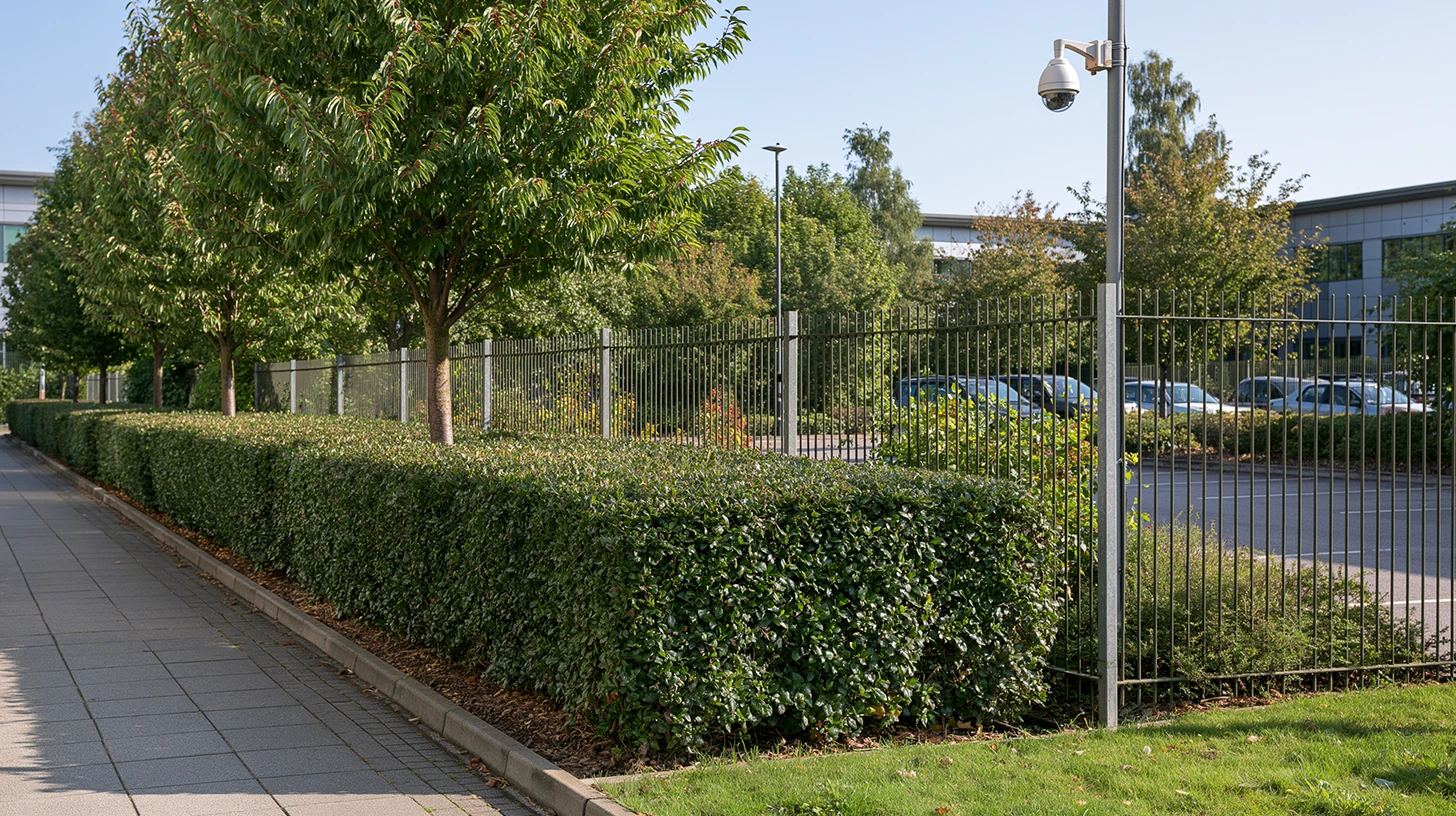

Grounds maintenance security is often overlooked when UK businesses plan their perimeter security UK strategy, yet overgrown hedges, trees and shrubs can undo months of investment in CCTV, lighting and access control within a single growing season. For facilities managers and security guarding services UK providers, treating landscaping as purely cosmetic is a costly mistake. This article explains why grounds maintenance belongs in every UK security plan, how CCTV blind spots develop silently, what CPTED principles and Secured by Design guidance recommend, and how BS 8418 compliant systems depend on clear sightlines, before setting out a maintenance schedule and the business case for a joint plan.
Why Grounds Maintenance Is a Security Issue, Not Just an Aesthetic One
For many UK organisations, grounds maintenance sits firmly within the facilities budget, scheduled around seasonal tidiness rather than crime prevention. That thinking creates a blind spot of its own. Hedges, trees and shrubs grow throughout spring and summer, sometimes gaining significant height and density between one visit and the next. A car park boundary that offered clear views in April can conceal an intruder by August if nobody has tracked its growth.
Security guarding services UK providers regularly encounter sites where carefully specified cameras and lighting are undermined months later by vegetation nobody thought to monitor. Grounds maintenance should sit alongside patrols, alarms and CCTV as a recognised layer of protection, reviewed as regularly as any other security control.
How Overgrown Vegetation Creates CCTV Blind Spots
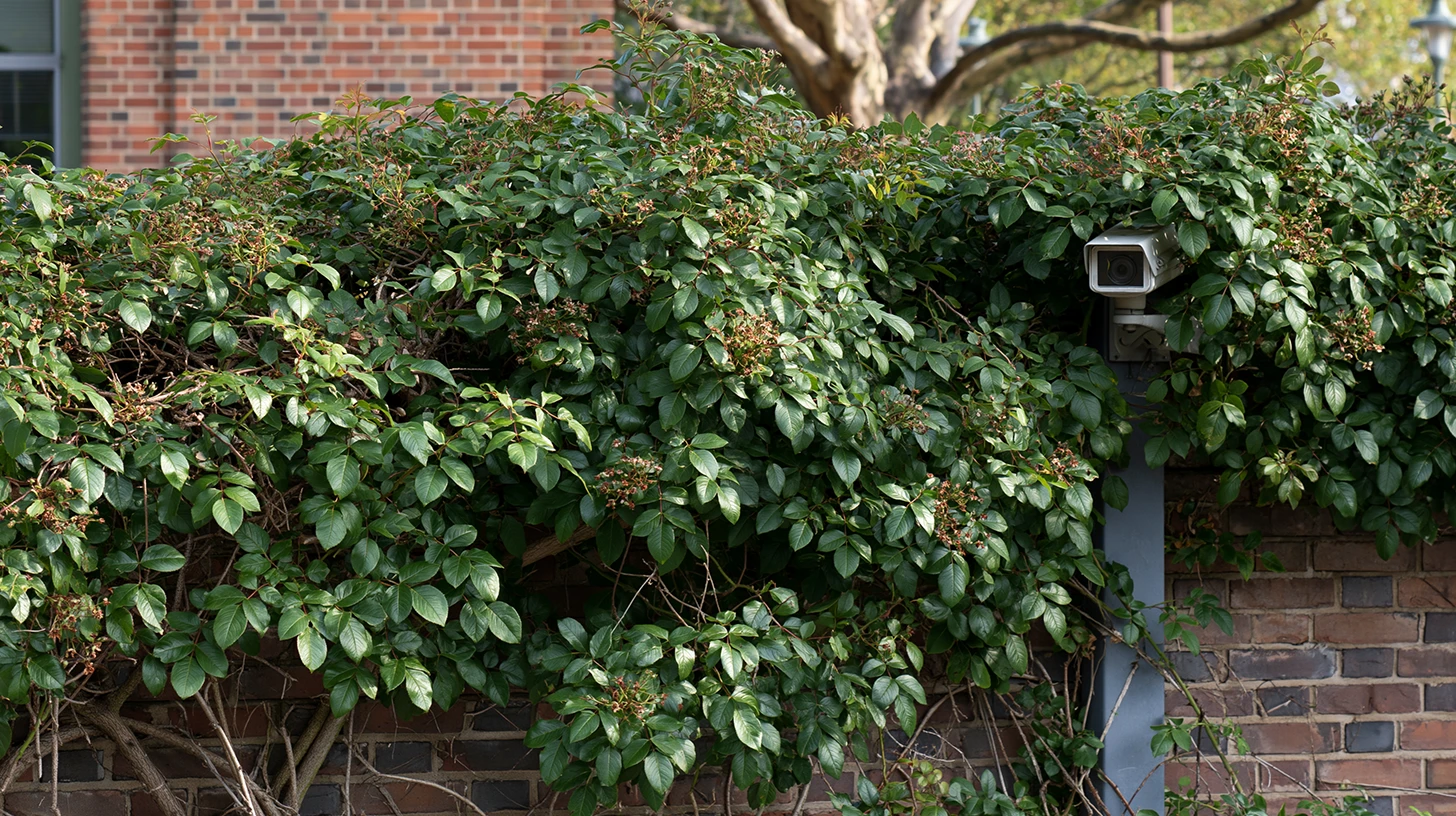
CCTV blind spots rarely appear overnight. They build up gradually as branches spread into a camera's field of view, as hedges thicken along a boundary, or as shrubs planted too close to a mounting pole eventually grow tall enough to obscure the lens. Because the change happens slowly, it is easy to miss during a quick site walk, particularly if nobody compares current footage against the original camera specification.
The consequences are significant. A camera that no longer captures its intended field of view cannot support an incident investigation, cannot satisfy insurers after a claim and, where a detector-activated system is in use, can trigger false alarms as foliage moves in the wind. Regular checks, ideally every quarter and after any period of strong growth, should be built into a site's routine maintenance.
Sightlines and Natural Surveillance: Applying CPTED Principles to Your Site
Crime Prevention Through Environmental Design, commonly known as CPTED, offers a well-established framework for thinking about how a site's layout influences the likelihood of crime. Two of its core concepts, natural surveillance and defensible space, are directly relevant to grounds maintenance. Natural surveillance means ensuring that staff, security officers or passersby can see across a site without obstruction, making it harder for an intruder to move unseen. Defensible space means creating a clear sense of ownership and boundary around a property, discouraging casual trespass.
Applying CPTED to grounds maintenance means asking a simple question before any planting or pruning decision is made: does this improve or reduce the ability of a security officer, a member of staff or a passing patrol to see clearly across the site?
Choosing and Positioning Perimeter Planting Without Compromising Security
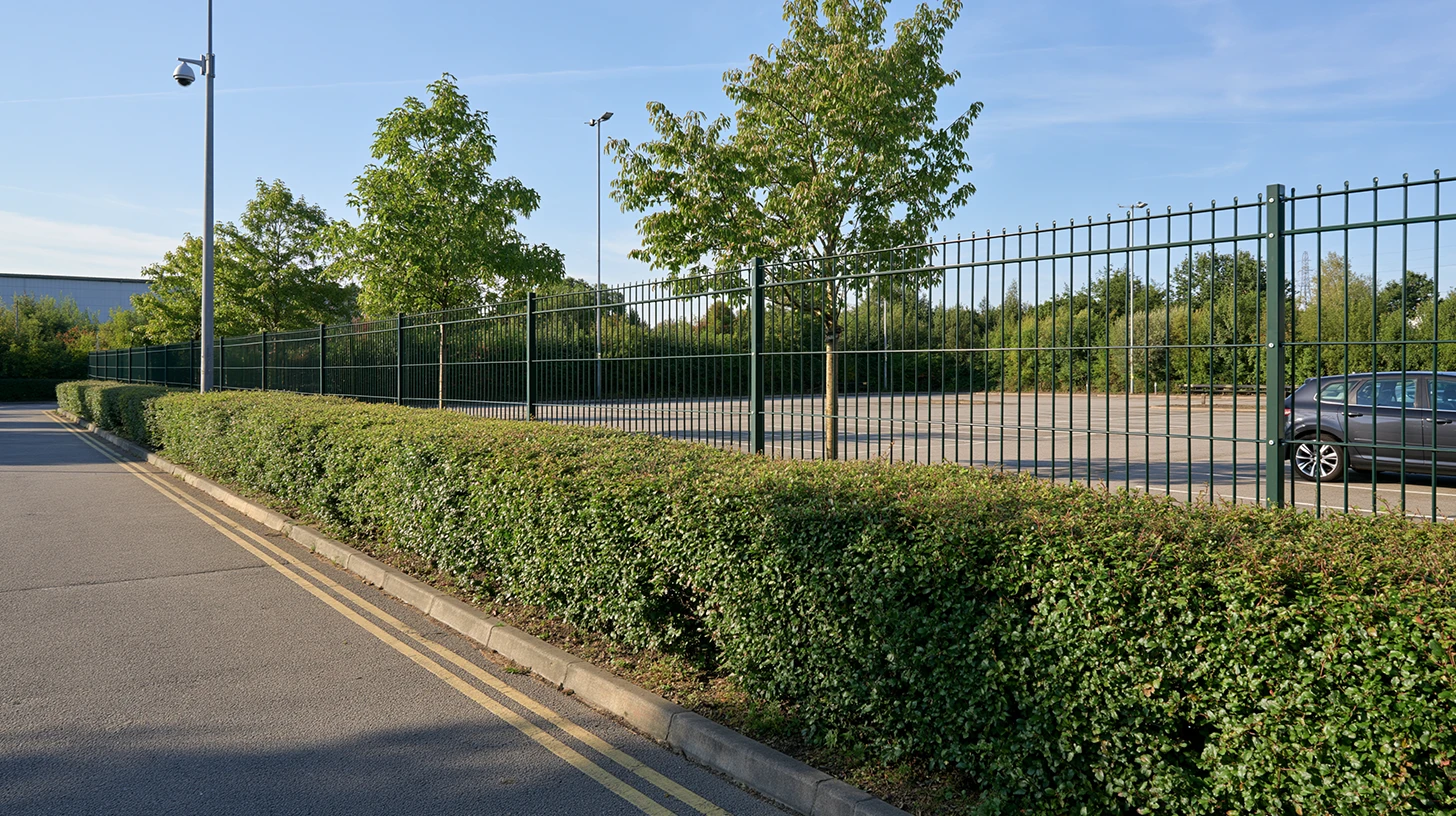
Perimeter planting does not need to be sacrificed for security, but it must be chosen carefully. As a general principle, planting within two metres of a fence line, camera pole or main pedestrian route should be kept below one metre in height at maturity, preventing it from creating a hiding place or blocking a lens. Slow-growing species that do not require constant cutting back are preferable to fast-growing hedging that demands frequent attention simply to stay within limits.
Thorny or dense shrubs positioned beneath vulnerable windows or along a boundary can act as a deterrent in their own right. Wherever cameras, lighting columns or access points are located, a clear zone free of tall planting should be maintained and reviewed as part of the landscaping plan.
Hedge, Tree and Shrub Maintenance Schedules to Keep Cameras and Lighting Clear
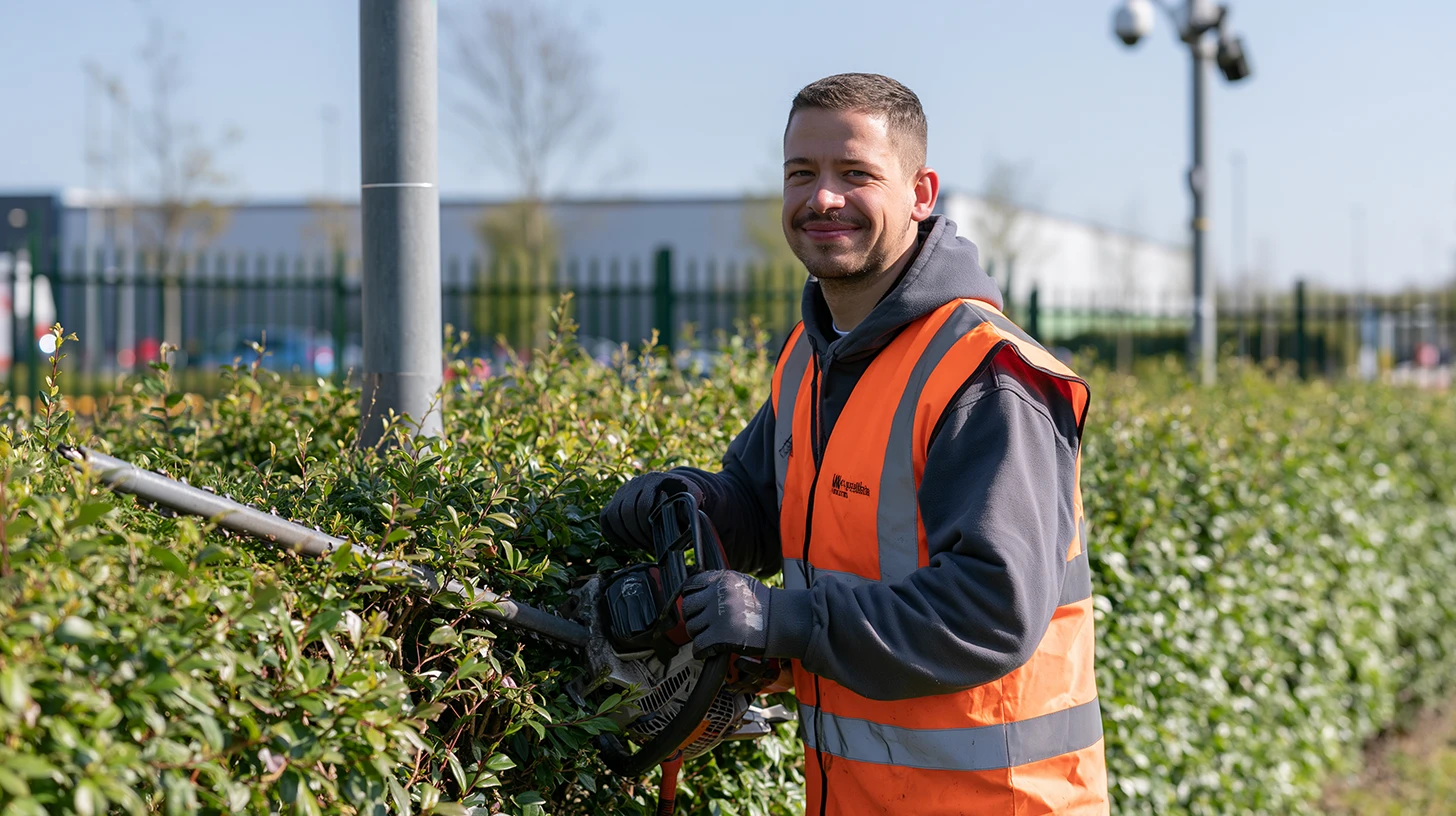
A realistic maintenance schedule reflects how quickly UK vegetation grows through the seasons. Fast-growing hedges typically need cutting two to three times between late spring and early autumn, while slower-growing shrubs may only need attention once or twice a year. Trees near cameras and pedestrian routes should be checked for low branches and spreading canopies before each growing season begins.
Responsibility should be assigned clearly, whether to an in-house grounds team, a specialist tree surgeon such as Ross Webster Tree Services, or a combined arrangement with the site's security guarding services UK provider. Camera fields of view should be checked after every significant maintenance visit, not left until the next scheduled review. A simple log of what was cut, when and by whom makes gaps far easier to spot before they become security issues.
Secured by Design, BS 8418 and Police Advice
UK organisations do not need to rely on generic advice when it comes to security-led landscaping. Secured by Design, the official police security initiative, has worked with local forces and organisations such as the Royal Horticultural Society to promote defensive planting and clear sightlines as recognised crime prevention measures, and its guidance covers hedge heights and boundary treatments. BS 8418, the British Standard covering detector-activated video surveillance systems, sets out requirements for camera and detector fields of view that must remain unobstructed if a system is to qualify for a police response.
Local police Designing Out Crime Officers, who work alongside Secured by Design, are often willing to advise on landscaping and layout at little or no cost, particularly for commercial sites undergoing refurbishment. Building this guidance into a grounds maintenance plan adds real authority to a UK security strategy.
The Hidden Costs of Neglected Grounds With Break-Ins, Insurance and Liability
Neglected grounds carry costs that only become visible after something goes wrong. Overgrown perimeters give intruders cover to approach undetected, and sites with poor sightlines are consistently more attractive to opportunist offenders than those with clear boundaries. Once a break-in has occurred, insurers often examine whether reasonable security measures were maintained, and CCTV footage obscured by foliage can complicate or invalidate a claim.
Liability questions can follow too. If vegetation had been blocking a camera or lighting for months without anyone noticing, a site owner may struggle to demonstrate that adequate care was taken. The cost of a missed maintenance visit is small compared with the cost of a break-in or a disputed claim.
Building a Joint Maintenance Plan With Getting Grounds Teams and Security Working Together
The most effective UK sites treat grounds maintenance and security as connected disciplines rather than separate budgets that never communicate. A joint maintenance plan should set out who checks camera fields of view, how often hedges and trees are cut, who signs off on new planting near cameras or fences, and how issues are reported between scheduled visits.
Bringing grounds contractors and security guarding services UK providers into the same conversation, even briefly each season, closes the gap where most vegetation-related security failures occur. A shared plan with clear ownership costs little to set up, yet it protects the investment already made in cameras and lighting, keeping a site secure all year round.