


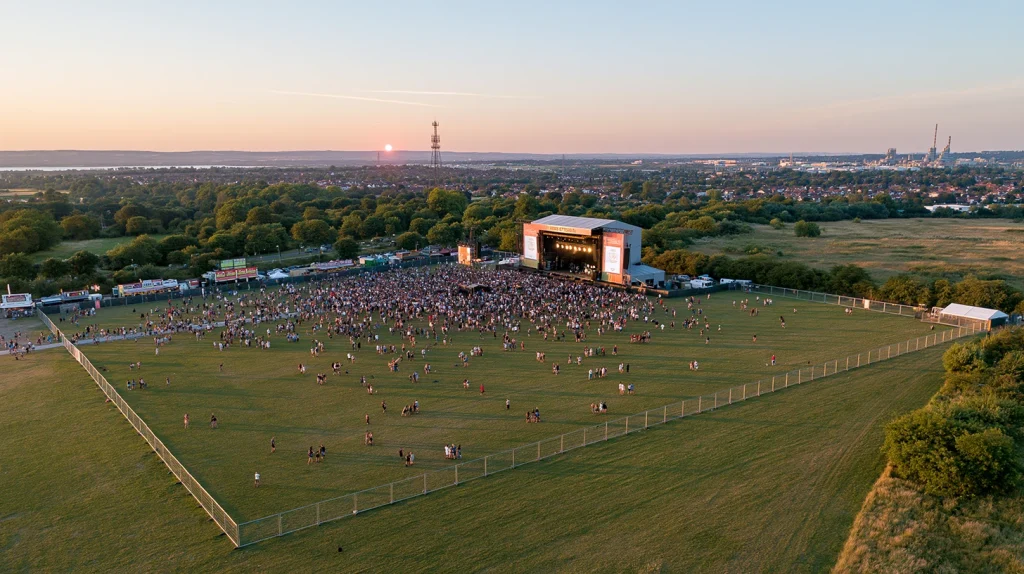
Every summer, the United Kingdom comes alive with outdoor gatherings from music festivals drawing hundreds of thousands of fans to local sporting events, seasonal fairs, and community celebrations. Whether you are staging a boutique food market in the countryside or a major multi-day music festival, one responsibility sits at the very top of the planning agenda: keeping people safe. And that responsibility begins at the perimeter.
Perimeter security for outdoor UK events is no longer simply a matter of putting up some fencing and calling it done. Today, event organisers must navigate an increasingly complex landscape of physical threats, evolving legislation, and growing public expectations around safety. This guide sets out everything you need to know.
Why Perimeter Security Has Never Mattered More
The threat environment facing outdoor events in the UK has changed significantly over the past decade. Vehicle-borne attacks in which a car, van, or lorry is deliberately driven into a crowd have become one of the most pressing security concerns for event planners. The attacks at Westminster Bridge and London Bridge in 2017 served as devastating reminders that publicly accessible spaces are vulnerable, and that the consequences of inadequate event security perimeter protection can be catastrophic.
Beyond Terrorism: The Everyday Threats
Terrorism, however, is not the only threat. Unauthorised access, petty theft, equipment vandalism, and crowd disorder are all genuine risks at outdoor events of any size. When tens of thousands of people converge in a single location, the margin for error is small. A failure of perimeter control can result in gate-crashing, overcrowding at entry points, theft of expensive production equipment, or at worst a dangerous incursion into the venue itself.
The Commercial Case for Getting It Right
There is also a practical commercial argument. Research indicates that a proportion of British adults feel concerned about their safety when attending public gatherings. A well-designed, clearly communicated security perimeter provides the reassurance that drives ticket sales and keeps attendees coming back. The peace of mind that comes with robust, visible perimeter security solutions is as much a selling point as it is an operational necessity.
The Legal Landscape: Martyn's Law
Perhaps the most significant development in UK event security in recent years is the passing of the Terrorism (Protection of Premises) Act 2025, widely known as Martyn's Law, named in memory of Martyn Hett, one of the 22 victims of the 2017 Manchester Arena attack.
The Act
Which received Royal Assent on 3 April 2025, is intended to improve protective security and organisational preparedness for terrorist attacks at publicly accessible places across the UK. The government has built in an implementation period of at least 24 months, meaning the Act's provisions will likely not come into force until 2027. That said, security experts are urging event organisers not to sit back and wait the coming period should be used proactively.
Who Does the Law Apply To?
The law introduces counter-terrorism duties for venues and events with a capacity of 200 or more people. Importantly, it applies not only to permanent venues like stadiums and theatres, but also to temporary events including Christmas markets, music festivals, fairs, and marquees covering the full spectrum of outdoor public events held across the UK each year.

Understanding the Two Tiers
The Act creates two tiers of obligation. The standard tier covers smaller venues with a capacity of 100 to 799 people, requiring basic preparedness and training, while the enhanced tier applies to larger venues and events and demands more substantial security measures and perimeter security systems. For enhanced-tier events, organisers must produce a written security plan and appoint a senior manager responsible for safety compliance.
For event organisers, Martyn's Law is a clear signal that perimeter security is no longer discretionary it is becoming a legal duty. Beginning your compliance planning now, well ahead of enforcement, is not merely advisable. It is essential.
Building Your Perimeter: Fencing and Physical Barriers
The foundation of any outdoor event security plan is a clearly defined physical perimeter. This serves several simultaneous functions: it delineates the venue boundary, controls where people can enter and exit, helps deter unauthorised access, protects valuable assets and equipment, and creates the conditions for effective crowd control.
Choosing the Right Temporary Fencing
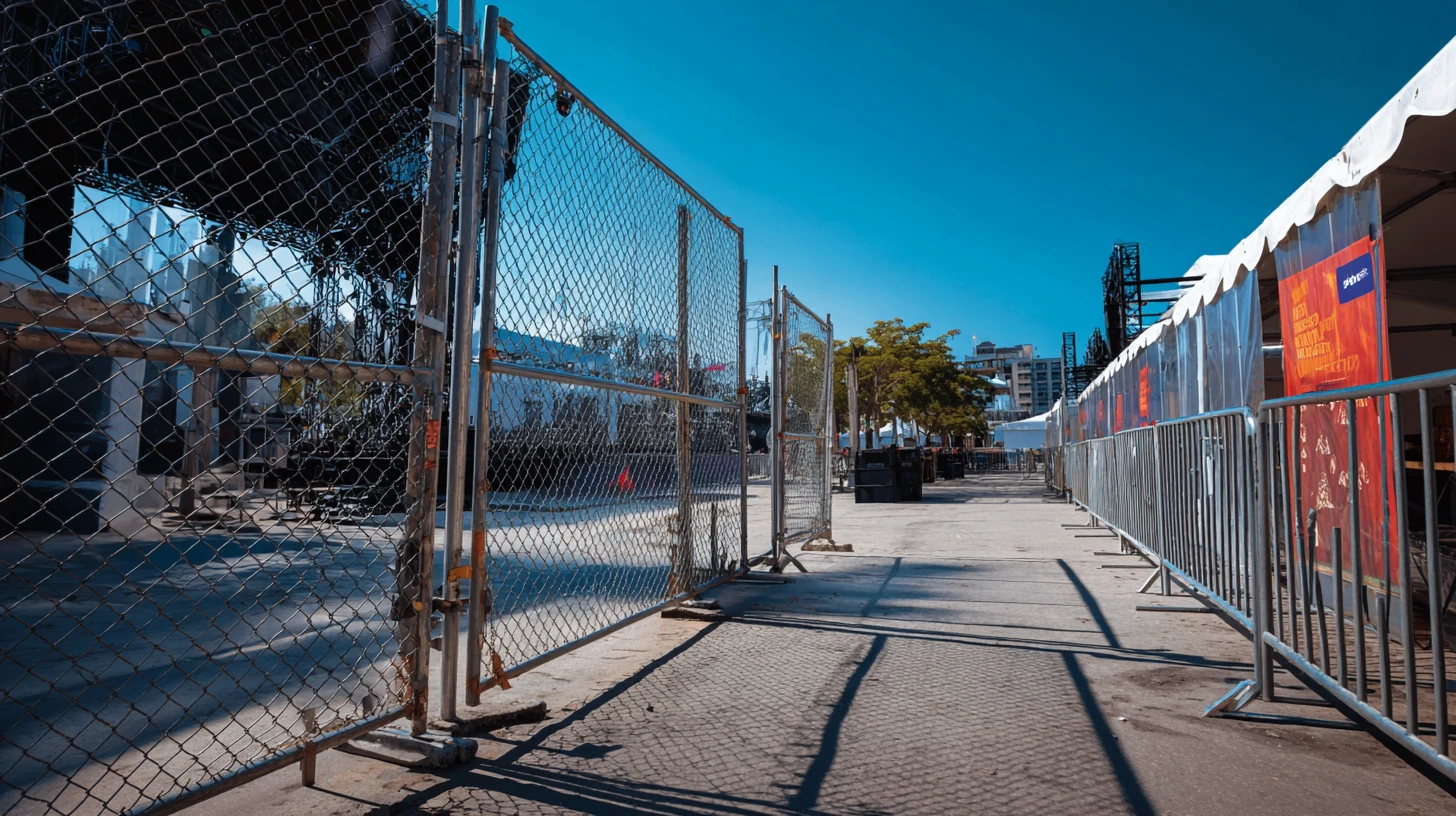
For temporary or one-off events, temporary fencing systems are the most widely used solution. Modern rigid mesh fencing panels, manufactured from galvanised or powder-coated steel, offer a robust and adaptable perimeter that can be assembled rapidly, reconfigured as event layouts change, and removed cleanly once the event concludes. High-quality systems incorporate anti-climb design, tamper-proof fixings, and modular construction that allows installation teams to work efficiently even on constrained sites.
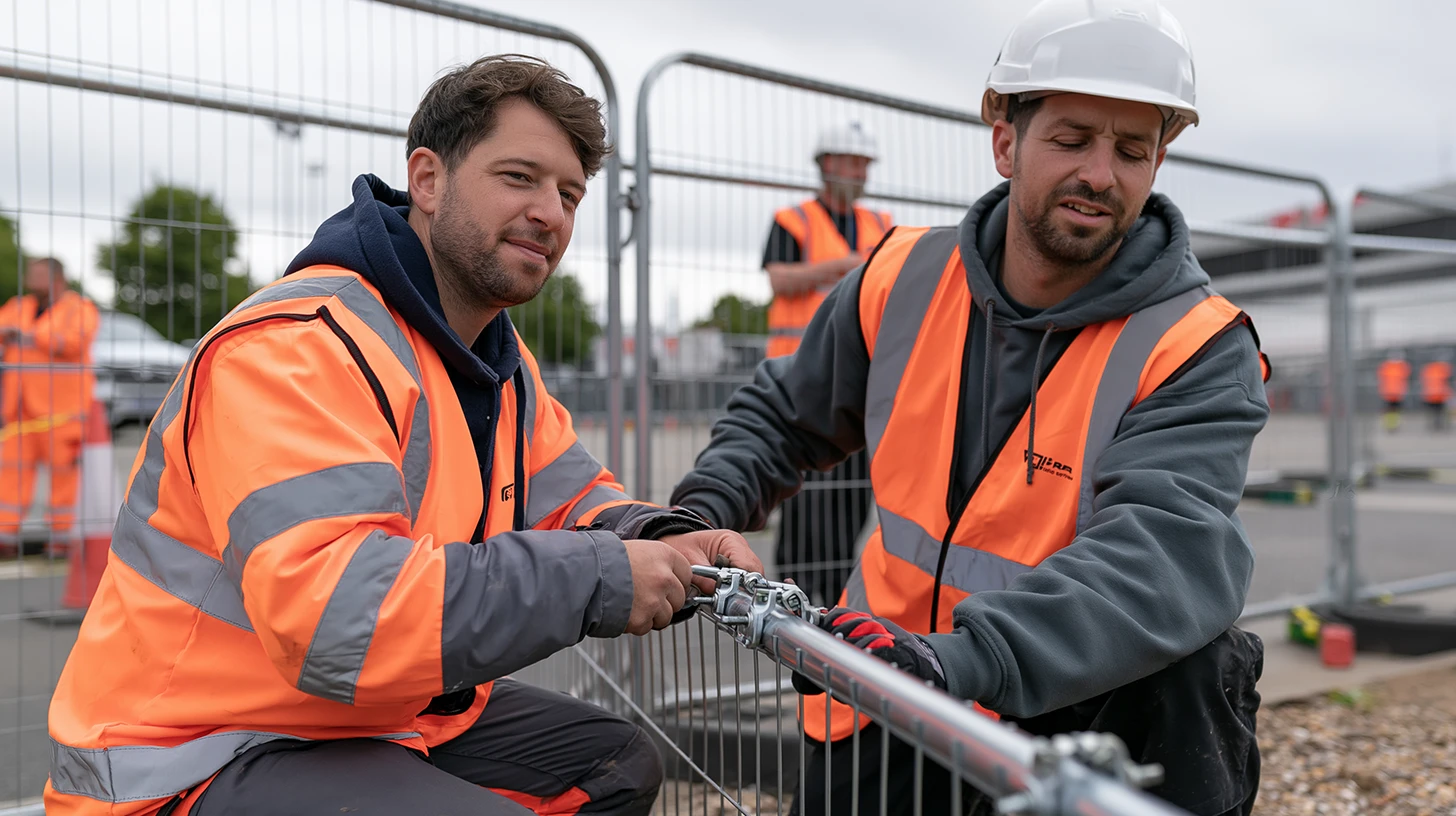
The choice of fencing should be matched to the nature of the event and the level of security required. A community festival will have different needs to a high-profile concert or a sporting event with competing fan groups. Considerations include panel height, mesh aperture size, the quality of fixings and clamp connections, and whether additional features such as pedestrian or vehicle gates are required.
Managing Entry Points and Crowd Flow
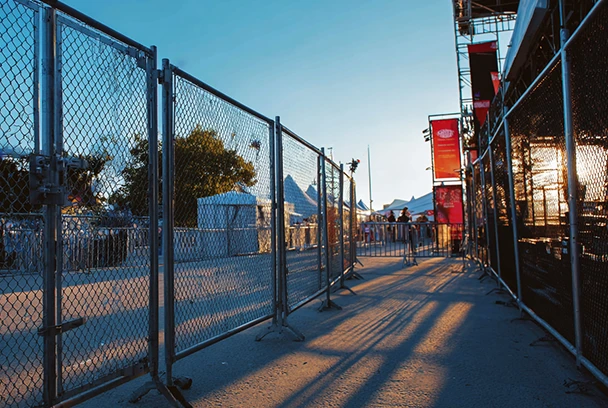
Perimeter fencing must also be chosen with crowd flow in mind. Entry points are a critical pressure zone at any large event. Pedestrian portals, swing gates, and multiple access points help to regulate the flow of attendees without creating dangerous bottlenecks. For larger events, turnstile systems and ticket scanning integration can further improve efficiency and reduce tailgating. Effective crowd management begins at the perimeter, not inside it.
Securing the Site Before Opening Day
It is worth remembering that perimeter security must be in place well before the event opens its gates. Construction phases during which expensive staging, lighting, power infrastructure, and production equipment are brought onto site represent a significant period of vulnerability. High-security fencing, security gates, and perimeter monitoring should be operational from the moment site preparation begins, not just on event day. This approach to site security is particularly important for large-scale music events and festivals, where setup can take days or even weeks in advance.
A key part of achieving this level of protection is planning your event security company hire early in the organising process. Specialist event security providers can supply trained personnel to manage access control at perimeter gates, conduct regular patrols of the site boundary, and monitor CCTV and surveillance systems throughout the build phase and beyond.
Hostile Vehicle Mitigation: A Non-Negotiable Priority
For any event held in a public or semi-public space with pedestrian approaches, Hostile Vehicle Mitigation (HVM) must form part of the perimeter security plan.
What Is HVM and Why Does It Matter?
HVM is a protective security discipline focused on reducing risks associated with vehicle-borne threats posed by terrorists and criminals. HVM measures encompass the integrated deployment of security processes, procedures, and physical obstructions including vehicle security barriers and traffic management to counter vehicle-borne threats at event venues.
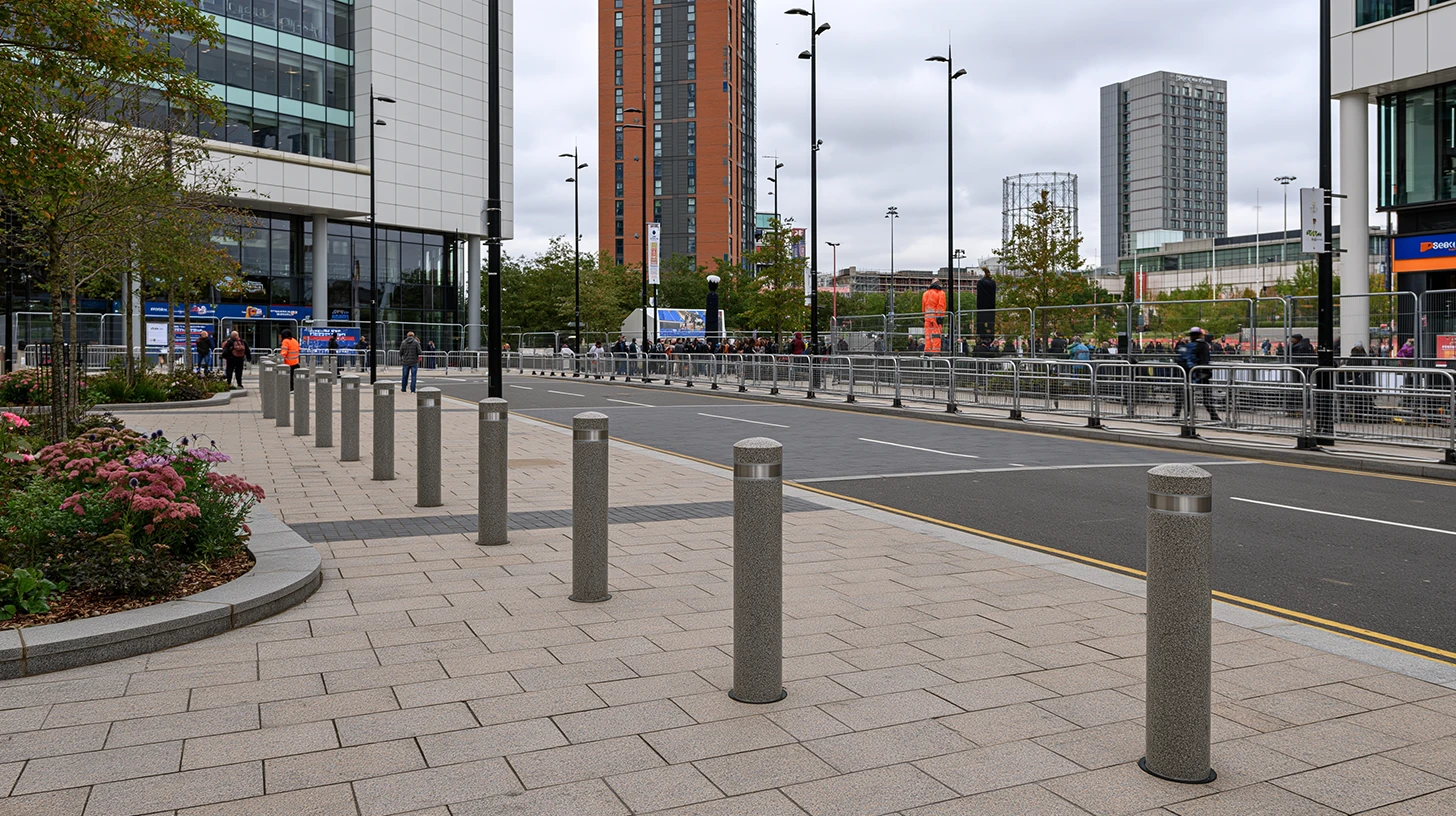
Most event venues choose permeable bollards in areas of high spectator footfall, as they have been shown to reduce the impact on crowd flow compared to larger obstacles such as gates. Security bollards rated to the UK standard PAS 68, developed by the British Standards Institute, are widely regarded as the benchmark for vehicle mitigation at public events. PAS 68 bollards are one of the most popular HVM products because they strike the right balance between strong perimeter protection and unobstructed pedestrian movement.
Temporary HVM Solutions for One-Off Events
For temporary events, removable or surface-mounted bollard systems offer a perfect solution. These can be installed without extensive groundworks, reused across multiple events on either a permanent or temporary basis, and deployed rapidly once a site has been assessed by a qualified security specialist. Road blockers and vehicle barriers can be used to secure service vehicle access routes whilst remaining operable for legitimate deliveries and emergency services access.
Standoff Distance and Expert Advice
A key consideration is standoff distance the buffer between the outer HVM line and the crowded areas within the venue. Every additional metre of separation reduces the potential impact of a vehicle-borne attack. Where the site layout permits, this standoff zone should be maximised. Early engagement with a Counter Terrorism Security Adviser (CTSA), accessible through the National Protective Security Authority (NPSA), is strongly recommended for larger events. Their expert advice can prove invaluable in designing a robust HVM scheme that integrates effectively with the rest of your security systems.
Access Control and Technology Integration
Effective perimeter security is not purely about physical barriers. Access control who gets in, how they are verified, and how movement within the venue is managed is an equally critical element of any comprehensive event security plan.
Layered Screening at Access Points
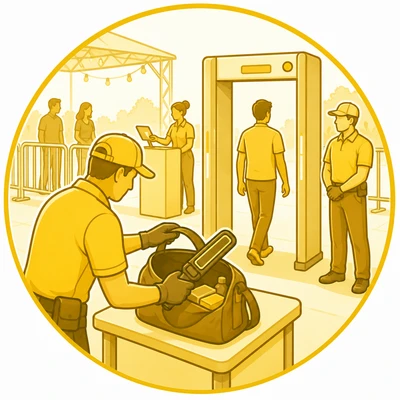
Entry points should be designed with the principle of layered screening in mind. Outer perimeter access controls can be complemented by bag checks, ticket validation, and in some cases walk-through detection equipment. For high-profile public events, handheld detection devices and metal detector archways may be appropriate. A dedicated team of trained security operatives at each access point is essential for managing queues and maintaining safety compliance.
The Role of CCTV and Real-Time Monitoring
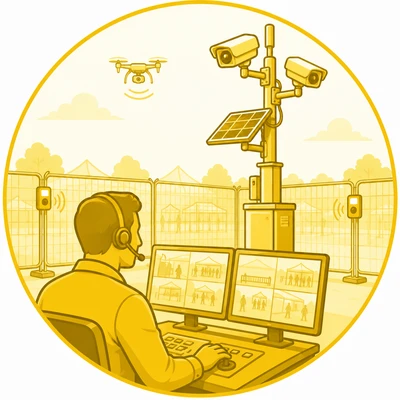
Technology is playing an increasingly significant role in enhancing security at outdoor events. CCTV cameras covering all perimeter access points, intrusion detection sensors integrated into fencing panels, and CCTV towers providing elevated real-time monitoring can all provide situational awareness for security teams. Where mains power is unavailable, solar-powered mobile CCTV towers offer a practical and increasingly popular solution for open areas and temporary sites. Drone-based aerial monitoring can also enhance security across larger event sites, offering rapid response capability and comprehensive coverage.

Communication and Command
A coordination hub or command post, from which security, crowd management, and emergency services can be centrally managed, is good practice for any event expecting significant footfall. Clear communication channels across all teams security operatives, stewards, police liaisons, and response teams ensure a faster response to any developing situation, whether a crowd surge, an attempted unauthorised entry, or a more serious incident.
Working With the Authorities
UK event organisers do not work in isolation when it comes to public safety. Police, fire, and ambulance services are key stakeholders in any major event security plan, and early engagement with these agencies is strongly advisable. In some areas, Event Safety Advisory Groups (ESAGs) bring together the local council, police, fire and rescue services, and ambulance services to provide coordinated guidance and help organisers work closely with all relevant partners.
Legal Obligations Under Health and Safety Law
Under the Health and Safety at Work Act 1974 and the Management of Health and Safety at Work Regulations 1999, event organisers are legally required to conduct detailed risk assessments covering all foreseeable hazards including health and safety risks associated with crowds, site access, and perimeter security. These risk assessments should be documented, kept on file, and reviewed as event plans evolve. Failure to comply with health and safety regulations can result in significant fines and legal liability.
Planning Ahead: Practical Steps for Organisers
Effective perimeter security does not happen at the last minute. UK event organisers should approach security planning in the same way they approach staging, ticketing, or artist logistics as a structured project with clear timelines, responsible owners, and budget allocation.
Conducting a Site Security Assessment
Begin with a thorough site assessment. Understand where your perimeter boundaries will sit, identify all potential access points, assess lines of approach for vehicles, and consider how your chosen site layout will affect crowd management. Commission specialist security consultants where the event scale or risk profile demands it. Engage with your local CTSA if vehicle threats are a credible concern.

Procuring the Right Security Solutions
Procure temporary fencing, barriers, and bollard systems from reputable UK manufacturers whose products have been independently tested and certified by recognised bodies such as the NPSA, LPCB, or Secured by Design. Whether you are hiring equipment on a temporary basis for a single event or investing in reusable systems across a broad range of events over multiple seasons, quality and certification should be non-negotiable.
Document, Train, and Review
Document everything your risk assessment, your security plan, your supplier agreements, and your staff briefings. Not only does this demonstrate due diligence to regulators and insurers, but it ensures that every member of your team understands their role and responsibilities on the day. Ensure all security operatives are trained in their specific duties, that stewards are fully briefed on emergency procedures, and that storage areas for equipment are secured at the close of each event day.
With Martyn's Law moving towards enforcement, the window to get ahead of these requirements is now. The events industry in the UK is vibrant, resilient, and economically significant. Protecting it and the hundreds of thousands of attendees who attend events each year begins at the perimeter.