



Access Control & Perimeter Security at High-Profile Events
Whether it is a sell-out music festival in Manchester, a corporate gathering in the City of London, a sporting event at Wembley, or a red-carpet gala in the West End, the UK's event industry is one of the busiest and most diverse in the world. With that comes a serious responsibility: keeping VIP guests safe, restricted areas secure, and the event running without incident.
Managing VIP and restricted areas is far more than placing a rope barrier and hoping for the best. It demands strategic planning, professional personnel, the right technology, and a thorough understanding of UK security legislation. This article outlines the key strategies behind effective access control and perimeter security at UK events and explains why getting it right matters more than ever.
Why Restricted Zone Management Is Critical at UK Events
High-profile individuals at UK events, whether celebrities, senior executives, politicians, or members of the Royal Family attract significant attention. That attention can quickly create risk. Overzealous fans, aggressive media, gate-crashers, and in more serious cases, targeted threats, are all real possibilities at any large-scale event.

The Legal and Reputational Stakes
Beyond physical threats, there are serious reputational and legal considerations. In today's social media environment, a security breach involving VIP guests can go viral within minutes, causing lasting damage to an event's reputation, to the organiser's brand, and to any associated sponsors or venue. The consequences of inadequate security are swift and severe, and increasingly they carry legal weight too.

The introduction of the Terrorism (Protection of Premises) Act 2025
Commonly known as Martyn's Law and named in memory of Martyn Hett, one of the 22 victims of the 2017 Manchester Arena bombing, has added a formal legislative dimension to event security in the UK. Receiving Royal Assent in April 2025, with full implementation expected by April 2027, Martyn's Law will require event organisers and venue operators to have documented public protection procedures in place.
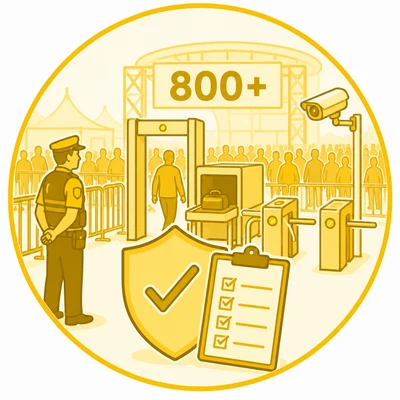
For venues expecting more than 800 attendees
An Enhanced Duty applies, which demands not only reactive procedures but proactive, preventative security measures. The Security Industry Authority (SIA) is the designated regulator and will have powers to issue compliance notices and substantial financial penalties for non-compliance. For event professionals managing VIP areas and restricted zones, these legislative changes make robust planning more important and legally necessary than ever before.
The Role of SIA-Licensed Security Staff
In the UK, any professional operating as a door supervisor or security guard at a public event must hold a valid licence issued by the Security Industry Authority. This is a legal requirement, not a formality. Hiring unlicensed security staff exposes event organisers to significant liability.
Close Protection Officers and Specialist Roles
Security staff working in VIP environments should ideally hold additional qualifications, including training in conflict resolution, first aid, and close protection. For the highest-risk VIP assignments, such as protecting celebrities, senior politicians, or major corporate figures, Close Protection Officers represent the gold standard.
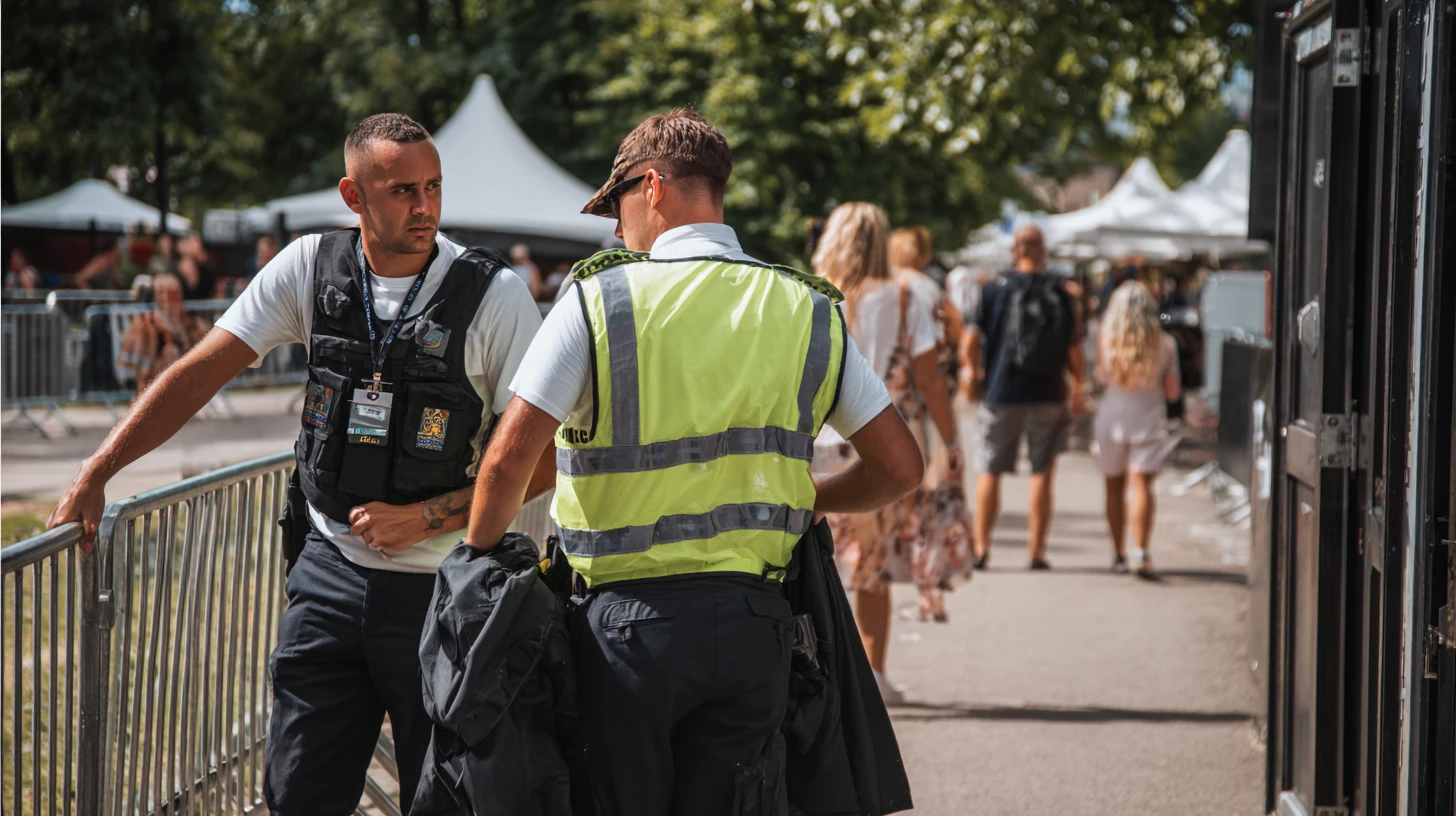
These specialists accompany VIP guests from arrival to departure, carrying out constant threat assessment and acting as a personal shield against any risk to the principal's safety, comfort, or privacy. In the UK, Close Protection Officers must hold the SIA Close Protection licence in addition to any wider event security credentials.
Building the Right Security Team
A well-structured professional event security for vips will typically include a mix of uniformed door supervisors at perimeter access points, plainclothes operatives within the event itself, Close Protection Officers for high-risk guests, and a senior security manager coordinating all elements in real time. Security consultants are also increasingly engaged during the planning phase to carry out detailed site surveys, identify potential risks, and advise on the deployment of both personnel and technology.
Strategic Planning and Venue Layout
Effective management of restricted areas begins long before the event. A professional security team will conduct a full site survey and risk assessment, ideally weeks in advance, examining every aspect of the venue. This includes entry points, sight lines, emergency exits, potential crowd pinch points, and vulnerabilities in the perimeter.
Defining the Physical Perimeter
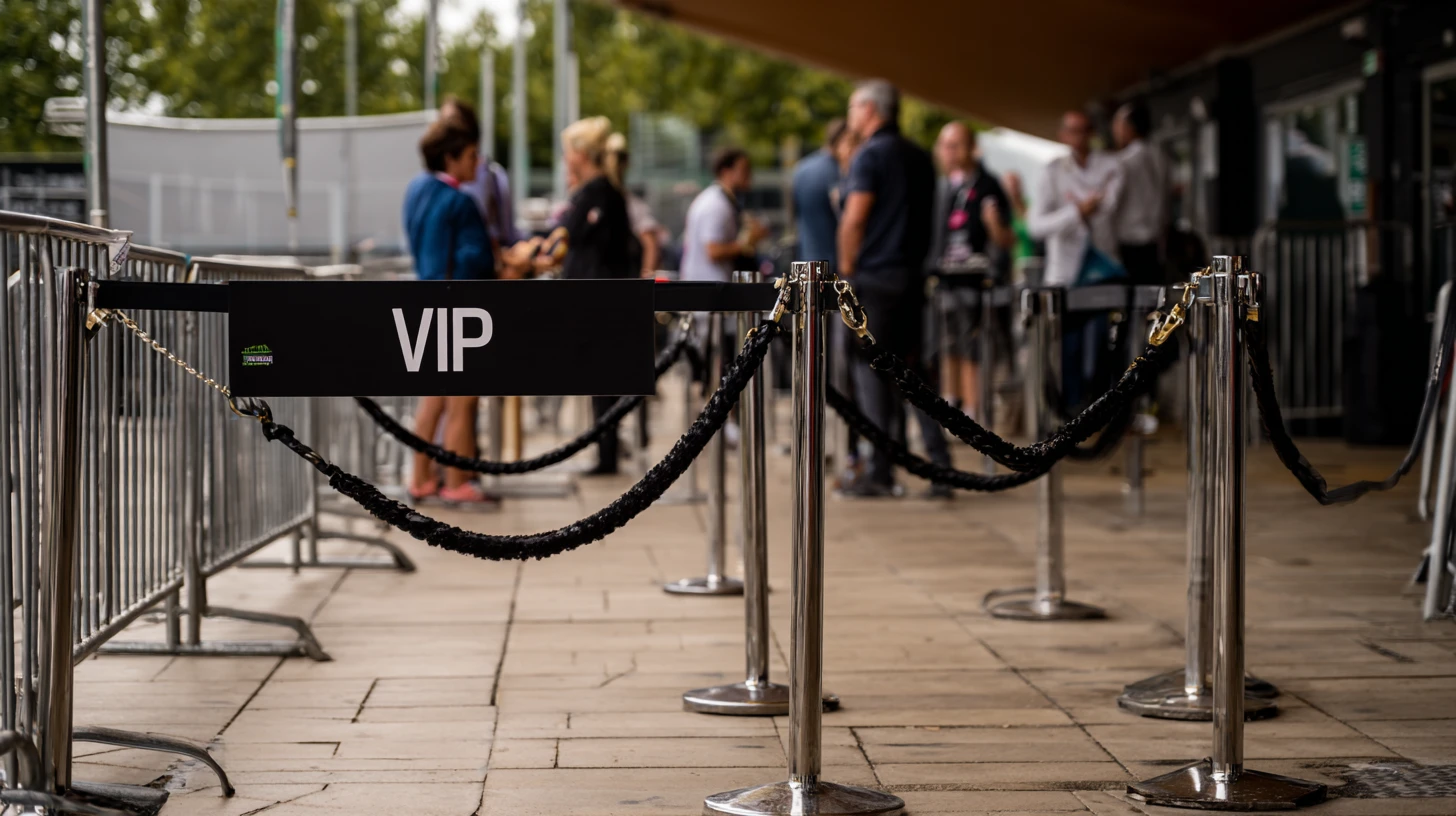
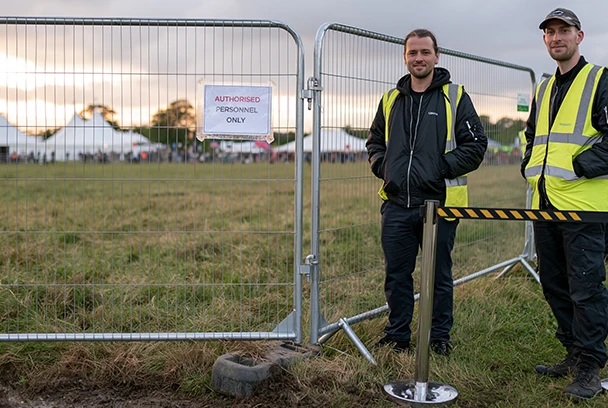
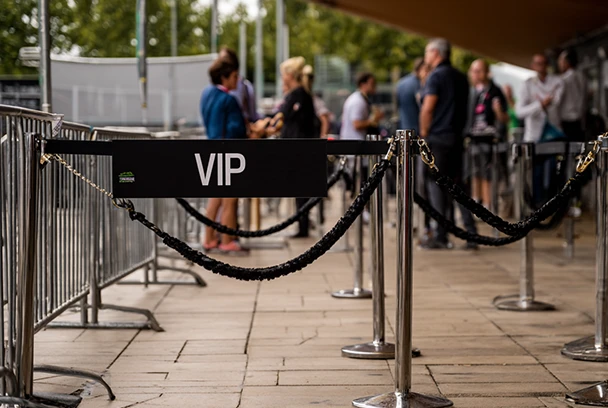
For events held at outdoor venues or temporary structures across the UK, from festival fields to marquee events on private estates, establishing a clear physical perimeter is an essential first step. Crowd management fencing, Heras panels, and retractable barriers should be used to define zones clearly and prevent unauthorised access between general public areas and restricted or VIP spaces. Clear signage plays an equally important supporting role, reducing ambiguity and deterring opportunistic intrusions.
Positioning VIP and Restricted Zones
VIP and restricted areas should be positioned to allow easy access for authorised guests and event staff while remaining naturally secluded from general foot traffic. Each restricted zone should have designated, single-direction entry and exit points, reducing the chance of unauthorised individuals slipping through during the busy flow of an event. Emergency exits must remain unobstructed and clearly marked at all times, in compliance with UK fire safety regulations.
Access Control Systems and Credentialing
Access control is the cornerstone of VIP zone event security. At UK events, credentialing systems have become significantly more sophisticated in recent years and the options available to event organisers reflect this. Wristbands colour-coded by access tier remain common and practical. However, more advanced events now deploy RFID-enabled passes, digital guest list apps with real-time scanning capability, and even biometric verification for the most sensitive access points.
A Layered Approach to Access Control
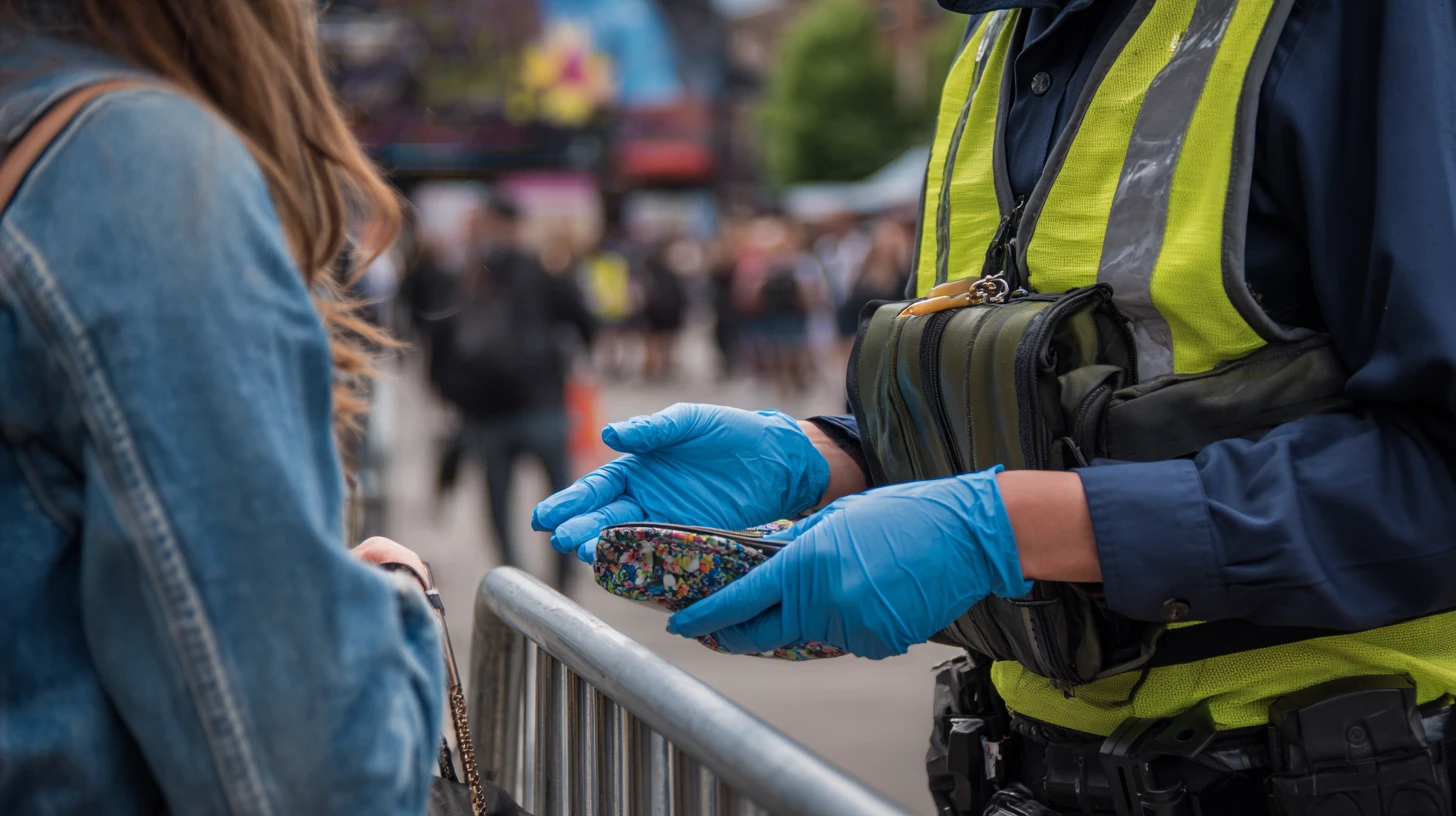
A layered access control approach is best practice. The outer event security perimeter may involve general event entry checks, including ticket scanning, basic ID verification, and bag searches where warranted. Metal detectors are also deployed at many UK high-profile events, particularly those involving political figures or where specific intelligence suggests elevated risk. An intermediate checkpoint narrows access to event staff, media, and accredited guests. The innermost layer, the VIP zone or backstage area, should be the most tightly controlled, with access restricted to a pre-approved list verified by a senior member of the security team.
Communication and Real-Time Updates
Guest lists should be finalised and distributed to security personnel before the event opens, with a clear chain of command established for handling exceptions or disputes at checkpoints. Any changes to access permissions during the event must be communicated through secure communication systems to all relevant staff simultaneously
A breakdown in communication at any single checkpoint can undermine the entire controlled access system. For larger UK events, it is increasingly common to vet catering staff, technical crew, and contracted suppliers who require access to restricted areas. Background checks and pre-event credentialing for these individuals should be treated as seriously as those for general attendees.
Surveillance, Technology, and Real-Time Monitoring
Advanced technology
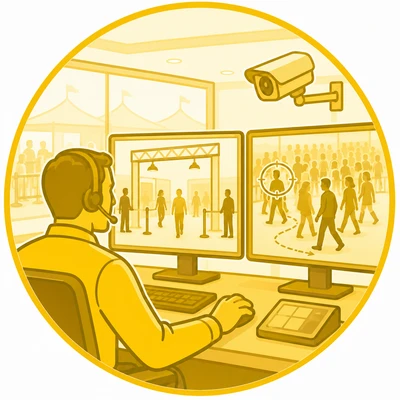
Plays an increasingly important role in supporting security teams at UK events. CCTV coverage of all entry and exit points to restricted zones is standard practice, with footage monitored live by a dedicated security control room. Modern systems can integrate behavioural analysis software, flagging unusual crowd patterns or individuals who linger around restricted boundaries without a clear purpose.

Tools That Support Security Personnel on the Ground
Radio communication between security personnel remains essential for real-time coordination. Earpieces allow plainclothes operatives to receive instructions and report observations without alerting those around them. In larger events, a dedicated communications channel for VIP security, separate from the general event security channel, helps ensure that sensitive information is kept within the appropriate team.
For The Highest Profile Events
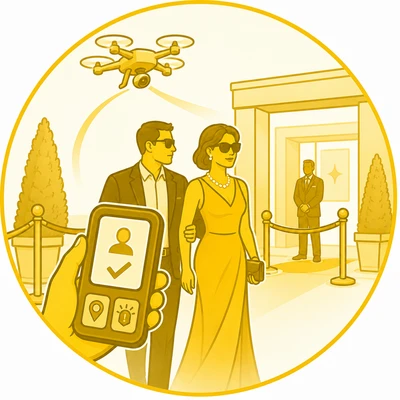
Drone surveillance is occasionally used to monitor the external perimeter and surrounding areas, while GPS tracking devices and emergency panic buttons may be discreetly issued to at-risk VIP guests. Digital access control platforms also generate detailed security logs of who accessed which area and at what time, invaluable both for post-event review and for responding to any security breach in the moment.
Handling Unauthorised Access and Security Breaches
Despite the most thorough planning, incidents do occur. How security teams respond is critical. The first priority is calm, professional de-escalation. A trained SIA-licensed steward approaching an individual attempting unauthorised access in a measured manner, verifying their credentials and politely directing them away, will resolve the vast majority of situations without further escalation.
Escalation Protocols and Legal Compliance
When an individual refuses to comply, or the situation involves a clearer and more serious security threat, a defined escalation protocol must be activated immediately. This means involving a senior security manager, supported by police liaison if present on site. All actions must remain within the legal framework governing security across England, Scotland, Wales, and Northern Ireland. Security staff do not have powers beyond those of an ordinary citizen and must operate accordingly to ensure full legal compliance at all times.
Documenting Incidents and Security Logs
Following any breach, all incidents should be formally documented, including the time, location, individuals involved, actions taken, and evidence gathered from CCTV and security logs. This documentation is important for insurance purposes, future events planning, and any potential legal proceedings that may follow.
Balancing Security with VIP Guest Experience
One of the defining challenges of balancing security with hospitality at UK events is ensuring that robust protective measures do not compromise the guest experience. The most respected security professionals in the industry understand that their role is not purely protective but also deeply service-oriented.
Visible and Discreet Security Working Together
Uniformed security guards at perimeter points provide visible deterrence, but within the VIP area itself, the preference at most UK high-profile events is for plainclothes operatives who can monitor guests and manage situations discreetly. Stewards assigned to VIP lounges should be briefed on hospitality etiquette as well as security procedure, guiding guests, assisting with queries, and ensuring comfort, all while remaining alert to any potential threats.

Making VIP Guests Feel Secure
Seamless, low-friction access management, where authorised VIP guests move smoothly through checkpoints without unnecessary delays, reflects well on the event as a whole. Making VIP guests feel safe, respected, and well-served throughout the event means they are far more likely to return, to speak positively about their experience, and to enhance the event's reputation. In that sense, great security is not just risk management.
It is a direct contributor to the success of the event itself. Non-disclosure agreements are also increasingly used at high-profile UK events to protect sensitive information about VIP movements and security arrangements, adding an additional layer of confidentiality for all involved.
Emergency Preparedness and Response Planning
Every VIP security plan for a UK event must include clearly documented emergency response plans. This should cover medical emergencies, fire evacuation, aggressive behaviour, active security threats, and the specific procedures for extracting VIP guests discreetly and safely in any scenario. Under Martyn's Law requirements, evacuation and invacuation procedures will increasingly become a mandatory part of event planning for qualifying venues.
Medical Teams and Evacuation Protocols
Medical teams should be positioned with direct access to VIP zones, and all security staff should hold basic first aid training as a minimum. Evacuation routes for VIP guests should be kept separate from general public exit routes wherever possible, reducing both the risk of overcrowding and the exposure of high-profile individuals during a potentially chaotic evacuation. Rapid response capability must be built into the overall emergency response plan from the outset, with clear roles assigned and rehearsed in advance.
Working with Local Authorities and Emergency Services
For major UK events, coordination with local authorities and emergency services is an essential part of the planning process. Police, fire, and ambulance services should be briefed on the venue layout, the nature of the event, and any specific VIP requirements. This joined-up approach ensures a smooth and secure environment is maintained not just within the venue boundary but across the surrounding area as well. Crisis communication protocols should also be established in advance, so that VIP guests and their teams can be informed quickly and calmly in the event of any incident, without causing unnecessary alarm to the wider audience.

A Professional Approach from the Ground Up
The effective management of VIP and restricted areas at UK events requires a combination of licensed, experienced personnel, intelligent use of technology, well-designed physical infrastructure, and meticulous pre-event planning. With Martyn's Law set to come into force by 2027, the legal and regulatory landscape is tightening, and rightly so.
The expectation on UK event organisers to implement serious, proportionate, and documented security measures has never been greater. The unique risks associated with hosting high-profile guests in public settings demand a professional, specialist approach at every level. For event organisers, the message is clear: invest in the right security partner early, conduct thorough risk assessments, and never treat access control and perimeter security as an afterthought. The safety and comfort of your VIP guests, and the reputation of your event, depend on it.