


Running a public event in the UK carries significant legal, moral, and logistical weight. Whether you are organising a community festival, a charity march, a large-scale music concert, or a sporting occasion, one of your most critical responsibilities is establishing a clear, early, and ongoing working relationship with police and the emergency services.
This is not simply good practice it is a cornerstone of safe, legally compliant event management. Getting it right protects your attendees, safeguards your organisation, and helps ensure the event runs smoothly from start to finish.
Understanding Who Is Responsible for What
The Organiser's Duty of Care
A common misconception among first-time event organisers is that public safety at an event is primarily a police matter. It is not. The police are responsible for maintaining the peace, preventing breaches of the law, and taking action against those who break it. The primary responsibility for public safety including preventing harm to attendees, avoiding disruption to the surrounding community, and ensuring the event proceeds safely rests firmly with the event organiser and event security guard company.
Why the Distinction Matters
This distinction is important because it shapes how organisers must approach their planning. You cannot rely on a police presence to manage crowd management challenges or deal with medical emergencies on your behalf. You must have your own systems in place.
Equally, the police cannot best perform their own role unless public safety is being managed effectively around them. These responsibilities are interdependent, and this is precisely why both the Metropolitan Police and forces such as Greater Manchester Police advocate strongly for a genuine partnership approach between organisers and all relevant agencies from the earliest stages of planning.
Start Early: The Planning Partnership
Engaging Emergency Services from the Outset
The foundation of good multi-agency coordination is early engagement. Guidance from forces across England consistently emphasises that the earlier you begin consulting with police, the ambulance service, fire and rescue, and the local authority, the better placed everyone will be to manage the event effectively. For marches and processions in particular, where the venue is constantly moving and therefore inherently less predictable, early planning is absolutely essential.

The Role of the Safety Advisory Group
The formal mechanism for bringing all these parties together is the Safety Advisory Group, or SAG. Usually co-ordinated by the local authority, a SAG brings together representatives from the council, emergency services, and the event organiser to discuss and advise on public safety matters. SAGs do not have legal powers and cannot approve or prohibit an event, but they provide an invaluable forum for sharing expertise, flagging risks, and ensuring that all parties are working from the same information.
What the SAG Process Covers
Event organisers are strongly advised to engage with their local SAG at the earliest opportunity, as the advice and guidance provided on issues ranging from traffic management and medical cover to stewarding ratios and contingency plans can prove decisive in making an event safe and well-run.
For large or complex events, SAG meetings may be held multiple times in the run-up, and in some cases an on-site visit may be arranged so that agencies unfamiliar with the venue can assess it in person and discuss any site-specific security challenges before the event takes place.
Statements of Intent and Formal Agreements

Formalising the Working Relationship
In many areas, the working relationship between organisers and police is formalised through a document known as a Statement of Intent, sometimes called a Memorandum of Understanding. These are not legally binding contracts, but they represent a clear, signed record of the roles, responsibilities, and agreed arrangements between an organiser and the police. Originally used in the context of football matches and sporting events, they are now increasingly applied to a wide range of public gatherings.
The Benefits of Signing an Agreement
For organisers, signing a Statement of Intent is an opportunity to demonstrate professionalism, to commit to specific safety measures, and to establish a working relationship with the relevant police commander well in advance of the event. It also provides a useful framework for ensuring that nothing important has been overlooked from the number and briefing of security personnel to contingency plans for emergencies and communication systems on the day.
Where police services are engaged to provide specialist support, costs may be recovered by the force under a special service agreement, and organisers should seek written confirmation of likely costs at the earliest opportunity in the planning process.
How Your Security Team Coordinates with Emergency Services

Security Teams as the Bridge Between Plans and Response
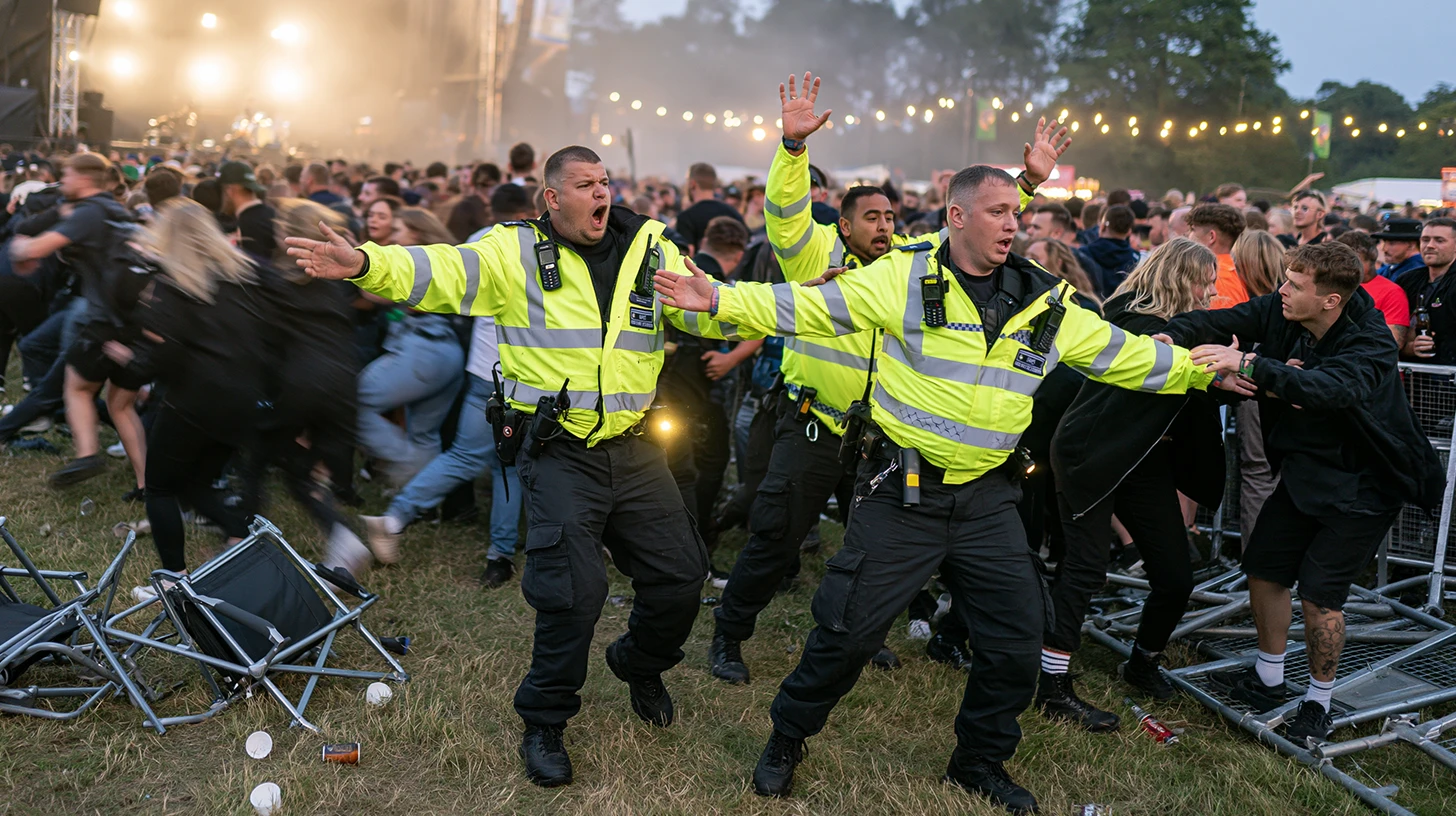
Your event security team sits at the interface between your organisational plans and the wider emergency response infrastructure. The trained security personnel and stewards you deploy are agents of your organisation; they are not police officers and do not hold police powers, but their role in supporting safe coordination with the emergency services is critical.

Immediate Reporting Responsibilities
At its most basic level, stewards must be trained and briefed to immediately notify police of anything that requires law enforcement attention, including anything that may lead to a criminal offence, a breach of the peace, or an immediate risk to public safety. Security teams must also be aware that if their instructions and those of the police appear to conflict during an incident, police instructions take precedence failure to follow police direction can constitute an obstruction offence.

The Event Liaison Team Model
For larger events, best practice in the UK now advocates for co-location of command. National Police Chiefs' Council guidance describes an Event Liaison Team model in which representatives from the event's security service, local authorities, police, ambulance, and fire services are all based in a single control room or command hub.

Benefits of Unified Command Structure
This approach enhances real-time communication, creates shared situational awareness, and enables a coordinated, effective response to any incident, large or small. Whether a minor crowd management issue, a medical incident, or a full major incident, having all agencies connected through a single command structure dramatically improves outcomes for everyone on site.

Building the Chain of Command
The chain of command within your security team should be clearly defined before the event begins. A Head or Chief Steward should be appointed to liaise directly with the police officer in charge, both in pre-event briefings and throughout the event as it develops.

Supervisor Span of Control
Supervisors beneath the chief steward should be responsible for defined sections of the crowd or venue, with each supervisor managing a group of no more than six to ten stewards. This tiered structure ensures that communication flows quickly in both directions from organisers down to frontline event staff, and from stewards back up to the command centre.

Monitoring the Crowd, Not the Show
Stewards must monitor the crowd, not the event itself. Their attention should be on identifying and defusing potential problems before they escalate, watching for suspicious behaviour, reporting developing situations up through the chain of command, and facilitating access for emergency services when required.

Communication System Testing
Communication systems, whether portable radios or designated mobile channels, must be tested before the event begins. Mobile networks can become congested or fail entirely during large gatherings or major incidents, making radio the preferred and more reliable option for event staff to rely on in emergency situations.
Emergency Plans and the Transfer of Authority
Building a Robust Emergency Response Plan
Every event, regardless of size, should have a documented, robust event emergency response plan proportionate to the risks involved. This plan should cover how to get people away from immediate danger, how to summon and assist emergency services, how to manage casualties including those requiring first aid, and how to handle communications with the public during a crisis.
HSE guidance is explicit that for all but the smallest low-risk events, emergency plans must be drawn up and discussed in advance with police, fire and rescue, and the ambulance service. The detail of those discussions should reflect the risk profile of the event.

Scenario Planning and Testing
For a large festival or public gathering, this may involve tabletop exercises and scenario planning sessions conducted months in advance, allowing all agencies to test their responses before the event takes place. Useful scenarios to work through include severe weather, structural collapses, medical emergencies, fire, and the need for mass evacuation. Running through these scenarios as a team with police, fire, ambulance, and your own security teams all involved builds the shared understanding and muscle memory that makes an effective response possible when it is needed most.
When Police Take Command
One critical principle that all organisers and security teams must understand is the transfer of authority during a major incident. If police declare a major incident at your event, all event personnel and resources come under police command. However, the police may also designate only part of the event as being under their direct authority, leaving the organiser in control of the remainder. Your plans must account for this possibility and ensure that your team is trained to operate effectively in both modes.
Communicating with the Public During an Incident
The public-facing element of emergency response also matters greatly. Event staff must know the location of all exits, how to raise the alarm, how to direct attendees, including those with disabilities or limited mobility and how to communicate official messages in coordination with the emergency services. Pre-agreed wording for public announcements, whether delivered over a PA system or via social media, should be prepared well in advance as part of your crisis management planning.
Martyn's Law: A New Era of Statutory Obligation
What the Act Requires
The landscape of event safety in the UK has changed significantly with the passing of the Terrorism (Protection of Premises) Act 2025, widely known as Martyn's Law. Named in memory of Martyn Hett, one of the 22 people killed in the Manchester Arena bombing of 2017, this landmark legislation places formal statutory duties on those responsible for public premises and events with a capacity of 200 or more people. The Act received Royal Assent in April 2025, with a compliance deadline expected by April 2027.
Under The Act
Event organisers and venue operators must implement public protection procedures covering evacuation, invacuation, lockdown, and communications with the emergency services. Those responsible for enhanced duty events those with an expected capacity of 800 or more must additionally conduct a formal counter-terrorism risk assessment, implement proportionate physical security measures, and document their procedures for submission to the Security Industry Authority, which has been established as the regulator overseeing compliance.
The Wider Benefits of Compliance
Far from being an additional bureaucratic burden, Martyn's Law represents an important opportunity. Venues and organisers who engage seriously with the Act's requirements find that building robust emergency procedures and close working relationships with police and local counter-terrorism security advisers pays dividends well beyond terrorism prevention.
Better trained security personnel, tested communication systems, stronger relationships with the emergency services, and a clear culture of event safety all contribute to better-managed events across the board. Staff become more confident in identifying suspicious behaviour, communication channels between venue teams and emergency services become more effective, and the overall security culture across the organisation improves measurably.
After the Event: Debrief and Continuous Improvement
The Hot Debrief
Good multi-agency working does not end when the event closes. An immediate hot debrief held directly after the event allows organisers, stewards, volunteers, safety officers, and police to share initial impressions, flag anything that went wrong, and capture time-sensitive observations before memories fade.

The Formal Debrief
A more structured formal debrief, held some weeks later, allows all agencies involved to gather their own internal feedback and bring it to a shared discussion. This feedback loop is one of the most powerful tools available to event organisers. The best events are not built in a single planning cycle they are refined over time through honest, constructive dialogue between all parties involved, with lessons carried forward to establish stronger plans and a more resilient operation for every event that follows.
In summary, working effectively with police and emergency services is not a box-ticking exercise. It is the operational backbone of any safe and successful public event in the UK. Start early, engage with your local SAG, build genuine relationships with the agencies involved, empower your security teams to communicate clearly up and down the chain of command, and invest in thorough, tested emergency plans. The result will be events that are safer, more resilient, and better for every single person who attends.