


Whether you are organising a political rally, a ministerial appearance, a party conference fringe event, or a public engagement for a high-profile VIP, one thing is certain: the security requirements you face are fundamentally different from those of a standard public event. This guide is written for you the event organiser to help you understand what professional VIP and political event security actually involves, what your responsibilities are, and how to plan effectively before your principal steps through the door.
Understanding Why This Is Different
Standard Security vs Principal-Centric Protection
Before you can plan effectively, you need to understand why VIP and political event security operates in a different league entirely from modern event security. When you organise a music festival or a corporate awards evening, your security team's primary job is to protect the crowd: managing access, resolving conflict, controlling flow.
That work is reactive and broad-based. When your event features a senior politician, a foreign dignitary, a member of the Royal Family, or another credible VIP, the security operation becomes principal-centric. Every decision, every resource, and every contingency plan is built around the safety of one individual.
The Elevated Threat Landscape
The threat landscape changes entirely too. You are no longer just managing the risk of antisocial behaviour or overcrowding. You must plan around potential threats: politically motivated attacks, hostile surveillance, kidnapping risks, state-sponsored interference, and organised protests that may turn violent. These are not hypothetical scenarios. The UK's terrorism threat level currently sits at "Substantial," meaning an attack is assessed as likely. For political principals specifically, that backdrop is an operational reality every single day.

Why the Statistics Matter for Your Planning
The statistics are sobering. A survey of 224 MPs found that 39% had received calls for them to come to harm, 37% had received threats to hurt them, and 27% had received death threats. Female MPs and those from minority backgrounds are disproportionately targeted. If your event features an elected official at any level not just Cabinet ministers you are working within this threat environment, and your event security planning must reflect it.
Who Should Be Involved in Your Security Operation
Thinking in Layers, Not Tiers
One of the most common mistakes event organisers make is treating security as a single-tier service. For VIP and political events, you need to think in layers, and you need to know who sits in each layer. Effective event security at this level is not achieved by one team doing everything it is the product of multiple specialist functions working in close coordination.
Close Protection Officers
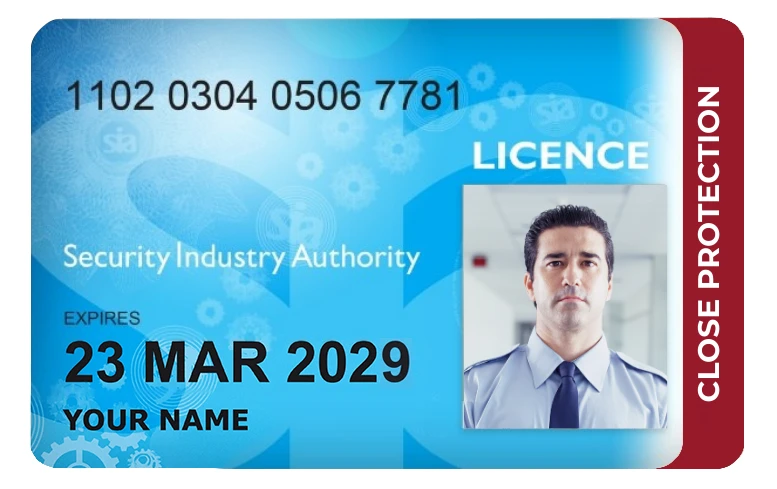
Close Protection Officers (CPOs) are the professional specialists responsible for the principal's personal safety. Under UK law, CPOs must hold a Security Industry Authority (SIA) Level 3 Close Protection licence. They are not security guards in the traditional sense they are trained specialists in threat assessment, advance reconnaissance, risk mitigation, and emergency response.
In the UK, CPOs operate without firearms, relying instead on prevention, situational awareness, and physical intervention as a last resort. When selecting professional security services for a VIP event, the experience and licensing of your CPO team should be your first point of scrutiny.

Door Supervisors and Event Security Staff
SIA-licensed door supervisors and event security staff form the outer perimeter of your event. These are the security personnel your audience will see managing access control, ticketing, and crowd management. They provide the visible face of your security operation and are essential for managing the broad public-facing risks of a large-scale event. Their role is to create a secure environment at the point of entry before the principal ever arrives.

Plain-Clothed Surveillance Detection Officers
Plain-clothed surveillance detection officers sit between these two layers and are often overlooked by organisers who are not experienced in this sector. These individuals, working invisibly among attendees, are watching for hostile surveillance: people loitering near exit points, methodically filming the principal, or attempting to access restricted areas. At a political rally or public VIP event, this middle tier is critical to identifying security threats before they can escalate.

Police Liaison and Statutory Coordination
Police liaison must also be factored in from the outset. Depending on the profile of your principal, policing support may be mandatory. Even where it is not, you should contact your local constabulary early in the planning process. Counter Terrorism Policing units, local public order teams, and in some cases national intelligence agencies may all have an interest in your event.
Your private security team must understand how to work alongside statutory authorities the communication hierarchies, protocols, and respective boundaries of authority because for high-risk political events, this interagency working is not optional. It is the architecture of safety.
The Pre-Event Planning Process
Why Preparation Is Everything
If your event runs smoothly on the day, it will be because the planning that preceded it was thorough. Here is what that process should look like.
Intelligence-Led Threat Assessment
Before any physical planning begins, a thorough risk assessment should be conducted. Professional CPO teams use an established methodology that profiles a principal across seven dimensions: the people around them, the places they frequent, their personality, their prejudices, their personal history, their political or religious views, and their private lifestyle.
For your purposes as an organiser, this means being open and transparent with your professional security provider about who your principal is, what the event is about, and what known security threats or concerns already exist. The more information your security team has, the more accurately they can calibrate the level of protection required.
| Risk Factor | Description | Risk Level |
|---|---|---|
| Direct Threat to Principal | Politically motivated attacks, death threats and credible violence targeting officials or VIPs | 🔴 High |
| Hostile Crowd & Protest Escalation | Hostile attendees or pre-organised counter-demonstrations escalating at publicly advertised events | 🔴 High |
| Terrorism & State-Sponsored Threat | Organised threats including surveillance and attack within a current UK "Substantial" threat level | 🔴 High |
| Legal Non-Compliance | Failure to meet SIA licensing, Martyn's Law or counter-terrorism documentation obligations | 🔴 High |
| Venue & Route Vulnerabilities | Inadequate reconnaissance of entry points, CCTV gaps and transition points leaving the principal exposed | 🟡 Medium |
| Access & Media Control Failures | Insufficient access control and unrestricted press zones allowing unvetted individuals into restricted areas | 🟡 Medium |
| Interagency & Communications Breakdown | Poor coordination between private security, police and counter-terrorism units during a live incident | 🟡 Medium |
| Incomplete Emergency Planning | Evacuation, departure contingencies and emergency protocols not documented or rehearsed before the event | 🟡 Medium |
| Intelligence & Surveillance Failures | Inadequate social media monitoring or absence of surveillance detection, missing emerging threats | 🟢 Low |
Advance Work and Venue Reconnaissance
Your venue will be physically inspected by the security team before the event and this is not a box-ticking exercise. Advance work covers all entry and exit points and their relative vulnerability, secure holding areas where the principal can wait away from public view, evacuation routes and their condition, potential chokepoints where crowd pressure could build, CCTV cameras and any gaps in coverage, staff access points that could be exploited, and the location and response time of the nearest emergency services.
Planning the Departure Separately from Arrival
Critically, the departure scenario is assessed separately from arrival. Your security team will plan for routine departure, departure under a developing threat, and departure if exits are compromised. As the organiser, you should make your venue fully accessible for this reconnaissance and ensure venue management are briefed and cooperative.

Route Planning and Secure Transport
Every movement of the principal from their point of origin to your venue, and back will be subject to route planning. Primary, secondary, and emergency routes are all identified. Your security provider will want to know about known protest activity in the area, road layouts and traffic patterns, and the location of hospitals and local law enforcement along each route.
Secure transport using executive vehicles with trained drivers forms part of the protection envelope. You should not assume the principal will make their own transport arrangements without security input. Every transition point from vehicle to entrance, from holding area to stage is a moment of elevated vulnerability, and your security plan must account for each one.
Venue Selection as a Security Decision
If you have not yet confirmed a venue, treat the risk assessment as a primary factor in your selection — not an afterthought. Each venue type carries different trade-offs. Before committing to any site, your security team should be consulted. Ideally, a preliminary walkthrough should take place before contracts are signed. This allows your CPO team or security provider to flag structural or logistical concerns while you still have the flexibility to choose differently or negotiate changes with the venue.

Outdoor vs Indoor: Weighing the Security Trade-Offs
Outdoor venues offer more dispersal space and are often easier to manage in terms of crowd control, but perimeter security is more complex and the principal is more exposed. Indoor arenas allow for tighter access control measures and a more contained environment, but evacuation procedures are more complex and certain threat scenarios become harder to manage.
Whatever the venue, you should consider the shape of the event space, the position and access to the stage or speaking area, the location of press zones and VIP areas, and the integration of modern surveillance systems including CCTV cameras and, where appropriate, mobile surveillance units. The principal's time on stage their most exposed moment should be the conclusion of an exhaustive planning process, not a footnote to it.
Political Rallies: The Most Demanding Environment

Why Rallies Present a Unique Security Challenge
Of all the VIP and political events you might organise, the political rally presents the most complex security challenge. A rally is, by definition, publicly advertised. Unlike a corporate gathering or a private engagement with a vetted guest list, a rally attracts attendees with widely varying backgrounds and motivations, including those who may be actively hostile to the principal.
The convergence of a high-profile political figure with a large, emotionally charged crowd creates a threat profile that sits at the intersection of close protection and large-scale event security management.

The Legal Framework Protecting Political Figures
The UK government has formally recognised this elevated risk. Following the launch of the Defending Democracy Policing Protocol in February 2024, Operation Bridger the framework for protecting politicians from intimidation and violence was extended to all candidates in general elections and local officials including councillors, mayors, and Police and Crime Commissioners. If your event falls within this category, your obligations as an organiser are heightened accordingly.

Managing Protest Activity
Protest activity must be planned for explicitly. Counter-demonstrations at political events are common and sometimes planned well in advance by organised groups. You need cordoned separation zones agreed with local authorities, pre-briefed responses to protest infiltration, and clearly documented protocols for how your security team will respond if a protest escalates.
The violent disorder that followed the Southport attack in the summer of 2024 was a sharp reminder of how rapidly public gatherings can shift in character, and why real-time monitoring of social media and intelligence feeds is now standard practice in political event security.

Raising the Standard for Access Control
At a rally, access control requires a higher standard than ticketing alone. Consider enhanced access control measures such as identification checks, bag searches, and restricted press accreditation zones.
Your security staff should be involved in designing the access control process from the outset not simply executing it on the day. Identifying potential vulnerabilities in your access points during the advance work stage, rather than after attendees have arrived, is one of the key elements that separates a professional security operation from an improvised one.

Positioning Media to Protect the Principal
Media management intersects directly with security at political events. Press areas must be positioned with the protection operation in mind. Unrestricted media access can create security breaches, and the presence of cameras means any visible incident will be captured and circulated within seconds.
The conduct of your security personnel is part of your event's public reputation. A security professional who escalates rather than de-escalates a situation has failed their principal and your event regardless of any other outcome.
Your Legal Responsibilities: Martyn's Law
What the Legislation Requires
As of April 2025, the UK's event security landscape is governed by a significant new piece of legislation. The Terrorism (Protection of Premises) Act 2025 known as Martyn's Law, in memory of Martyn Hett, one of the 22 victims of the 2017 Manchester Arena bombing places formal legal obligations on venue operators and event organisers for the first time. The Act mandates who is responsible for considering security threats and taking appropriately proportionate security measures across qualifying events and premises.
The Enhanced Tier and What It Means for You
The Act creates a tiered system of obligations based on event size. Enhanced-tier venues those expecting 800 or more attendees face the most stringent requirements, including physical security measures appropriate to the threat level, monitoring systems and crowd management controls, documented emergency response procedures, formal security plans submitted to the SIA as regulator, and demonstrable staff training in event safety and evacuation procedures.

Your Accountability as the Organiser
Political events of any significant scale will frequently fall within the enhanced tier. This means you, as the organiser, carry clear legal accountability not just moral responsibility for security management and planning. Evacuation plans, emergency response protocols, and staff briefings must be formally documented and demonstrably practised, not simply written and filed away.
Preparing for Compliance Now
The SIA is preparing for its regulatory role with full go-live expected around Spring 2027 and is creating over 100 new operational posts for compliance and enforcement. The period between now and implementation is your window to ensure your documentation, procedures, and training are properly aligned. Even if your event falls below the enhanced tier, the Act's underlying principle is one you should apply regardless: event safety cannot be an afterthought. It must be embedded in your planning from the earliest stages.
Practical Checklist for Organisers

8 to 12 Weeks Before
Confirm the principal's attendance and brief your professional security services immediately. Begin the threat assessment process. Initiate contact with local authorities and, if relevant, Counter Terrorism Policing. Begin venue reconnaissance and route planning.

5 to 6 Weeks Before
Finalise the layered security architecture outer perimeter, surveillance detection, close protection, and police liaison. Confirm transport arrangements and route options. Agree on protest management protocols with local authorities. Draft your emergency response procedures and evacuation plans.

1 to 2 Weeks Before
Conduct full advance work at the venue. Brief all security staff and event staff together. Confirm communications protocols, including how the security team will communicate with each other and with you during the event. Review social media intelligence for known protest organisations and identify any emerging threats.

On Day 1
Walk all entry and exit points with the security team. Confirm holding areas are prepared. Ensure all are briefed on their specific roles. Establish a single point of contact between you, the security lead, and the police liaison. Confirm emergency response protocols are understood by all relevant parties before doors open.