


Whether you are organising a music festival in Manchester, a corporate conference in London, or a community fair in the West Midlands, one thing sits at the very heart of every successful event: the safety of your guests. Choosing the right event security provider is one of the most important decisions you will make during the planning process and yet it is one that is often rushed, or left too late.
The UK's events industry is a thriving, multi-billion pound sector, but the threats and responsibilities facing event organisers continue to grow. From crowd control and access control to counter-terrorism preparedness and data protection, the demands placed on modern event security team services have never been more complex. The wrong security partner can expose you and your guests to serious risk.
So before you make your final decision, here are the ten essential questions every UK event organiser should ask their potential security provider.
1. Are All Your Operatives Properly Licensed?

Why Licensing Is Non-Negotiable
This is non-negotiable. In the United Kingdom, any individual carrying out licensable security activities including door supervision, crowd control, physical guarding, and close protection must hold a valid licence issued by the Security Industry Authority. Employing an unlicensed operative in a licensable role is a criminal offence that can result in up to six months' imprisonment and an unlimited fine. The reputational damage alone could be devastating.
How to Verify and What to Look For
Ask your provider to provide proof of licensing and verify it independently using the SIA's free online licence checker. You should also ask whether the company holds SIA Approved Contractor Scheme status a voluntary accreditation that demonstrates a company meets defined performance standards. Also look for membership of the British Security Industry Association or accreditation from the National Security Inspectorate, both of which represent markers of professional credibility within the UK security industry.
2. What Experience Do You Have With Events Like Mine?

Relevant Experience Matters
Event security is not a one-size-fits-all discipline. A provider experienced in securing warehouse raves will have a very different operational profile to one that specialises in corporate dinners or outdoor sporting fixtures. Ask directly whether the security company has managed events of a similar size, format, and demographic to yours and ask for references or verifiable testimonials to support their claims.
Always Seek Independent Validation
Some providers list high-profile clients on their websites without having directly delivered security services for those clients. Always seek independent validation. A reputable company will be happy to put you in touch with satisfied clients and provide documented case studies of comparable work.
3. What Is Included in Your Risk Assessment and Event Security Plan?

The Importance of a Tailored Security Plan
Before any operative sets foot at your venue, a professional security company should conduct a thorough risk assessment and produce a detailed event security plan tailored specifically to your event. This should take into account the venue layout, the nature of your audience, the presence of alcohol, the time of day, capacity numbers, and any specific security needs or vulnerabilities.
Your Legal Duty of Care
Ask to see a sample security plan and find out exactly how it will be developed for your event. Will the provider carry out a site visit? Will they liaise with your venue management team? In the UK, under the Health and Safety at Work Act 1974 and associated regulations, event organisers have a legal duty of care to those attending their events. A security provider who cannot produce a coherent risk assessment framework is a provider you should walk away from.
4. Do You Carry Adequate Insurance?

Public Liability and Employers' Liability
Reputable UK event security providers should carry substantial public liability insurance typically a minimum of £5 million in cover, with larger operations holding £10 million or more to protect against claims arising from injury to members of the public or damage to property during their operations. They should also hold employers' liability insurance, which is a legal requirement in the UK for any business with employees, covering claims from staff who are injured or become ill as a result of their work.
Protect Yourself From Hidden Costs
Ask for documentary evidence of both policies and confirm the level of cover is appropriate for the scale of your event. Do not assume that your own event insurance or the venue's cover will be sufficient to protect you if your security provider is at fault. Failing to address this early on can result in significant hidden costs further down the line.
5. How Do You Screen, Vet, and Train Your Security Staff?
Vetting and Background Checks
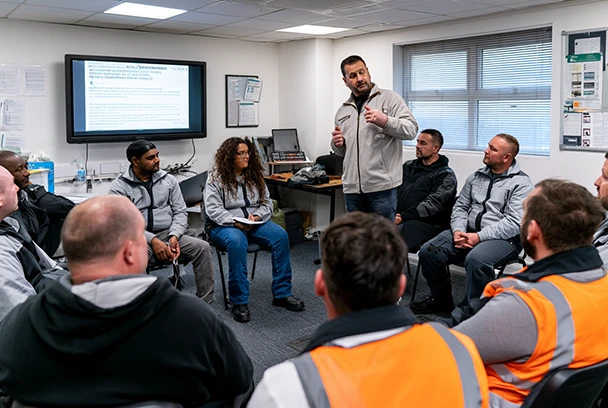
The quality of a security team is only as strong as the people within it. Ask how the company recruits and vets its operatives. This should include criminal record checks via the Disclosure and Barring Service, thorough employment history verification, and right-to-work checks in line with UK legal requirements. Background checks are a fundamental part of responsible hiring, and a provider that cannot clearly articulate its vetting process may be cutting corners.
Ongoing Training and Professional Development
Equally important is training. Beyond the baseline SIA licence-linked qualification, ask what additional and ongoing training staff receive particularly in conflict de-escalation, first aid, counter-terrorism awareness such as the government's ACT Awareness programme, and customer service. A well-trained operative not only protects your guests they enhance the experience for everyone at your event.
6. How Will You Manage Crowd Safety and Control?

Crowd Management Strategy
Crowd control is a specialist discipline that carries enormous responsibility. The UK has witnessed tragic events that have brought crowd management practices under intense scrutiny. Ask your security provider how they will manage ingress and egress, prevent bottlenecks, monitor crowd density, and respond if overcrowding becomes a risk at key entry points throughout the venue.
Deployment and Communication
Find out whether the provider uses smart deployment strategies positioning the most skilled communicators at entry points to build rapport with guests while maintaining firm, consistent access control. Ask about their protocols for managing alcohol-related incidents, which remain among the most common security challenges at licensed events across the UK.
7. What Is Your Emergency Response Plan?

Preparing for Every Scenario
No matter how meticulously an event is planned, the unexpected can and does occur. Your event security company must have clear, practised protocols for a full spectrum of emergency scenarios medical incidents, fire evacuation, hostile vehicle attacks, civil disturbance, and counter-terrorism situations. Ask specifically about response time and how quickly the team can escalate and coordinate in a fast-moving situation.
Coordination With Emergency Services
Ask how the provider's team would coordinate with the emergency services police, ambulance, and fire in the event of an incident. A forward-thinking security company should already b e engaged with the UK's Protect Duty legislation, also known as Martyn's Law, which will impose formal obligations on those responsible for certain public venues and events to have terrorism protection measures in place.
8. Who Will Be My Point of Contact, and How Will Staff Be Supervised on the Day?

Clear Chain of Command
It is a common failing in the events industry: a security company sends a team on the day, but there is no clear chain of command, no named supervisor, and no single point of contact for the event organiser when issues arise. Ask upfront who your dedicated account manager or event supervisor will be, confirm they will be physically present throughout the event, and establish how the wider security team will be briefed, deployed, and monitored.
Supervision and Accountability
Poor supervision leads to inconsistent performance, disengaged guards, and a security operation that unravels exactly when it is needed most. A professional provider will have robust internal supervision structures and will be transparent about staffing ratios and management presence on the ground.
9. What Security Technology and Equipment Do You Provide?

Beyond Physical Presence
Physical presence alone is no longer enough in modern event security. Ask your provider exactly what security technology and equipment they deploy. Do they use walk-through metal detection archways or handheld wands for entry screening? Do they operate CCTV surveillance systems, monitored in real time by operatives holding the appropriate SIA Public Space Surveillance licence? For larger events, ask whether body-worn cameras and crowd monitoring technology are available both have become increasingly standard across the UK security industry.
Training, Maintenance, and Compatibility
Crucially, do not just ask what equipment they have ask whether their security personnel are properly trained and experienced in using it. Sophisticated security technology in the hands of an untrained operative is a liability, not an asset. Ask how old the equipment is, how frequently it is tested, and whether it is compatible with your venue's existing infrastructure, including any surveillance cameras or access control systems already in place.
10. Can You Provide References, and What Are Your Contract Terms?

Ask for References and Follow Them Up
Before committing to any security provider, ask for references from at least two or three previous event clients and follow them up. A company unwilling to provide references is a company worth avoiding. Satisfied clients are the strongest indicator of a reliable security services provider that consistently delivers on its promises.
Understand the Pricing Structure and Contract Terms
Equally, scrutinise the contract carefully before signing. Clarify the pricing structure whether it is charged per head, per hour, or as a fixed fee and ask about any potential additional costs such as late-night uplift charges, travel expenses, or mobile patrols. Understand the cancellation and substitution terms: what happens if security staff are unavailable on the day? Is the contract flexible enough to accommodate last-minute changes to your event?
Transparency at the contract stage is a strong indicator of how a company will behave when things get complicated.
Final Thoughts
Selecting the right security company is not simply a procurement exercise it is a duty of care obligation to everyone attending your event. These are the key questions that separate professional security companies from those that simply are not up to the task. Do not be afraid to push back, ask the difficult questions, and walk away from any provider that cannot give you clear, evidenced answers.
The best event security partnerships are built on openness, expertise, and trust. Find a company that demonstrates all three, and you will have a security partner not just a supplier for the long term.