


Whether you are organising a local charity fundraiser or a major outdoor music festival, one question every event organiser in the UK must answer honestly is: how much security do I actually need? It is a question that is often left too late, answered too casually, or based on gut feeling rather than proper planning.
Getting event security wrong in either direction carries real consequences. Too little and you risk the safety of your guests, your reputation, and potentially your legal standing. Too much and you waste budget on unnecessary personnel. The truth is that there is no universal formula. Security needs depend on a wide range of factors, and understanding those factors is the starting point for every responsible organiser.
Why Security Cannot Be an Afterthought
The Legal Framework Every UK Organiser Must Understand
In the United Kingdom, event organisers have a legal duty of care to everyone who attends their event. Under the Management of Health and Safety at Work Regulations 1999, a written and comprehensive risk assessment is required for any event involving employees. The Licensing Act 2003 governs venues that sell alcohol or provide regulated entertainment such as live music, and any event falling under these categories may be required to detail its safety and security arrangements as part of the licensing application process.

Martyn's Law and the Changing Landscape of Event Safety
More recently, the Terrorism (Protection of Premises) Act 2025, commonly known as Martyn's Law, has introduced counter-terrorism duties for venues and events with a capacity of 200 or more, requiring organisers to assess terrorism risks and take reasonably practicable steps to address them. For event planning in the UK, this represents a significant shift in legal responsibility that all organisers must now factor into their security planning from the outset.
Beyond the legal framework, the Health and Safety Executive provides guidance through its event safety web pages, while the Purple Guide, produced by the Events Industry Forum in consultation with the UK events industry and government representatives, sets out best practice for running events of all sizes safely. The message from all of these sources is clear: security planning is not optional, and it must be proportionate to the specific risks of the event.
The Key Factors That Determine Security Levels

Why Guest Numbers Are Just the Starting Point
Before deciding how many security guards you need and what roles they should perform, you must assess the nature of your event. Attendance numbers are the obvious starting point, but they are far from the only consideration. A private dinner for 80 guests in a licensed venue carries very different risks from a public outdoor fair with the same expected number of attendees. Larger crowds make access control, crowd management, and emergency response significantly more complex.

Audience Type
The type of audience matters enormously. A corporate awards evening, a children's sports day, and an all-night music event may each attract similar numbers, but the security needs are worlds apart. Events where alcohol service is involved, where attendees are unknown to the organiser, or where a younger or more excitable crowd is expected will generally require higher levels of trained security staff.

Venue Type
The venue itself introduces its own threats. Outdoor events require consideration of open entry points, perimeter fencing, and weather contingencies. City centre venues may benefit from easier emergency access but introduce challenges around busy surrounding streets and external crowds. Indoor venues with limited exits demand careful crowd management and thorough fire safety planning.

Role of Social Media
Social media exposure can also transform a small local event into something far larger than anticipated. Community events promoted online can attract attendances well beyond original expectations, leaving organisers under-resourced for the crowd that actually arrives. Proper planning must account for this possibility from the very beginning.
Small Events: Do Not Underestimate the Need
What Security Actually Looks Like at Smaller Gatherings
A common misconception in the UK is that small events, whether village fetes, charity nights, school fundraisers, street parties, private gatherings, or local business launches, do not require professional event security. In reality, even modest gatherings can face risks that volunteers and event staff are simply not trained to handle.
For low-risk private events, broadly accepted guidance suggests one security guard per 100 guests as a starting point. Where alcohol service is involved, this ratio tightens considerably. However, these are not hard rules. A small private event at someone's home may need just one security guard to assist with access control, first aid readiness, and evacuation if required. The primary role of security at this level is deterrence and calm management, preventing gate-crashers, discouraging opportunist theft, and being the first point of response if something goes wrong.

Public Spaces Change the Equation
At small public events, a local market, a community hall concert, or a charity fundraiser in a hired event space, the picture changes. A public venue with 50 guests may require one security operative per every ten guests, depending on the venue's own health and safety and licensing requirements. If the venue holds a licence for alcohol or entertainment under the Licensing Act 2003, the licence conditions themselves may dictate minimum staffing levels.
Filling the Gap Left by Volunteers
Small events also often rely heavily on volunteers, which introduces a gap in trained emergency response. Security professionals fill that gap. They are trained in conflict management, first aid, emergency evacuation procedures, and communication with emergency services. Their presence allows volunteers and event staff to focus on what they do best, running the event, while knowing that public safety is being professionally managed. A visible but approachable security presence also helps attendees feel more at ease, which contributes positively to the overall atmosphere and success of the occasion.
SIA Licensing Is Not Optional

It is equally important to remember that anyone carrying out regulated security duties at a public event in the UK must hold a valid Security Industry Authority licence. Security work at premises open to the public, including sporting events, music festivals, community events, and private gatherings with entertainment, requires all security personnel to hold a current SIA licence. This applies to door supervisors, crowd controllers, and those conducting bag checks or entry screening. Hiring unlicensed security staff not only puts your event at risk, it puts you at legal risk too.
Large Events: Structure, Coordination, and Layered Security
Beyond Headcount: Building a Security Operation
As event size grows, the complexity of security does not simply scale upwards. It transforms entirely. A large concert, sporting event, music festival, or major public celebration requires not just more security guards, but a fundamentally different operational structure.
For large public gatherings or events with an elevated threat level, one licensed guard per 150 guests is a commonly accepted starting point. At this scale, however, headcount alone is a misleading measure. Large events require multiple entry points, each staffed appropriately. They require mobile patrols covering the interior and perimeter of the venue.
They require security teams organised around a clear command-and-control structure, with a central operations room, supervisors managing defined zones, and clear radio communication protocols throughout. This level of operational complexity is precisely why many event organisers choose to engage a large event security company, one with the experience, infrastructure, and trained personnel to deliver this kind of coordinated, multi-layered security operation seamlessly.

Zone Management and Command Structures
Larger events will have areas of the venue sectioned as smaller, manageable zones, such as the main entrance, reception area, and back-of-house. Each zone is managed by team leaders who oversee their specific area and report back to a line manager or commander in the operations room. This approach ensures that every part of the event has dedicated security teams responsible for it. This hierarchical structure is not bureaucracy for its own sake. It is what allows a large, dispersed security operation to respond quickly and coherently when something goes wrong.
Emergency Services, Specialist Roles, and Pre-Event Planning
Emergency planning at large events must account for the possibility of multiple simultaneous incidents. A crowd surge in one area, a medical emergency in another, and a fire alarm in a third might all occur within minutes of each other. Before large-scale events take place, representatives from the police, medical services, Health and Safety executives, and security experts are typically part of the pre-planning process, covering crowd control, traffic management, and venue security.
Large events may also require security personnel with specialist roles, including those trained in close protection for VIP guests, traffic and perimeter management, or working directly alongside police and other emergency services. The security measures required at this level go well beyond door supervision and access control.

Martyn's Law for Larger Venues and Events
Under Martyn's Law, venues and events expecting 800 or more people now carry enhanced counter-terrorism duties, including terrorism risk assessments, hostile vehicle mitigation planning, and staff training in emergency preparedness. For events in the 200 to 799 capacity range, a standard tier of duties applies. This legislation marks a significant shift in how the UK approaches safety and security at public events, and underscores the need for professional security partners who understand counter-terrorism best practice.

The Purple Guide, which covers everything from music festivals to country fairs, reinforces that each event must be assessed individually. There is no single prescriptive model that fits all situations, and security experts will always advise that a tailored, proactive approach is far more effective than a generic one.
Common Mistakes UK Event Organisers Make
Booking Late, Choosing on Price, and Ignoring the Venue
Regardless of event size, certain errors appear repeatedly in event security planning. Booking event security too late is one of the most common. Reputable, SIA-licensed companies fill their calendars quickly, particularly during the busy spring and summer season. Leaving security to the last minute often means settling for less experienced security staff or inadequate coverage across the whole event.
Choosing a security provider based on price alone is another costly mistake. SIA licensing, public liability insurance, first aid training, and prior experience of comparable events should all be verified before any contract is signed. A cheaper quote from an under-qualified provider can expose you to significant liability if something goes wrong.
Communication, Guest Lists, and Knowing Your Crowd
Failing to communicate with the venue ahead of the event is also a frequent problem. Venues may have their own safety staff, specific entry requirements, or conditions attached to their premises licence. A pre-event walkthrough with your security teams and the venue manager is a practical necessity that prevents confusion on the day. Issues around guest lists, restricted areas, and access control procedures should all be agreed in advance.
Underestimating the Social Dynamics of Your Audience
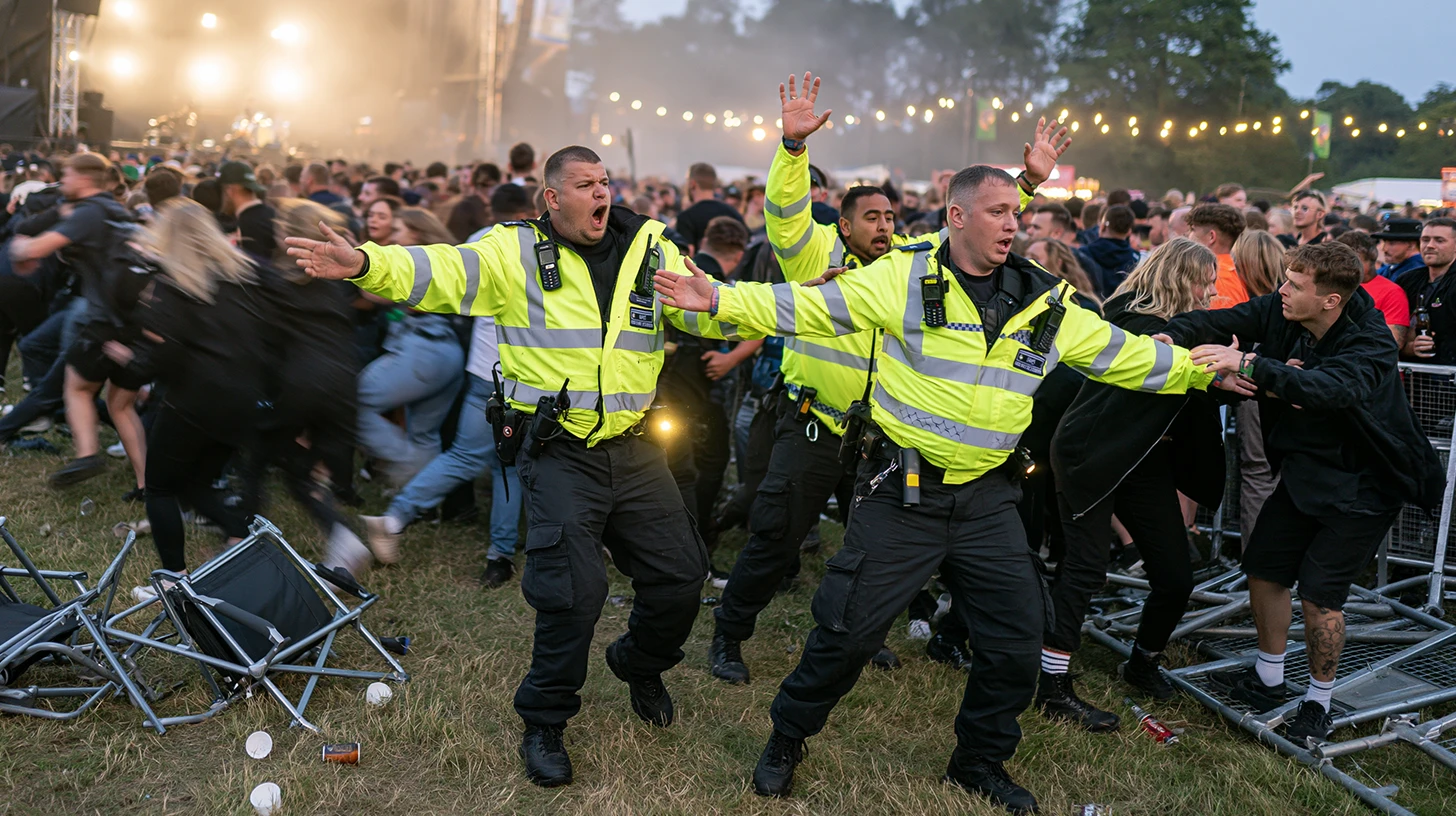
A persistent blind spot for many organisers. Alcohol service, heightened emotions, large queues, and unfamiliar surroundings can all cause situations to escalate quickly. Trained security staff understand de-escalation techniques and crowd management practices that untrained volunteers simply do not. This includes handling situations involving lost children, medical incidents, antisocial behaviour, and unexpected disruptions, all of which can occur regardless of crowd size.
Starting With a Risk Assessment
The Foundation of All Effective Event Security Planning
Whatever the size of your event, the process begins in the same place: a thorough risk assessment. Under UK law, if you employ five or more people, your risk assessment must be written down and made available to local authorities upon request. Even where this is not strictly required, a documented assessment demonstrates due diligence and provides a clear framework for your security teams to operate within.
| Event Type | Example Events | Guest Numbers | Security Ratio | Key Considerations | Risk Level |
|---|---|---|---|---|---|
| Small private | House party, private dinner | Up to 100 | 1:100 | Access control, first aid readiness, evacuation support | 🟢 Low |
| Small/medium public | Village fete, market, charity event, licensed venue | 50–199 | 1:10 (or per venue licence) | SIA-licensed staff required; Licensing Act 2003 sets minimum staffing if alcohol/entertainment is served | 🟡 Medium |
| Large public/major event | Concert, festival, sporting event | 200+ (800+ = enhanced tier) | 1:150 (starting point) | Multiple entry points, zone management, command-and-control structure; Martyn's Law duties apply standard tier 200–799, enhanced tier 800+ (terrorism risk assessment, hostile vehicle mitigation, staff training) | 🔴 High |
What a Strong Security Plan Should Cover
The assessment should address access and egress, crowd control procedures, emergency response protocols, alcohol service considerations, the expected behaviour of your audience, and any specific venue hazards. From this foundation, a security plan can be built that is proportionate, professional, and properly resourced, whether your event has fifty guests or fifty thousand.
A good security plan will also include clearly defined entry points with assigned security personnel, protocols for communicating with emergency services, procedures for managing lost children or vulnerable individuals, and contingencies for weather or unexpected changes in crowd size. The more thoroughly these elements are considered during event planning, the better placed your security teams will be to manage any situation that arises on the day.