


Introduction
Music festivals are among the most celebrated events in the British summer calendar. From intimate community gatherings to headline-pulling, multi-day spectaculars, festivals bring together tens of thousands of people in temporary, high-energy environments that are as exciting to attend as they are complex to manage. Behind every great festival experience is a level of planning that most attendees never see and at the heart of that planning sits security.
Festival security is not simply a box-ticking exercise. It is absolutely essential to the success and reputation of any event, and in the UK, it carries significant legal weight. Whether you are staging a regional food festival or a full-scale outdoor music event, a well-structured security plan is one of the most important investments you will make. This ultimate guide walks through everything festival organisers need to know about staffing, crowd control, and staying on the right side of UK compliance from the moment planning begins to the final stages of teardown.
Why Festival Security Must Be a Top Priority
The risks associated with large public gatherings are wide-ranging and serious. Music festivals face potential threats including theft, anti-social behaviour, unauthorised access, crowd surges, fire, severe weather, and medical emergencies. Without adequate preparation and understanding of event security by event type, any one of these risks can escalate rapidly endangering attendees, damaging reputations, and exposing organisers to significant legal liability.
In the UK, the regulatory framework governing festivals is extensive. The Health and Safety at Work Act 1974 places a duty of care on organisers to protect workers, contractors, and the public. The Licensing Act 2003 governs alcohol and entertainment activities, while the Regulatory Reform (Fire Safety) Order 2005 sets out fire safety obligations. More recently, the Terrorism (Protection of Premises) Act 2025 commonly known as Martyn's Law introduced counter-terrorism duties for venues and events with a capacity of 200 or more, requiring organisers to conduct terrorism risk assessments and implement proportionate security measures. Understanding and complying with this legal landscape is not optional. Local authorities, insurers, and emergency services all expect festival organisers to demonstrate robust safety procedures before granting the permissions needed to proceed.
The Purple Guide to Health, Safety and Welfare at Music and Other Events, published by the Events Industry Forum, remains the industry's definitive reference. It goes beyond standard health and safety legislation to cover fire safety, crowd management, alcohol licensing, and much more. Any festival team serious about planning should treat it as essential reading.
Conducting a Thorough Risk Assessment
Every strong security plan begins with a thorough risk assessment. This is the process by which potential risks are identified, evaluated, and prioritised and it forms the backbone of every decision that follows.
| Risk Factor | Key Considerations | Risk Level |
|---|---|---|
| Site & Location | Ground conditions, access routes, weather, proximity to roads | 🟡 Medium |
| Crowd Size & Demographics | Capacity, audience type, event timing | 🔴 High |
| Historical Data | Lessons from comparable events | 🟢 Low |
| Temporary Infrastructure | Unauthorised access, electrical hazards, structural instability | 🔴 High |
| Critical Infrastructure | Cash handling, communications, data systems | 🔴 High |
A thorough risk assessment for music festivals should consider:
Site and location
Outdoor festivals present unique challenges compared to indoor venues. Ground conditions, proximity to roads and residential areas, access routes for emergency services, and environmental factors such as weather conditions all need to be mapped and assessed. A festival site in a remote field carries different risks to one situated in an urban park.
Crowd size and demographics
The crowd size expected will determine the scale of security measures required. A family-orientated daytime festival will call for different security strategies compared to a late-night electronic music event with a capacity of 50,000.
Historical data
Reviewing incidents from similar events provides invaluable insight. Understanding what went wrong at comparable festivals helps shape a more effective security plan and ensures that lessons are embedded into your own approach.
Temporary infrastructure
Stages, fencing, lighting towers, power generators, and cabling are all installed under tight timeframes and carry inherent risks. Unauthorised access to technical areas can result in electrical hazards or structural instability, so these zones must be incorporated into the risk assessment from the outset.
Critical infrastructure
Cash handling points, communications equipment, and data systems all represent targets for criminal activity. Protecting critical infrastructure requires specific planning alongside physical security coverage.
Once the risk assessment is complete, the findings should feed directly into a documented security plan, staffing model, and emergency response plan. This documentation is often required by local authorities as part of the event licensing process.
Building Your Security Team
The quality of your event security company will define the safety and atmosphere of your event. In the UK, any individual working in a security role at a licensed event must hold a valid Security Industry Authority (SIA) licence. Employers who use unlicensed security staff face prosecution, with penalties including fines and potential imprisonment. Since December 2025, the SIA has updated its licensing criteria, raising the bar for suitability and fitness to hold a licence making it more important than ever to verify credentials before deployment.

A professional festival security team typically comprises several distinct roles:

Door supervisors and entry staff
manage access points, conduct bag checks, and screen for prohibited items such as weapons, drugs, and alcohol brought in from outside. Their role sets the tone for the entire event before it begins.

Patrolling security officers
move through the festival grounds to monitor behaviour, identify early warning signs of trouble, and offer support to attendees. Their visibility alone acts as a deterrent to antisocial behaviour and petty crime.

Crowd management specialists
They are positioned at key locations around stages, bars, and food areas, trained to monitor crowd density and respond to surges before they become dangerous situations.

Supervisors and control room operators
coordinate security operations from a central point, overseeing CCTV systems, managing communications, and directing teams during security incidents.

Specialist close protection officers
may be required for high-profile performers or VIP guests. Their specialist skills are vital for protecting your most important guests at your event.

Support Event Stewards
Support stewards who do not require an SIA licence but should hold relevant training play a vital role in directing crowd flow, operating emergency exits, and assisting with general attendee welfare.
The combination of licensed security personnel and trained stewards creates a layered approach that balances control with hospitality. Conflict resolution skills are as important as physical capability. The best security teams understand crowd psychology, de-escalation techniques, and how to communicate effectively with large groups of people under pressure.
Access Control and Entry Management
Effective access control is one of the pillars of festival security. Managing who enters the festival site and under what conditions prevents unauthorised access, reduces the risk of prohibited items entering the grounds, and keeps crowd numbers within safe limits.
Key access control measures include:

Secure perimeter fencing
A robust perimeter prevents individuals from bypassing official entry points and makes it significantly harder for unauthorised access to occur undetected.

Ticket verification and scanning
Digital ticketing systems reduce fraud and allow security teams to cross-reference attendee data in real time. Any attempt to enter with a duplicate or counterfeit ticket can be identified quickly.

Bag checks at all entry points
All bags should be searched at access points before the event begins, with clear signage posted in advance informing attendees of what prohibited items will be confiscated.

Wristbands and RFID access cards
For multi-zone events with VIP areas, backstage sections, and restricted technical zones, wristbands or RFID cards ensure that only authorised individuals can enter sensitive areas.

Drug detection dogs
Canine units are one of the most effective deterrents against the bringing in of illegal substances. Their presence at entry points significantly reduces the likelihood of drug-related incidents inside the festival grounds. For large events where entry points experience significant volumes of people, staggered arrival windows and multiple access lanes help to prevent congestion and maintain a smooth flow into the site.
Crowd Management and Crowd Safety
Crowd safety is one of the most complex and consequential aspects of festival planning. Poorly managed crowds at music festivals can cause compression injuries, panic, and in the worst cases, fatalities. The responsibility to prevent these outcomes rests squarely with festival organisers and their security teams.
Effective crowd management planning begins with site design. The layout of stages, food concessions, bars, and toilet facilities should be mapped to prevent congestion in any single area. Designated circulation routes, clearly marked with signage, guide attendees between zones and reduce the likelihood of dangerous crowd densities forming unexpectedly. Staggering performance times across multiple stages also distributes crowd movement and helps prevent bottlenecks from forming at peak moments.

Security personnel should be positioned in sufficient numbers at all key locations, including stage barriers, emergency exits, access routes, and first aid stations. Two-way radios are essential for keeping all teams in communication, enabling rapid coordination when crowd conditions change. CCTV systems provide an overhead view that ground-level staff cannot replicate, allowing control room operators to identify developing issues and deploy resources efficiently.
When a crowd surge or unusual density is detected, the emergency response must be swift. Trained staff should be able to intervene early, using clear verbal communication and physical barriers to redirect movement before a situation escalates. Regular drills conducted before the event begins ensure that every member of the team knows their role and can act without hesitation.
Developing an Emergency Response Plan
Even the most thorough risk assessment cannot eliminate the possibility of an emergency. What it can do is ensure that when something unexpected happens, the response is fast, coordinated, and effective.
An emergency response plan should cover:

Medical emergencies and medical incidents
First aid stations should be distributed across the festival grounds, staffed by qualified paramedics and first aiders. Medical issues related to heat exhaustion, intoxication, and physical injury are common at large outdoor festivals, and rapid access to first aid is essential. Ambulance access routes must remain clear throughout the event.

Fire safety
Fire extinguishers must be positioned at appropriate intervals across the site, with particular attention paid to catering areas, electrical installations, and temporary structures. Evacuation plans should be rehearsed before the event begins, and all staff must know their responsibilities.

Evacuation procedures
Emergency exits must be clearly signed and kept free of obstruction at all times. If a site-wide evacuation is required, security teams need pre-agreed assembly points, communication protocols, and coordination with emergency services to manage the movement of large crowds safely.

Severe weather
Outdoor festivals are vulnerable to sudden changes in weather conditions. High winds, heavy rain, and extreme heat each carry specific risks that must be planned for. Contingency arrangements should include shelter options, communication strategies for alerting attendees, and protocols for suspending performances if conditions become dangerous.
Terrorism and serious threats
Under Martyn's Law, events with a capacity of 800 or more are required to appoint a responsible person, conduct a terrorism security risk assessment, and implement a documented plan. Even below this threshold, counter-terrorism planning is considered best practice and is increasingly expected by local authorities and insurers.
All emergency response protocols must be communicated to every member of staff before the event begins, and coordination with emergency services police, fire services, and ambulance should be established well in advance.
Technology and Surveillance
Modern festival security operations are supported by a range of technologies that enhance situational awareness and response capability. CCTV systems are among the most important, providing continuous visual coverage of entrances, stages, crowd areas, and critical infrastructure. Live monitoring rather than passive recording is what delivers real security value, as it allows operators to detect developing problems and coordinate a response before they escalate.

Beyond CCTV, drones are increasingly used at large outdoor festivals to provide overhead crowd monitoring across areas that ground-level cameras cannot cover effectively. Body-worn cameras worn by security personnel provide accountability and evidence in the event of security incidents. Digital communication platforms and festival-specific apps allow security teams to share information rapidly, coordinate responses, and keep attendees informed during an emergency.
Cybersecurity is also a growing concern for festival organisers. Digital ticketing systems and cashless payment infrastructure can be targeted by fraudsters. Encrypted payment systems, two-factor authentication, and staff training on phishing and scam awareness are all part of a well-rounded security plan.
Managing Alcohol, Substances, and Behaviour

Alcohol consumption is a recognised feature of most music festivals and one of the primary drivers of security incidents. Training bar staff to recognise the early warning signs of intoxication and refuse service where appropriate is one of the simplest and most effective interventions available. DS-licensed security operatives deployed around bar areas are trained specifically in the challenges that alcohol creates, including conflict resolution and de-escalation.
Welfare and Vulnerability Engagement (WAVE) training equips security staff with the skills to recognise not only intoxication but also indicators of drug use and spiking increasingly important at festivals where these issues are a documented risk. Collaboration between security teams, medical staff, and bar management creates a joined-up approach that identifies and supports vulnerable individuals before their situation becomes a medical emergency.
Post-Event Security
Festival security does not end when the last act leaves the stage. The teardown phase carries its own distinct set of risks. Fatigue among staff, reduced crowd presence, and the gradual dismantling of temporary infrastructure all create opportunities for theft, vandalism, and unauthorised access.
Post-event security should include continued perimeter monitoring, patrol of the festival site, protection of artist equipment and staging assets, and access control throughout the clear-up operation. Maintaining a documented, professional security presence during teardown also demonstrates responsibility to venue owners, local authorities, and insurers all of whom will take note of how the event is concluded as well as how it was run.
UK Compliance: What Festival Organisers Must Know
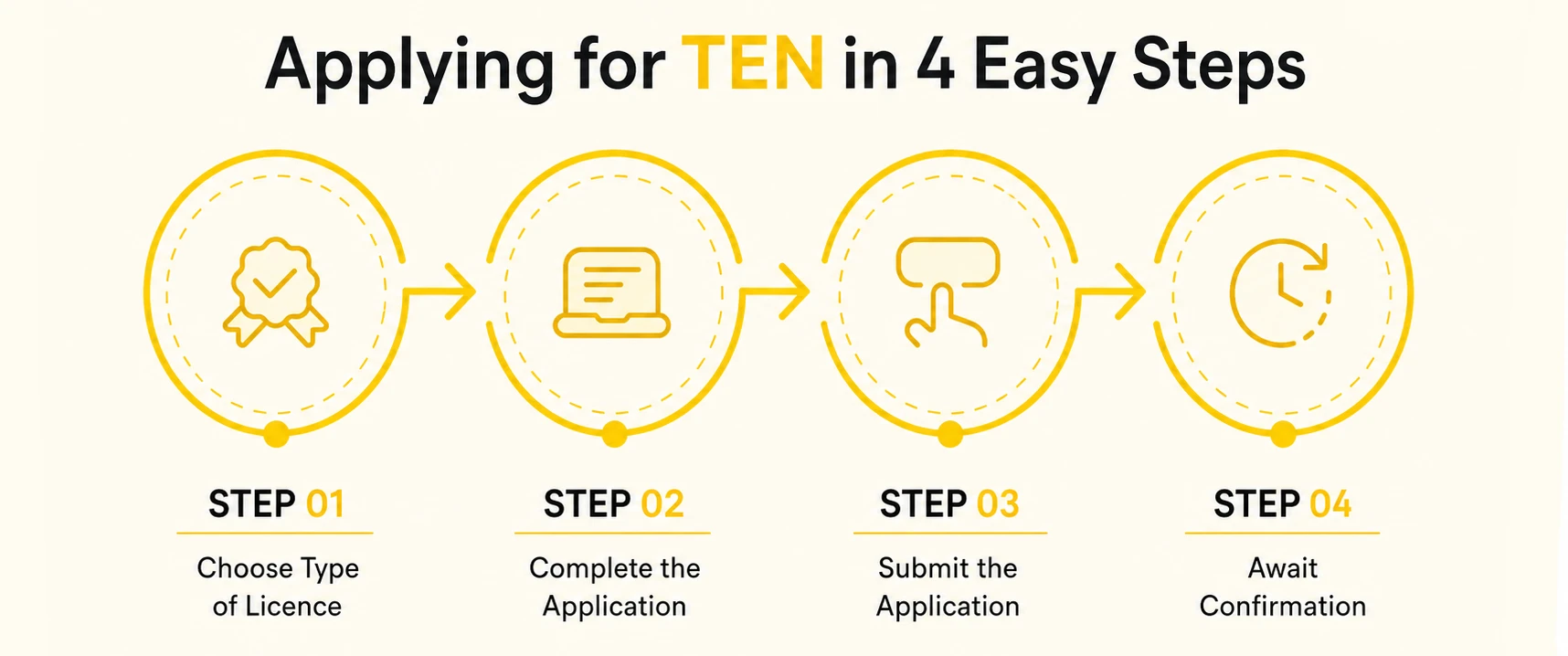
UK compliance for festivals involves multiple overlapping legal frameworks. Beyond the Health and Safety at Work Act and Martyn's Law already discussed, the Licensing Act 2003 requires a premises licence or Temporary Event Notice (TEN) for events involving the regulated sale of alcohol or provision of entertainment. Engaging with your local authority's Safety Advisory Group (SAG) early in the planning process is strongly recommended in many cases it is required. SAGs bring together representatives from the local council, police, fire services, and ambulance providers to review event safety plans and offer guidance before permissions are granted.
Compliance is not simply about avoiding fines. A demonstrably strong security plan reassures insurers, increases your chances of securing licences, and builds the kind of credibility with local authorities that supports future events. Festivals that have suffered security failures have faced not only financial penalties but event shutdowns and lasting reputational damage. The investment in getting security right is always worthwhile.
Top Tips for Festival Security: A Summary
Planning festival security is a detailed, ongoing process that must begin months before the event. As a starting point, these top tips capture the essentials:
- Conduct a thorough risk assessment tailored to your specific site and audience.
- Build a security team of SIA-licensed professionals with clearly defined roles.
- Implement layered access control at all entry points.
- Plan crowd management strategies around your site layout from the outset.
- Develop a comprehensive emergency response plan and test it with regular drills.
- Deploy CCTV systems with live monitoring rather than passive recording.
- Address alcohol and substance risks with trained, specialist staff.
- Maintain security throughout teardown and post-event operations.
- Engage with local authorities and emergency services early and transparently.
- Document everything your security plan, risk assessment, incident logs, and compliance records.