


Planning a successful event in the UK means far more than booking security hire for events, selecting a venue, arranging entertainment, and selling tickets. From music festivals and corporate conferences to Christmas markets and charity fundraisers, every event carries inherent risks that organisers have a legal and moral duty to manage. At the heart of that duty is one essential document: the event security plan.
Whether you are organising a small private celebration or a large-scale public festival, a well-crafted security plan is not optional. It is the foundation upon which everything else sits the document that protects your attendees, your staff, your reputation, and your legal standing. This guide walks you through exactly what a UK event security plan needs to include, why each section matters, and how to approach the process with the rigour it demands.
What Is an Event Security Plan and Why Does It Matter?
An event security plan is a formal, working document that identifies the security threats relevant to your event, defines the measures in place to mitigate those threats, and sets out the roles, responsibilities, and procedures that all personnel must follow. It is a living document one that will evolve as your event planning progresses and that should be reviewed, updated, and signed off at every major milestone.
Security and safety are integral to event management at every scale. Yet all too often, event organisers treat security as an afterthought something to sort out in the final weeks before the event rather than a strategic priority from the very beginning. This approach is not just risky; it is increasingly unlawful.
UK Events are Governed by a Significant Legal Framework
Key legislation includes the Health and Safety at Work Act 1974, which places a duty on organisers to protect workers and the public; the Management of Health and Safety at Work Regulations 1999, which require written and comprehensive risk assessments; the Regulatory Reform (Fire Safety) Order 2005, which governs fire risk planning; and the Licensing Act 2003, which covers alcohol and entertainment licensing. For events with a capacity of 200 or more, the landmark Terrorism (Protection of Premises) Act 2025 commonly known as Martyn's Law now introduces specific counter-terrorism duties.
The reason you need an event security assessment is simple: the consequences of inadequate security can be severe. Missing or insufficient security arrangements can lead to access control failures, crowd management incidents, breaches of licensing regulations, theft, and in the worst cases, serious harm or fatality. A comprehensive event security plan reduces those risks, demonstrates compliance to local authorities and licensing bodies, and gives everyone involved from your client to your stewards the clarity they need to do their jobs well.

Understanding Martyn's Law: What UK Event Organisers Must Know in 2025
One of the most significant developments in UK event security in recent years is the passage of Martyn's Law. The Terrorism (Protection of Premises) Act 2025 received Royal Assent on 3 April 2025, named in honour of Martyn Hett, one of the 22 victims of the 2017 Manchester Arena attack. The legislation introduces new legal duties for those responsible for publicly accessible premises and events, with full compliance expected by April 2027 following a 24-month implementation period.
The Act operates on a tiered basis:
Applies to venues and events where between 200 and 799 individuals are reasonably expected to be present at the same time.
Standard Tier (200–799 Capacity)
Standard tier duty holders must notify the Security Industry Authority (SIA), and have in place, so far as is reasonably practicable, public protection procedures designed to reduce the risk of harm in the event of a terrorist attack. This includes a terrorism-focused risk assessment, staff awareness training, and an emergency response plan.
Four Key Areas of Procedure
EVACUATION:
Swiftly moving people out of the venue to safety.
INVACUATION:
Sheltering people in a secure area on-site when evacuation isn't safe.
LOCKDOWN:
Securing the premises against external threats.
COMMUNICATION:
Informing and guiding people on the premises during an incident.
The standard tier focus is on planning and training rather than expensive physical upgrades. The law does not require standard-tier premises to install new security equipment. Developing an emergency action plan, training staff, and conducting evacuation procedures drills are the primary compliance measures. This mirrors the approach already familiar to most organisations through fire safety regulations.
What compliance looks like

Emergency Action Plan: A documented plan for staff to follow in the event of an attack.

Staff Training: Training relevant staff on procedures and their individual responsibilities.

Evacuation Drills: Conducting regular practice drills to test and refine procedures.
Enhanced Tier (800+ Capacity)
Applies to venues and events expecting 800 or more people. In addition to the standard tier requirements, enhanced tier organisers must conduct detailed threat, vulnerability, and risk assessments; implement physical security measures such as barriers, hostile vehicle mitigation (HVM), and CCTV; designate senior security roles and responsibilities; carry out regular plan reviews and realistic training drills; and document their compliance in a formal submission to the SIA.
Public Protection Measures
CCTV:
Enhanced monitoring across the venue and surrounding perimeter.
BAG SCREENING:
Bag checks or metal detectors at entry points.
ACCESS CONTROL:
Stricter protocols governing who can enter restricted areas.
PERIMETER SECURITY:
Hostile vehicle mitigation barriers and boundary improvements.
Enhanced-tier venues must also produce a written security plan or risk assessment documenting the procedures and measures in place, which must be submitted to the SIA. Additionally, any organisation (other than a sole trader) operating an enhanced duty premises must appoint a senior leadership representative a senior manager as the responsible person for Martyn's Law compliance. This individual ensures the business meets its obligations under the Act.
Additional Compliance Obligations

Written Security Plan: A documented risk assessment of all procedures and measures, submitted to the SIA.
Responsible Person: A named senior manager accountable for Martyn's Law compliance (not required for sole traders).
SIA Registration: All enhanced-tier premises must register with the Security Industry Authority.
If Your Event Currently Falls Outside the Scope of Martyn's Law
The approach it mandates early threat assessment, proportionate protective measures, trained staff, and documented procedures reflects best practice that every organiser should aspire to. The SIA has the power to issue compliance notices and substantial financial penalties for non-compliance, so starting your preparations now is strongly advised.
The Structure of a Comprehensive Event Security Plan
There is no single universal template for an event security plan, and the specific content will vary depending on your event type, venue, scale, and the nature of your audience. However, the sections below represent the core components that every robust security plan should address.

1. Executive Summary
Begin with a concise executive summary that sets out the purpose and goals of your security plan. Identify the key areas the document will address, flag any high-risk security concerns that require particular attention, and note any unique characteristics of your event that may demand a tailored approach. The executive summary allows stakeholders including your client, the venue team, local authorities, and emergency services to quickly understand the plan's scope and priorities.
2. Introduction and Scope
The introduction should define what the security plan covers and, crucially, what it does not cover. It is important to distinguish clearly between security responsibilities and broader health and safety matters. Your event security plan should remain focused on security-specific risks and procedures. Conflating it with general health and safety planning can make it unwieldy and harder to action under pressure.
Describe the document's objectives clearly, note its limitations, and state how it relates to any other plans in use such as a separate health and safety risk assessment or a major incident plan.
3. Site Parameters and Venue Details
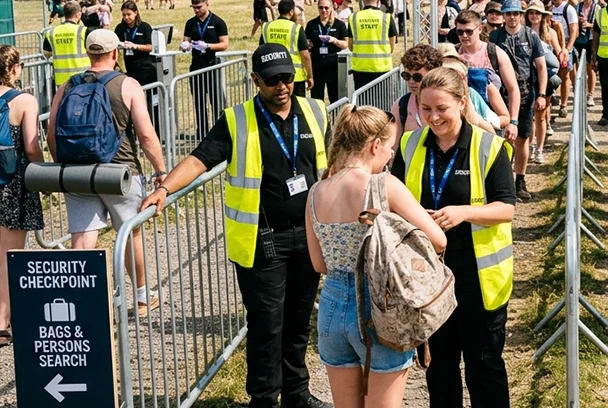
Whether your event is indoors or outdoors, the security plan must reflect the specific layout and features of your venue. Include a detailed floor plan or site map that highlights emergency exits, entry and exit requirements for general and emergency use, access points, security posts, and critical infrastructure.
If the venue is being used outside of normal hours for example, a gallery or museum hosting an evening event document any additional out-of-hours contacts and access arrangements. Include specific venue management contacts and their details so that communication can be maintained quickly and efficiently throughout the event.
For outdoor events, describe how the perimeter will be managed. Consider whether fencing or barriers are required, and how access through unauthorised entry points known as porosity will be minimised. For indoor events, pay particular attention to back doors, fire exits, and windows that could provide unauthorised access.
4. Scope of Event
This section provides a clear overview of the event itself. Include the type of event, the expected number of attendees and staff, the event structure and programme, and any relevant context from previous iterations of the same event or similar events at the same venue. This contextual information is valuable when assessing risk and planning resources, as it allows you to draw on real-world experience rather than hypothetical scenarios alone.
Note any factors that may elevate risk: high-profile guests, politically sensitive themes, events with a history of public disorder, or venues in areas with elevated crime levels.
5. Risk Assessment
The event risk assessment is the analytical core of your event security plan, and it deserves careful, methodical attention. Every credible threat must be identified, evaluated, and assigned a corresponding control measure.
Conducting a Threat and Risk Assessment

Identifying Threats
Compile a comprehensive list of potential security incidents relevant to your event. These may include terrorism and targeted attacks, crowd surges and stampedes, violent or antisocial behaviour, theft and pickpocketing, cybersecurity breaches, gate-crashing and ticketing fraud, hostile vehicle incidents, and protests or agitation. The UK Government's National Risk Register is a useful reference for identifying the range of threats worth considering.
Assessing Likelihood and Impact
For each identified threat, assess both the likelihood of it occurring and the potential impact if it does. The threat level should reflect genuine intelligence and contextual knowledge for example, previous incidents at the venue, information from the police, or awareness of current social or political tensions. It should not be influenced by the security measures you already have in place; those measures form a separate part of the calculation.

Using the Risk Status Approach
One widely used method assigns each potential incident a threat level score from 1 (very low) to 5 (very high) and a separate vulnerability score from 1 to 5 that reflects how prepared your event is to deal with that threat. Multiplying these two figures produces a risk status score on a scale of 1 to 25. A threat rated 3 with a vulnerability score of 2 produces a risk status of 6 indicating a low risk that may not require significant resource allocation. A threat rated 4 with a vulnerability score of 4 produces a risk status of 16 a high-risk scenario demanding immediate mitigation planning.

Documenting and Reviewing Assessments
All assessments must be documented in full. Record the methodology used, the scores assigned, the rationale behind those scores, and the control measures implemented in response. The risk assessment should be reviewed regularly throughout the planning process, updated in response to any changes in circumstances, and re-evaluated in real time during the event itself, where possible.
Key Sections of the Event Security Plan: In Depth
Roles and Responsibilities
A security plan without clearly defined roles and responsibilities is a plan that will fail under pressure. Every member of the security team from the overall security manager to individual door supervisors and stewards, must know exactly what they are responsible for, where they should be, and who they report to.
Document the full command structure, including the individual with overall responsibility for security management. Include up-to-date contact details for all key personnel, as well as the contact information for venue management, local authorities, police, ambulance, and fire services. Specify which roles require SIA licensing, and ensure that door supervisors, security guards, and any other regulated roles are filled by appropriately accredited individuals.
Ensure staff involved in the event at every level understand that security is everyone's responsibility, not just that of the dedicated security team.
Compliance and Competency
It is the responsibility of the event organiser to ensure that all security staff hold the qualifications and training required for their roles. Document the required certifications and training standards for each security role, and establish a system for monitoring compliance. This should include details of how contractors are expected to manage their own staff training, and how you will verify that this is happening.
Staff training requirements should cover counter-terrorism awareness, including the ACT (Action Counters Terrorism) programme as well as evacuation procedures, how to identify suspicious behaviour and unattended items, first aid awareness, and how to integrate effectively with the police and other emergency services during an incident.
Physical Security Measures
Physical security encompasses the tangible measures in place to protect people and property. Based on your risk assessment findings, this section should detail:
| Security Consideration | Key Actions Required | Risk Level |
|---|---|---|
| Access Control | Manage entry/exit via wristbands, ID passes or ticket scanning. Plan bag checks, metal detectors or body scanners. Document who conducts searches and under what authority. | 🔴 High |
| Perimeter Management | For outdoor events: define fencing, barriers and personnel at access points. For indoor events: address back-of-house access, fire exits and restricted areas. | 🔴 High |
| CCTV and Surveillance | Detail CCTV coverage across high-traffic areas, entry/exit points and sensitive zones. Specify who monitors feeds in real time and how they communicate with ground personnel. | 🟡 Medium |
| Crowd Management | Anticipate crowd movement patterns and plan accordingly. Use temporary barriers to guide flow, ensure adequate steward placement and manage queues. Plan must handle maximum expected attendance. | 🔴 High |
| Hostile Vehicle Mitigation | For events at risk from vehicle-based attacks, deploy physical barriers, bollards or other HVM measures to protect pedestrian areas at approach roads and entrances. | 🔴 High |
Cybersecurity
Modern events rely heavily on technology, and that dependency creates vulnerabilities. Electronic ticketing systems, venue access controls, communication networks, and public Wi-Fi are all potential attack vectors. Your plan should consider how you will prevent hackers from breaching venue systems and overriding electronic gates or door locks, what happens if alarm or communication systems are compromised, and how attendee data is protected in line with UK data protection law. Include backup systems and alternative communication channels such as radio networks, and ensure that IT support staff are available on-site throughout the event.
Communication Systems
Effective communication is essential to a coordinated security response. Your security plan should detail the communication equipment in use typically radio systems along with who is responsible for providing, testing, and distributing that equipment. Consider whether different parties (venue staff, event stewards, security contractors, and emergency services) are using compatible systems, and if not, how interoperability will be managed. Establish clear communication protocols for routine operations and for escalating incidents through the command structure.
Emergency Vehicles and Site Access
Emergency vehicle access must never be compromised. Your plan should document the designated access routes for ambulances, fire engines, and police vehicles, and confirm that these routes will remain clear and unobstructed throughout the event. If temporary structures, fencing, or barriers could affect emergency access, describe the arrangements in place to ensure rapid removal or opening of those obstacles when needed.

Evacuation Procedures
Clear, practised evacuation procedures are a non-negotiable element of any event security plan. Document all evacuation routes, identify assembly points, and ensure that trained staff are placed at key positions to direct guests during an emergency. Brief all personnel on evacuation procedures before the event begins, and consider how you will communicate evacuation instructions to large crowds, whether through PA systems, signage, or direct verbal guidance from stewards.
For events with large or complex venues, consider running evacuation drills in advance. The plan should also address how you will assist individuals with mobility impairments or other additional needs during an evacuation.
Fire Safety
Fire safety overlaps with health and safety planning but must be explicitly addressed within the security plan. Conduct a thorough fire risk assessment prior to the event and ensure compliance with the Regulatory Reform (Fire Safety) Order 2005. Verify that fire extinguishers and suppression systems are correctly positioned and maintained, that emergency exits are clearly marked and unobstructed, and that all staff know fire safety protocols and their individual responsibilities.
If your event involves catering with open flames such as barbecues or spit roasting these present an additional fire risk that must be specifically planned for. Coordinate with the local fire service as part of your major incident planning, and document the outcomes of those discussions.
Medical Facilities and First Aid
Medical preparedness is a core safety aspect of any event. Establish the number and location of first aid stations based on your anticipated attendance and the nature of your event. Ensure that trained medical personnel are available throughout the event, and that their locations are clearly communicated to attendees through signage and announcements. Document how medical staff and first aiders can be reached in an emergency, and establish direct communication with local hospitals and emergency services.
Remove physical hazards from the venue where possible loose wiring, slippery surfaces, and inadequate lighting are all common contributors to injuries at events.

Waste Management
While waste management may seem peripheral to security, it is directly relevant to site safety and should be noted within the plan. Accumulated waste creates fire risk, obstructs pathways, and can be used to conceal prohibited items. Document your arrangements for rubbish collection, recycling, and disposal throughout and after the event, and ensure that waste areas are regularly monitored and cleared.
Traffic Management
Planned traffic management extends to all aspects of movement to, from, and within the event site. Detail your arrangements for managing road traffic, including any planned road closures or diversions agreed with local authorities. Address pedestrian safety, including the marking of walkways and crossings, and plan separate routes for VIPs, performers, and key personnel where appropriate. Specify designated parking areas for staff, VIPs, and general attendees, and document how pre-registered vehicles will be identified.
Temporary barriers, blockades, or event fencing may be needed to prevent unauthorised vehicle access while allowing emergency vehicles to reach the site quickly when required.
Gathering and Communicating Information
An event security plan is only effective if the right information reaches the right people. The plan should coordinate all security-related information and define how it will be shared with all relevant stakeholders: the client, venue management, security contractors, stewards, local enforcement agencies, and emergency services.
Keep records confirming that all concerned parties have read and understood the plan. For larger events, consider holding formal pre-event briefings with security suppliers and health and safety representatives to ensure that all aspects have been thoroughly reviewed and that any outstanding questions are resolved before the event day.
Budget and Resources
Security budgets are often constrained, but it is essential to document your financial planning carefully. Record the initial budget estimate, track expenditure against that estimate, and flag any areas where the cost of required resources may exceed initial projections. Prioritising resources based on your risk assessment findings helps to ensure that the most significant threats receive the most investment, and that budget decisions can be justified to your client and to any authorities who may scrutinise your planning.
The Purple Guide and Other Key Resources
UK event organisers have access to a number of authoritative guidance resources that should inform the development of any security plan. The Purple Guide available online is the definitive industry reference for health, safety, and welfare at music and similar events. It provides detailed guidance on crowd management, site design, medical provision, and emergency planning, and is widely recognised by local authorities and licensing bodies as the standard against which event planning is measured. Familiarising yourself with the Purple Guide is strongly recommended for any organiser working on events of significant scale.
Additional resources include the HSE's Event Safety Guidance, available at hse.gov.uk, and the ProtectUK platform at protectuk.police.uk, which provides guidance on Martyn's Law compliance, counter-terrorism planning, and the ACT awareness training programme.

Working with Local Authorities, Police, and Emergency Services
Collaboration with the relevant authorities is not just best practice for many events, it is a legal requirement. Local councils issue event licences and often require formal safety documentation as part of that process. Police and fire services may need to be consulted on your security and evacuation plans, and for large-scale events, police may appoint a dedicated liaison officer months in advance to oversee intelligence sharing, route security, and contingency planning.
Engaging early with your local Safety Advisory Group (SAG) the multi-agency body that typically includes the council, police, fire service, and ambulance service ensures that your security plan is developed with the benefit of local knowledge and authority input, and that you are not caught out by requirements you were unaware of.
Document all engagement with local authorities in your plan, including the outcomes of any meetings, any conditions imposed by licensing authorities, and the contact details of all relevant officials.
Procedures, Reviews, and Continuous Improvement
An event security plan is never truly finished. It should be a living document that is reviewed and updated throughout the planning process, on the day of the event, and after the event concludes.
Establish a clear schedule for plan reviews and define who is responsible for authorising changes. For minor events, a simple event security checklist may be sufficient. For larger events, schedule formal review meetings with representatives of all concerned parties, and ensure that everyone is always working from the most current version of the plan.
After the event, debrief your entire security team. What worked well? What created unexpected challenges? Were there any incidents, near-misses, or failures in communication that need to be addressed? Collecting structured feedback from staff, contractors, and clients after each event allows you to refine your approach continuously, building a stronger security plan every time.
A One-Page Summary: Making Your Plan Actionable
A comprehensive event security guide can run to many pages, which means that critical information can be hard to locate quickly when it is needed most. Consider producing a one-page summary of the most important points key contacts, the command structure, emergency action procedures, and evacuation assembly points and ensuring that every member of the event team has a copy.
This summary is not a replacement for the full plan, but a practical operational tool that can be referenced rapidly under pressure.
Final Checklist: Does Your Event Security Plan Cover Everything?
Foundation & Documentation
Personnel & Training
Emergency Response
Operational Management
Coordination & Sign-Off

Conclusion
Writing a robust event security plan is one of the most important things an event organiser can do. It protects the people who attend and work at your event, demonstrates your compliance with UK law, satisfies the requirements of local licensing authorities, and provides a clear operational framework that allows your security team to respond effectively when the unexpected occurs.
Start the process early, engage with the right authorities and professionals, document everything thoroughly, and treat the plan as the living document it is reviewing, updating, and improving it at every stage. Security is not a box-ticking exercise. It is the backbone of every safe, successful, and professionally delivered event.