


Planning a public event in the UK, whether a community fête, outdoor music festival, charity fun run, or street carnival, involves far more than booking a venue and selling tickets. Behind every successful event is a carefully navigated relationship with local councils, licensing authorities, and statutory agencies.
Get it right, and you will have enthusiastic institutional support. Get it wrong, and your event could be stopped before it begins. Hiring a professional event security company can help you navigate and relieve the majority of this burden, as experienced providers understand the regulatory landscape and can liaise directly with the relevant authorities on your behalf. Here is some practical advice to help you work effectively with these bodies every step of the way.
Start Early…. Much Earlier Than You Think
Give Yourself Enough Lead Time
The single most important piece of advice any seasoned UK event organiser will give you is to begin your event planning well in advance. This is not merely good practice it is often a legal or administrative requirement.
For small and medium-sized events up to 4,999 attendees, most local councils require a minimum of three months' notice. For large events of 5,000 people or more, six months is typically the minimum, and some local authorities will expect even longer lead times for events that affect major public spaces, road networks, or require complex multi-agency coordination.
Why Early Planning Matters
The reason for these timelines is practical. Local authorities must internally review your event management plan across multiple departments highways, environmental health, parks and open spaces, licensing, and trading standards.
Emergency services such as the police, fire service, and ambulance trust need time to assess operational implications and make their own arrangements.
If your event falls during a busy summer period when many events compete for the same dates and resources, early notice is essential. Careful planning from the outset significantly increases your chances of a smooth approval process.
Understand Who You Need to Talk To
Mapping Out the Right Departments

Working with the council is rarely a single conversation with a single person. The local authority is a collection of departments, each with distinct responsibilities and powers relating to your event. Understanding who does what will save you enormous time and frustration.

The Events or Parks Team is usually your first port of call if your event is on council-owned land. They manage the permissions and conditions for site use, and in many boroughs operate a formal application process. These packs set out the specific requirements you must meet before permission is granted.

The Licensing Authority handles applications under the Licensing Act 2003. If your event involves alcohol, regulated entertainment like live music, theatre, indoor sporting events, or dancing, or the provision of late-night refreshment, you will need either a Premises Licence or a Temporary Event Notice.
Other Key Departments and Contacts
Environmental Health and Trading Standards are responsible for noise management, food safety compliance, and public health matters. If your event features amplified sound systems, generators, or food preparation by caterers, expect to engage with this department. It is worth keeping their contact details close throughout the event planning process.
The Highway Authority must be consulted whenever your event may affect traffic flow, require a road closure, or involve marches or parades on the public highway. An application giving at least three months' notice is required for road closures, and an agreed traffic management plan must be submitted alongside any event site licence application. Organisers should also be aware that a temporary traffic regulation order may be required in certain circumstances, and the highway authority will advise on this if needed.
The Safety Advisory Group
Many councils now operate a Safety Advisory Group, sometimes called an Event Advisory Group, which is a joined-up forum bringing together representatives from the local authority alongside blue light services including the police, fire, and ambulance services. The safety advisory group exists to provide coordinated, cross-agency guidance on public safety. For larger events or more complex community events, you may be asked to present your proposals to the group in person, and additional safety measures may be applied to your event that you must comply with.

Navigating the Licensing Act 2003
Understanding Your Legal Obligations
The Licensing Act 2003 is the primary legislation governing most licensable activities at UK events, and understanding its framework is fundamental to working smoothly with licensing authorities. All those involved in event management need to be aware of where the legal requirements sit and what happens if they are not met.
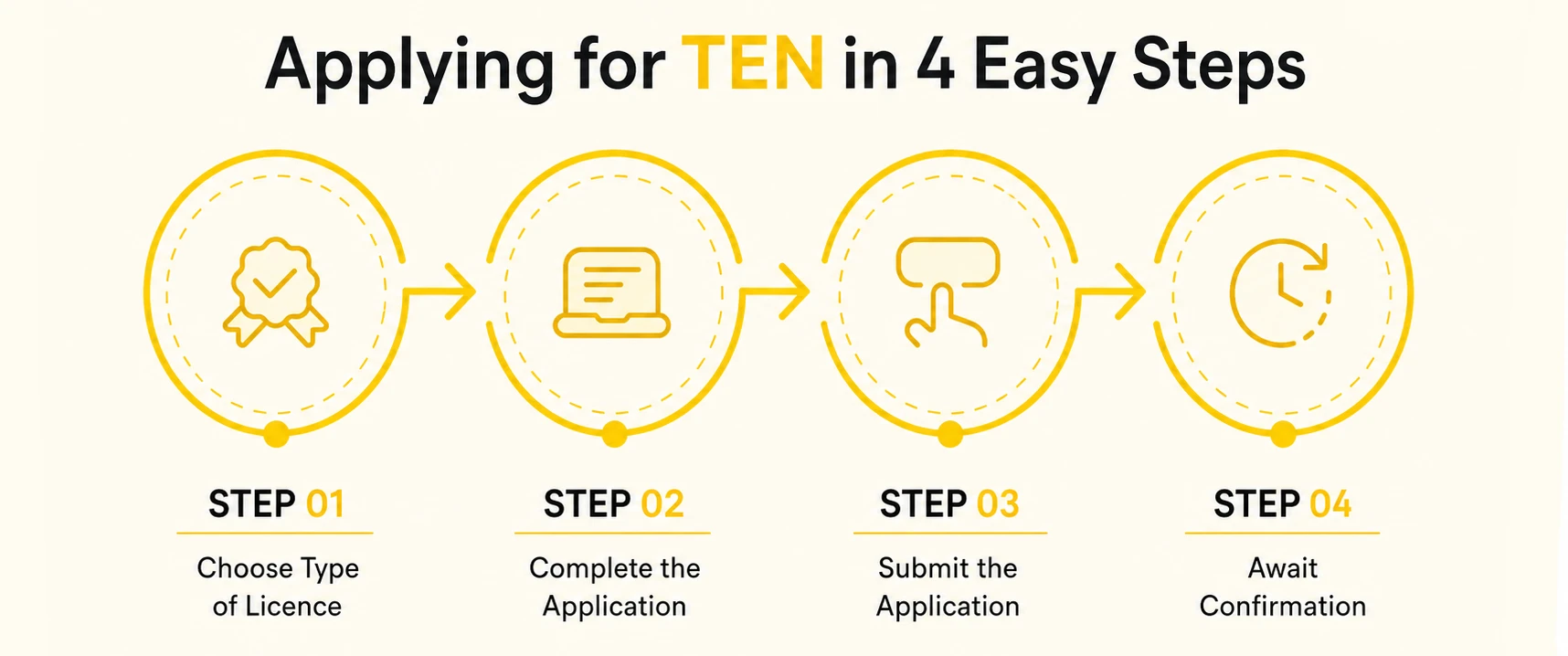
For many smaller public events, a Temporary Event Notice is the appropriate route. It is a relatively straightforward notification submitted to your local licensing authority and currently costs just £21. It permits licensable activities at premises not normally licensed, or activities beyond the scope of an existing premises licence. However, there are strict parameters: the event must have no more than 499 people present at any one time including staff and performers, last no longer than 168 consecutive hours, and the applicant must be at least 18 years old.
Timelines and Limits for TENs
Temporary Event Notices must be submitted at least ten working days before the event if submitted as a standard notice. A late notice can be submitted between nine and five working days before the event, but this carries more risk. Non-personal licence holders are limited to five Temporary Event Notices per calendar year. Personal licence holders may submit up to 50. A single event venue or premises can be covered by no more than 15 Temporary Event Notices in any calendar year, totalling no more than 21 days.
Crucially, only the police and the Environmental Health team have the power to object to a Temporary Event Notice. They must do so within three working days of receiving it, and can only object if they believe the event would undermine one of the four licensing objectives: the prevention of crime and disorder, public safety, the prevention of public nuisance, or the protection of children from harm.
Premises Licences for Larger Events
For larger events exceeding 499 attendees, a full Premises Licence is required. The Licensing Authority recommends that applications for major arts festivals, carnivals, and large outdoor events be submitted between three and twelve months in advance to allow adequate planning time. It is vital to remember that obtaining a Temporary Event Notice or premises licence does not, by itself, grant you permission to use the land. Whether the event is on private land, a public park, or sports grounds, you will still require separate landowner consent alongside any licence.
The Role of Emergency Services

Working With the Police
A common misconception among new event organisers is that the police are the primary approval authority for public events in the UK. In reality, it is the local council that issues licences. The police's powers to regulate traffic for planned events are limited, and they have no general duty to preserve public safety at public events except where there is an imminent or likely threat to life.
That said, engaging the police early is still considered good practice and essential for responsible event management. Contact the Police Operations Planning unit at the earliest stage, confirming event details in writing including event venue layout, entrances and exits, and anticipated attendance. They can offer invaluable advice on crowd control, public order considerations, emergency access routes, and traffic management and in some circumstances may provide resources, though charges may apply.

Fire, Ambulance, and First Aid Provision
The Fire and Rescue Service should be consulted about fire safety matters, including on-site precautions, access for fire vehicles, and the safety of any temporary structures or marquees. If your event involves any structures, you are also legally required to carry out a fire safety risk assessment under the Regulatory Reform (Fire Safety) Order 2005.
For medium and large events, inform the statutory Ambulance Service. They take responsibility for establishing a triage centre in the event of a major incident. Organisations such as St John Ambulance or the British Red Cross can provide trained first aiders on-site, though you should factor in the cost of these services at the planning stage. First aid provision should be proportionate to your event type, the number of people attending, and the nature of the activities taking place.

Insurance, Risk Assessments, and Documentation
Getting Your Insurance Right
No local council will grant permission for a public event without evidence that you have taken health and safety seriously. Two pillars of this are insurance and risk assessment.
Public liability insurance is not just sensible for events on council-owned land it is mandatory, typically with a minimum indemnity of £5 million. Event insurance more broadly should also cover cancellation risks where significant money has been paid out in advance, for example on ticket sales, venue hire, or performer contracts. If specialist contractors are involved, ensure they carry their own insurance cover and request copies of their policies. Never admit liability in the event of an incident, as this may invalidate your own insurance.
Completing a Thorough Risk Assessment
Your risk assessment must identify all potential hazards, evaluate the likelihood and severity of those hazards, and document the control measures you will put in place. Identifying potential hazards is not limited to the obvious; think about trip hazards on uneven ground, temporary structures that may be vulnerable to wind, electrical installations that could become dangerous in wet weather, and crowd control risks during peak arrival or departure times.
Separate written assessments should be completed for each major activity or attraction from music stages and bouncy castles to fireworks and electrical installations. This documentation forms your event management plan's safety section and is evidence that you have met your legal obligations under the Health and Safety at Work etc. Act 1974.
Your Emergency and Site Plans
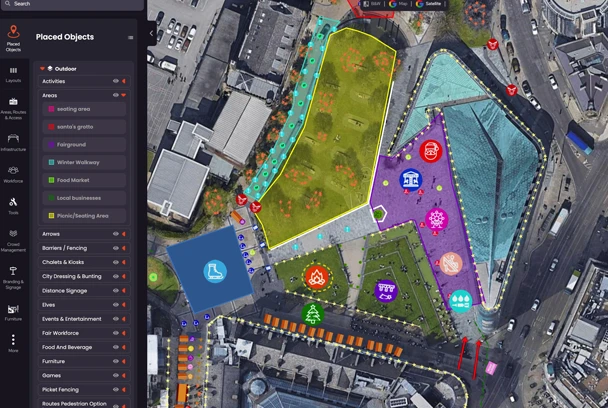
Equally important is your Emergency Plan a written document covering fire, bomb alerts, crowd disturbances, adverse weather, and evacuation procedures. A detailed site plan should accompany this, showing the position of all attractions, circulation routes, emergency exits, first aid posts, and the locations of food preparation areas and utility supplies. Both documents must be shared with and agreed by the emergency services before the event takes place.
Noise, Food, and Other Compliance Areas

Managing Noise in the Local Area
Two areas where councils exercise particularly active oversight are noise and food safety. The event organiser bears legal responsibility for limiting noise impact on the surrounding local area, including residents and businesses on private land nearby.
The Environmental Health department recommends notifying affected neighbouring properties in writing at least 21 days before the event, providing start and finish times including rehearsals and sound checks, and a contact number for noise complaints. PA systems and stage positioning should be carefully considered during the venue design and site plan stage. Appointing a dedicated Noise Control Person for the day is strongly advised for events where amplified music features prominently.

Food Safety and Selling Food at Events
Food concessions must comply with food hygiene legislation. All commercial caterers selling food at your event must be registered with a local authority as a food business and be able to demonstrate appropriate food hygiene training.
Your council's Environmental Health team will want the name, address, and registration details of all food traders in advance. Staff or volunteers involved in food preparation for the public must be trained or supervised by someone with appropriate experience. Consideration should also be given to food allergies and ensuring clear allergen information is available to people attending.
| Requirement | Key Details | Risk Level |
|---|---|---|
| Lead Time & Notice Periods | Small events (up to 4,999): minimum 3 months. Large events (5,000+): minimum 6 months. Start earlier if the event affects public spaces, roads, or requires multi-agency input | 🔴 High |
| Licensing & Permissions | Events or Parks Team handles council-owned land. TENs cover up to 499 people, 168 hours max, cost about £21, and must be submitted at least 10 working days ahead. Over 499 attendees requires a full Premises Licence applied 3–12 months in advance. Landowner consent is always required separately | 🔴 High |
| TEN Annual Limits | Non-personal licence holders: 5 TENs per year. Personal licence holders: 50. Any single venue: 15 TENs and 21 days max per calendar year | 🟡 Medium |
| Highway Authority & Traffic | Consult early if the event affects traffic or requires road closures. Minimum 3 months' notice and a traffic management plan required | 🟡 Medium |
| Multi-Agency Coordination | Engage the Safety Advisory Group for larger events; in-person attendance may be required. Contact Police Operations Planning early for crowd control and public order guidance. The council, not the police, issues licences | 🟡 Medium |
| Emergency Services | Consult Fire and Rescue on safety, vehicle access, and structures; a fire risk assessment is legally required. Inform the Ambulance Service for medium and large events. First aid provision should be proportionate to event size and activity type | 🔴 High |
| Insurance & Liability | Public liability insurance mandatory; minimum £5 million indemnity. Cancellation insurance strongly advised. All contractors must carry their own cover. Never admit liability at an incident | 🔴 High |
| Safety Documentation | Risk assessments required for all hazards and each major activity. Produce a written Emergency Plan and detailed site plan showing exits, first aid posts, and utilities. All documents must be agreed with emergency services beforehand | 🔴 High |
| Environmental Health – Noise & Food | Notify neighbouring properties in writing at least 21 days before. Appoint a Noise Control Person for amplified events. Food traders must be locally registered, hygiene trained, and display clear allergen information | 🟡 Medium |
| Building Council Relationships | Treat councils and agencies as partners. Attend briefings, respond promptly, record meeting minutes, and keep all departments updated. A strong track record builds goodwill for future events | 🟢 Low |
Building a Productive Relationship With Your Council
Working as a Partner, Not an Applicant
The most effective event organisers treat local councils, licensing authorities, and other agencies not as bureaucratic obstacles but as genuine partners in delivering safe, successful community events. Attend pre-event briefing meetings, respond promptly to queries, keep all relevant departments updated as your plans evolve, and record the minutes of every meeting.
Top Tips for Long-Term Success
Whether you are organising street parties, local charity fundraisers that raise funds for good causes, or large-scale public events, building a track record of well-run occasions opens doors. Councils and licensing authorities are more willing to be flexible and supportive for event organisers who demonstrate professionalism, transparency, and a genuine commitment to overall safety.
Start early, communicate openly, complete your documentation thoroughly, and engage your local organisations and community from the beginning. The regulatory framework, far from being a barrier to event management, becomes a solid foundation on which great events are built year after year.