


Whether you are organising a corporate gathering in Birmingham, a music festival in Manchester, a private celebration in Surrey, or a community fair in a local park, the responsibility for keeping everyone safe falls squarely on your shoulders. Event security in London and the United Kingdom is not simply about having a few guards on the door it is a legal obligation, a moral duty, and a fundamental component of professional event planning.
With the landscape of UK event security evolving rapidly, particularly following the introduction of the Terrorism (Protection of Premises) Act 2025, better known as Martyn's Law, now is the time for every event organiser to ensure their approach to security is thorough, documented, and legally compliant. This comprehensive event security checklist covers everything you need to know, from the earliest planning stages through to your post-event debrief.
Understanding Your Legal Obligations
Before any practical planning begins, every UK organiser must understand the legal framework governing their event. Under the Health and Safety at Work Act 1974 and the Management of Health and Safety at Work Regulations 1999, you have a statutory duty of care to protect the health, safety, and welfare of everyone at your event, including staff, contractors, volunteers, performers, and guests alike. Failure to meet this duty can result in prosecution, significant fines, civil litigation, and lasting damage to your reputation.
| Checklist Item | Action Required | Risk Level |
|---|---|---|
| Health, Safety & Licensing Compliance | Comply with the Health and Safety at Work Act 1974 and Management of Health and Safety at Work Regulations 1999. Apply for a Temporary Event Notice if alcohol, live music, or regulated entertainment is involved. | 🔴 High |
| Martyn's Law (Terrorism Protection of Premises Act 2025) | Identify whether your event is standard tier (200–799) or enhanced tier (800+). Begin compliance preparations ahead of 2027. The SIA is the named regulator. | 🔴 High |
| Risk Assessment | Document all hazards including venue layout, entry and exit points, crowd surge risks, temporary structures, weather impact, and audience profile. Written records are legally required. | 🔴 High |
| Terrorism & Disorder Threat Assessment | For events of 200 or more, formally document your response to a terrorist incident. Assess and record mitigation measures for theft, disorder, and protest activity. | 🔴 High |
| SIA Licensing & Team Selection | Verify all security staff hold a valid SIA licence. Hiring unlicensed staff is illegal. Prioritise experience relevant to your event type and strong de-escalation skills. | 🔴 High |
| Personnel Deployment & Briefing | Assign door supervisors, stewards, mobile patrols, and a command post coordinator. Brief all staff on roles, procedures, radio channels, and chain of command before the event. | 🟡 Medium |
| Access Control & Screening | Staff all entry and exit points, conduct ticket checks, use wristbands, and carry out bag searches. Deploy metal detectors where risk warrants it and communicate your search policy in advance. | 🔴 High |
| Signage, Barriers & Vehicle Management | Use signage and barriers to reduce congestion. Document delivery schedules and emergency vehicle access. Ensure emergency exits remain unobstructed throughout. | 🟡 Medium |
| CCTV, Communications & Patrols | Ensure CCTV covers all key areas in compliance with UK GDPR. Equip all staff with radios and establish a central command post. Deploy mobile patrols throughout the event. | 🟡 Medium |
| Evacuation, Fire & Emergency Services | Document evacuation procedures and a fire management plan compliant with the Regulatory Reform (Fire Safety) Order 2005. Liaise with local police, fire, and ambulance services early in planning. | 🔴 High |
| Medical, Vulnerable Persons & Suspicious Packages | Designate first aiders and medical stations across the venue. Establish lost children and vulnerable persons protocols. Document a clear response procedure for suspicious packages. | 🔴 High |
| Martyn's Law Four Pillars | For events of 200 or more, formally plan and document all four pillars: Evacuation, Invacuation, Communication, and Lockdown. | 🔴 High |
| On-the-Day Crowd & Behaviour Management | Maintain visible uniformed presence throughout. Monitor crowd density at key areas and redirect guests from congested zones. Manage disruptive individuals discreetly and maintain a running incident log. | 🟡 Medium |
| Post-Event Departure, Site Security & Debrief | Manage orderly departure to prevent exit rushes. Secure all access points after clearance. Hold a structured debrief, review incident reports, and document findings. | 🟢 Low |
Licensing and Martyn's Law
The Licensing Act 2003 applies to events involving alcohol, live music, or regulated entertainment. If your venue does not already hold the appropriate premises licence, you may need to apply for a Temporary Event Notice through your local authority well in advance.
The most significant recent development in UK event safety law is Martyn's Law, named in memory of Martyn Hett, one of the 22 victims of the 2017 Manchester Arena attack. This legislation introduces new legal duties for venues and events with a capacity of 200 or more people, operating on a two-tier system: a standard tier for premises expecting 200 to 799 attendees, and an enhanced tier for those expecting 800 or more.
The Core Laws Every Organiser Must Know
While full compliance is expected by approximately early 2027, organisers should be preparing now. The Security Industry Authority has been named as the regulator, and enhanced tier venues face serious financial penalties for non-compliance. Even if your event falls outside the Act's scope, the principles it enshrines represent good practice for everyone operating in the private security industry.
Conduct a Thorough Risk Assessment
Every well-secured event begins with a comprehensive risk assessment. This is not merely a bureaucratic exercise it is the foundation upon which your entire security plan is built, and it is a legal requirement under UK health and safety law.

Identifying Potential Threats
Your risk assessment should identify every plausible hazard and evaluate the likelihood and severity of harm. Consider the event size, scale, and nature, alongside the venue layout, including all entry and exit points, blind spots, and bottleneck risks. Think carefully about your expected audience, whether alcohol will be served, and the presence of high-profile guests or performers.
Additional Risk Factors to Consider
Further potential risks include crowd surges near stages, bars, or food outlets, fire hazards and trailing cables, unstable temporary structures, and bad weather affecting site safety. The risk of theft, disorderly conduct, and protest activity should also be assessed, as should the proximity of medical facilities and emergency vehicles to the site.

For events in scope of Martyn's Law, your risk assessment must now formally consider how you would respond to a terrorist attack on or near the venue. Document everything thoroughly. Most venues will require a written risk assessment before granting access, and having a detailed record protects you legally should anything go wrong.
Hire the Right Security Team

SIA Licensing Is Non-Negotiable
In the United Kingdom, it is a legal requirement for individuals carrying out certain security functions to hold a valid licence from the Security Industry Authority. This applies to door supervisors, close protection officers, and security personnel performing crowd control duties. Hiring unlicensed staff is illegal, exposes you to serious liability, and puts your guests at risk. Always verify licences before engaging any security team.

Choosing the Right Mix of Personnel
Beyond licensing, look for experience relevant to your event type. A security company that has worked extensively at events similar to yours will bring invaluable knowledge of specific risks and dynamics. Look for professional security personnel with strong communication skills and the ability to de-escalate tension calmly, as the best security outcomes are almost always achieved through dialogue rather than confrontation.
Depending on your event type, your security team may include door supervisors to manage entry and check guest lists, event stewards and crowd management staff to direct guests and assist with flow, mobile patrols to move continuously through the venue, close protection officers for VIPs, and a command post coordinator overseeing real-time operations.
Briefing Your Team
Brief your entire event staff before proceedings begin. Every member should know their specific role, the emergency procedures in place, radio channels, evacuation procedures, and the chain of command. A pre-event security briefing is not optional it is essential to a stress-free operation on the day.
Plan and Manage Access Control
Setting Up Entry Points
Robust access control is one of the most effective tools available. It prevents unauthorised entry, reduces the risk of prohibited items being brought onto site, and allows you to maintain a clear picture of how many people are on the premises at any given time.
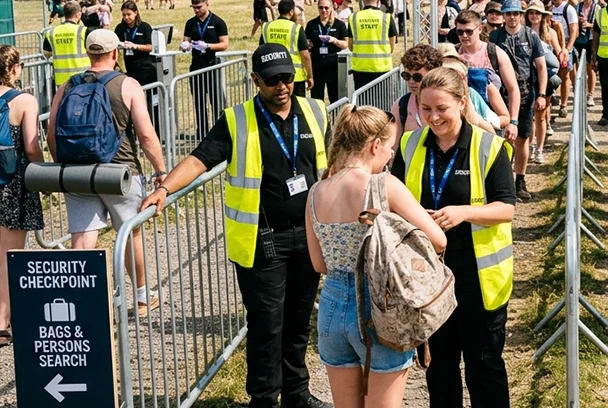
Your access control measures should include clearly monitored entry and exit points staffed by door supervisors, alongside ticket checks or guest list verification at the gate. Wristbands or lanyards help to distinguish between general attendees, VIPs, event staff, and contractors.

Bag Checks, Screening, and Signage
Bag checks and, where the risk assessment warrants it, metal detectors provide an important line of defence. Communicate your search policy to attendees in advance so there are no surprises on arrival. Use barriers and clear signage to direct guests efficiently, reducing congestion at access points.
A vehicle management plan covering delivery schedules, emergency vehicles, and VIP arrivals should also form part of your access strategy. Emergency exits must remain unobstructed at all times, both as a legal requirement under fire safety legislation and as a matter of basic guest safety. Regularly inspect exit points throughout the event to ensure they remain clear.
Deploy Surveillance and Communication Systems

CCTV and Technology
Maintaining situational awareness across a busy event requires more than a security team on foot. CCTV coverage of entrances, high-traffic areas, and any blind spots provides both a deterrent and a reliable record should an incident occur. If you are capturing footage of attendees, ensure compliance with UK GDPR and the Data Protection Act 2018, storing footage securely and notifying attendees where appropriate.

Mobile Patrols and Command
For larger events and outdoor events in particular, mobile patrols are invaluable. Every security team member should be equipped with a radio or other reliable communication device. Establish a central command post from which your security lead can monitor operations, receive real-time updates, and coordinate a rapid response to any incidents.
Prepare a Comprehensive Emergency Plan
Core Emergency Procedures
Even the most meticulously planned event can encounter the unexpected. A clearly documented and thoroughly rehearsed emergency plan is non-negotiable. Your plan should cover evacuation procedures with clearly marked assembly points, medical emergencies with designated first aiders and medical stations.
Fire management plan as required under the Regulatory Reform (Fire Safety) Order 2005, establishing clear emergency response protocols for locating and reuniting lost children or vulnerable persons, as well as procedures for handling disorderly or intoxicated individuals and suspicious packages.

Coordinating with Emergency Services and Local Authorities
For events with a capacity of 200 or more, your emergency response planning should now incorporate the four pillars required under Martyn's Law: evacuation, invacuation, communication, and lockdown. Liaise with local authorities, police, the fire service, and ambulance trust early in your planning process.
For larger events, emergency services may provide direct support or specific guidance relevant to your venue and location. This coordination is not just advisable for significant public gatherings, it is considered essential best practice across the industry.
On-the-Day Security Protocols

Incident Reporting on the Day
Keep a running incident log throughout the event. Record every incident, however minor. Consistent incident reporting is essential for insurance purposes, legal protection, and improving your event security plan for future events.

Managing Crowd Behaviour
Crowd management requires constant attention. Pay particular attention to high-risk areas such as bars, toilets, and dimly lit spaces. Monitor crowd density at all times and be prepared to guide guests away from areas that are becoming dangerously congested. Ensure your team is actively watching for signs of intoxication or aggressive behaviour, with a clear protocol for intervening discreetly and, where necessary, removing individuals from the event calmly and professionally.

Maintaining a Visible Presence
Once your event is underway, your event security team shifts from planning mode to active management. A visible, uniformed presence throughout the venue acts as a powerful deterrent and provides reassurance to attendees. Conduct regular patrols of all areas, including car parks, perimeters, and restricted areas backstage.
Post-Event Debrief and Review

Safe Departure and Site Security
Your responsibilities do not end when the last guest leaves. Managing the orderly departure of all attendees helps to prevent rushes at exit points and ensures everyone leaves the site safely. Once the venue is clear, ensure that all access points are locked, valuable equipment and any property on site is protected, and the breakdown phase proceeds securely.

Learning for Future Events
Hold a structured debrief with your security team and event staff once everything has concluded. Review all incident reports, discuss what worked well and where improvements could be made, and document your findings in full. This process is what separates good event organisers from great ones. Each event you run should leave you better equipped and more confident for future events.
Final Word
Event safety in the United Kingdom has never been more important, or more complex. The combination of established legal duties under health and safety law, the requirements of the Licensing Act, and the incoming obligations under Martyn's Law means that a rigorous, documented approach to event security is not just good practice, it is an absolute necessity for every UK organiser.
By working through this comprehensive event security checklist at every stage of your planning, and by engaging a professional, SIA-licensed security team with relevant experience, you can ensure that your event is safe, legally compliant, and one that every single attendee remembers for all the right reasons.