


Whether you are staging a local charity fun run, a village fête, a music festival, or a large corporate gathering, one document sits at the very heart of your planning: the event risk assessment. Far from being a tedious box-ticking exercise, a well-prepared risk assessment is the backbone of responsible event management in the United Kingdom. It protects your attendees, your staff and volunteers, your contractors and, ultimately, yourself.
Why a Risk Assessment Is a Legal Requirement in the UK
In the UK, the legal duty to carry out a risk assessment is set out in Regulation 3 of the Management of Health and Safety at Work Regulations 1999, underpinned by the Health and Safety at Work Act 1974. Risk assessments are a legal requirement for employers and self-employed people, and they must take into consideration the health and safety risks arising out of their work.
A key part of managing those risks effectively is hiring event security guards, who can identify potential threats, control access, and respond swiftly to incidents, significantly reducing the likelihood of harm to attendees and staff alike. If your event employs five or more people, you are required to record the significant findings in writing, and having qualified security personnel in place will not only support compliance but also demonstrate a genuine commitment to the safety of everyone involved

The Consequences of Getting It Wrong
The consequences of neglecting this duty are serious. Company directors and managers can be found personally liable for negligence, or indeed manslaughter, if someone is injured or killed and the Health and Safety Executive (HSE) finds that there was no suitable and sufficient risk assessment covering the activities involved. Fines can reach into the millions of pounds and, in the most severe cases, individuals face imprisonment.
Martyn's Law: A New Duty for Event Organisers
There is also a newer and highly significant piece of legislation that every event organiser in the UK must now be aware of. The Terrorism (Protection of Premises) Act 2025, also known as Martyn's Law, received Royal Assent on 3 April 2025 and is intended to improve protective security and organisational preparedness across the UK by requiring that those responsible for certain premises and events consider how they would respond to a terrorist attack.
The law applies to premises and events divided into two tiers: a standard duty tier for premises and events with a capacity of 200 to 799 people, and an enhanced duty tier for those with a capacity of 800 or more. While an implementation period of at least 24 months is in place, organisers of public events should begin familiarising themselves with their obligations now.
| Who Is at Risk | Hazard | Risk Level |
|---|---|---|
| All persons on site | Fire, flammable materials and evacuation procedures | 🔴 High |
| Staff, contractors, attendees | Electrical safety (portable appliances, temporary lighting, generators) | 🔴 High |
| General public, stewards | Crowd intensity and pinch points | 🔴 High |
| Pedestrians, staff, contractors | Vehicle and pedestrian movements (deliveries, car parks, access roads) | 🔴 High |
| All persons on site | Structures, site setup and breakdown (scaffolding, staging, rigging, marquees) | 🔴 High |
| All attendees and staff | Terrorism and security threats (Martyn's Law obligations) | 🔴 High |
| All persons on site | First aid and major incident response (cardiac arrest, serious injury, extreme weather) | 🔴 High |
| All attendees, staff, volunteers | Slipping, tripping and falling (uneven ground, loose cables, wet surfaces) | 🟡 Medium |
| Staff, contractors, volunteers | Manual handling (equipment, furniture, stage setup) | 🟡 Medium |
| Attendees, nearby residents, staff | High noise levels (music, generators, PA systems) | 🟡 Medium |
| Staff, contractors, volunteers | Hazardous substances (dust, fumes, fuels, cleaning chemicals) | 🟡 Medium |
| General public, vulnerable groups | Food hygiene and allergen risks | 🟡 Medium |
| Disabled attendees, elderly, children | Vulnerable persons (disabled, elderly, expectant mothers, children) | 🟡 Medium |
| Under-18s, children, vulnerable adults | Legal compliance and safeguarding (alcohol licensing, music licensing, DBS checks) | 🟡 Medium |
| All persons on site | Poor lighting and ventilation (enclosed or indoor spaces) | 🟢 Low |
The Five Steps of Risk Assessment
The HSE outlines a clear, five-step process that all event organisers should follow. Keeping the process methodical rather than overcomplicated is the key to producing a risk assessment that is genuinely useful on the ground.

Identify the Hazards
The process begins with a thorough walk-through of your event, both during the planning phase and on the day itself. A hazard is anything with the potential to cause significant harm. You should note hazards which could result in significant harm only the goal is focus and practicality, not an exhaustive list of every conceivable mishap.
Common Hazards to Look Out For
Among the most common hazards identified at UK public events are slipping, tripping and falling risks such as uneven ground, loose cables, potholes and wet surfaces. Fire risks and fire evacuation procedures must also be assessed carefully, along with electrical safety including the use of portable electrical appliances and temporary lighting. Manual handling activities, high noise levels, and poor lighting or ventilation are further areas requiring attention.
- Crowd intensity and pinch points
- Vehicle movements on site
- Substances hazardous to health
- Demonstrations or attractions risk
- Structures and scaffolding
- Special effects
- Storage of fuels
- Electrical and power supplies
Don't Forget the Build and Breakdown Phases
Drawing up a detailed event site plan is an excellent aid, as it can reveal hazards that may not be immediately obvious when reviewing individual activities in isolation. Do not forget to assess hazards during the build and breakdown phases of your event, not just during the public-facing hours. Some of the most serious incidents at UK events have occurred during loading, rigging and site dismantling operations. Car parks and access roads are another frequently overlooked area where vehicle and pedestrian movements can create significant risks.
Decide Who Might Be Harmed and How
For each of the hazards identified, you must consider all groups of people who could be affected. This goes well beyond your paying audience. The full range of people at risk at a typical UK event includes stewards, employees, volunteers and contractors; vendors, exhibitors and performers; members of the public including children, elderly persons, expectant mothers and disabled persons; local residents; and potential trespassers.
Thinking About Vulnerable Groups
Rather than listing individuals by name, think in terms of groups for example, "children in the activity zone" or "stewards on the perimeter fence." Consider whether any particular group has specific vulnerabilities. Elderly persons may be more susceptible to heat exhaustion, while disabled persons may face particular risks if emergency evacuation routes are not fully accessible. Remember also to think about people who may only be present for a short period, such as delivery drivers or contracted cleaners, as their safety is equally your responsibility.
Evaluate the Risks and Decide on Precautions
Once you have identified the hazards and the people at risk, you must evaluate the extent of the risk arising from each hazard and assess whether your existing control measures are adequate. Risk is the likelihood of harm occurring, combined with an assessment of how severe that harm could be. It is helpful to categorise risks as high, medium or low.

Assessing Your Existing Controls
Look honestly at what you are already doing. Consider whether existing controls comply with legislative standards, British Standards and industry codes of good practice. Ask yourself whether those precautions have reduced the risk as far as is reasonably practicable. You are not expected to eliminate every possible risk you cannot realistically be expected to account for everything that could possibly go wrong, but adopting a thorough approach to risk management and considering the main potential threats ensures you meet your legal obligations.

Taking Further Action Where Needed
Where risks are not adequately controlled, you must decide what further action is required to bring them down to an acceptable level. The priority order for controlling risks should be: first, eliminate the hazard entirely if it can be eliminated completely; second, prevent access to it, for example by guarding dangerous parts of machinery; third, implement procedures that reduce exposure to the hazard; fourth, provide a substitute activity or piece of equipment; and only as a last resort, rely on personal protective equipment. PPE should never be your first line of defence.

Record Your Findings
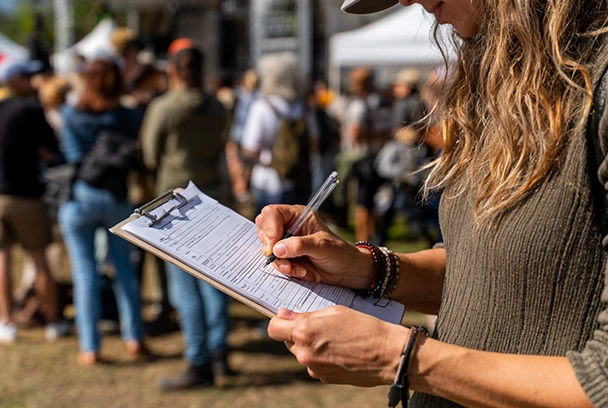
For events of any significant scale, your risk assessment findings must be written down. Use a structured risk assessment template or attached risk assessment form to record each significant hazard, the groups of people at risk, the existing control measures in place, any further controls required and who is responsible for carrying them out.

Keeping It Clear and Practical
The record does not need to be elaborate. Keep it simple and focused on controls. A brief entry such as "Tripping over cables control: all cables to be taped down and checked hourly by site manager" is far more useful than pages of theoretical discussion. The document should be shared with all those involved, including contractors and volunteers, ideally as part of a site induction and pre-event briefing. It is also worth retaining for future reference alongside any other documents you hold, such as manufacturer manuals and codes of practice.

Communicating Identified Significant Risks
If the assessment has identified significant risks, you have a legal duty to inform everyone affected of those risks and the control measures in place to manage them. You should also request risk assessments from any contractors working at your event, as they have their own legal obligations to their employees, and retain copies alongside your own assessment findings.

Fire Risk Assessments and the Emergency Services
A separate, legally required fire risk assessment must also be completed for any temporary structures used at your event, such as marquees, stages or exhibition stands. As an employer and/or building owner or occupier, you are required to carry out and maintain a fire safety risk assessment under the Regulatory Reform (Fire Safety) Order 2005, which applies in England and Wales.
This should ensure that all fire exits and escape routes are clearly signed and unobstructed, that firefighting equipment is in place, and that fire evacuation procedures have been communicated to everyone on site. For larger events, you should also engage early with the emergency services and your local Safety Advisory Group to ensure their requirements are built into your planning from the outset.
Review and Revise as Necessary
A risk assessment is not a document you write once and file away. It must be a living document, reviewed and updated throughout the planning process and on the day of the event itself.
Monitoring Controls During the Event
You should periodically check your agreed methods for controlling risks and test them to make sure they are working and being followed. Your risk assessment should set out the frequency of checks, who is responsible for them, and the methods they use. For small-scale events, a simple checklist may suffice. For larger events, a number of people may share the monitoring role, and whoever holds that responsibility should be thoroughly familiar with the assessment and able to identify new significant hazards and assess risks as they arise.

When to Revise Your Assessment
A review is required whenever there is a significant change in circumstances a new venue layout, a change in the expected audience profile, the withdrawal of a contractor, or adverse weather conditions. After the event, it is good practice to hold a debrief, particularly if any near misses or incidents occurred. For annual events, the risk assessment should be revisited each year; never assume that because last year passed without incident, the same assessment will be adequate for this year.
Additional Considerations for UK Event Organisers
Beyond the five core steps, there are several specific areas to which every event organiser in the UK should pay close attention.

Food, Drink and Allergens
Food hygiene is critical. Any caterers must hold current food hygiene certificates as well as public liability insurance. If food is being prepared on site by volunteers rather than a professional caterer, ensure everyone involved is familiar with the Food Standards Agency's safe food preparation guidelines. Allergen information should be clearly labelled for all food served, and where hot food and drinks are provided, steps should be taken to reduce the risk of burns, such as providing cup holders.
Licensing, Children and Vulnerable Adults
If alcohol is to be sold at your event, you will need the appropriate licence under the Licensing Act 2003, and steps must be taken to ensure it is not sold to anyone under the age of 18. You should also confirm whether a licence is required for live or recorded music. For events involving children or vulnerable adults, all relevant volunteers and staff should have undergone DBS checks, and arrangements must be in place for lost children.
First Aid and Major Incident Planning
First aid provision should be scaled appropriately to the size and nature of your event, and the procedure for dealing with accidents must be communicated clearly to everyone helping on the day. Arrangements must also be in place for managing major incidents, including a serious injury, a cardiac arrest or an extreme weather event.