


Hosting a public event in the UK, whether it is a music festival, a community fair, a sporting fixture, or a corporate conference, comes with a profound legal and moral responsibility. At the heart of that responsibility sits event emergency evacuation planning. Far from being a box-ticking exercise, a well-constructed evacuation plan can be the difference between a contained incident and a devastating tragedy. This guide sets out everything UK event organisers need to know to plan, document, and test an effective emergency evacuation strategy.
The Legal Framework
UK event organisers operate within a well-established legal framework that places a clear duty of care on anyone responsible for a publicly accessible gathering.
Key Legislation Every Organiser Must Know
The Health and Safety at Work etc. Act 1974 places a general duty on employers and organisers to ensure the health and safety of all people affected by their activities, so far as is reasonably practicable. The Management of Health and Safety at Work Regulations 1999 build on this by requiring formal risk assessments, the implementation of control measures, and structured emergency planning for foreseeable emergencies.
Martyn's Law and What It Means for Events
Of particular significance is the Terrorism (Protection of Premises) Act 2025, more widely known as Martyn's Law. Named in memory of Martyn Hett, one of the 22 people killed in the 2017 Manchester Arena bombing, this landmark legislation received Royal Assent on 3 April 2025. The Act will ensure the public are better protected from terrorism by requiring certain public premises and events to be prepared and ready to keep people safe in the event of a terrorist attack. While an implementation period of at least 24 months means it is not expected to come into force until 2027, event organisers are strongly advised to begin aligning their plans now.
Understanding the Two Tiers
The law applies to premises and events that meet specific capacity thresholds, divided into two tiers. The Standard Duty tier covers premises and events with a capacity of 200 to 799 people, while the Enhanced Duty tier applies to those with a capacity of 800 or more. Under the Enhanced Duty tier, procedures must be formally documented and submitted to the regulator. Across both tiers, evacuation, invacuation, and lockdown protocols must be in place.
Start with a Thorough Risk Assessment
Every effective evacuation plan begins with a thorough risk assessment. Before a single procedure is written, organisers must identify the potential hazards specific to their event.
| Topic | Key Requirements | Risk Level |
|---|---|---|
| Legal & Regulatory Framework | HSWA 1974 and MHSW Regs 1999 duty of care; Martyn's Law tiers (Standard 200–799 / Enhanced 800+) requiring evacuation, invacuation, and lockdown protocols | 🔴 High |
| Risk Assessment | Venue layout, crowd size/nature, weather, structural factors, proximity to emergency services | 🔴 High |
| Evacuation Plan Design (Routes, Signage, Lighting & Assembly Points) | Unlocked/unobstructed exits; emergency vehicle routes min. 3.7m, public routes min. 1m wide; signage and BS 5266-1 compliant lighting; assembly points located away from event footprint | 🔴 High |
| Vulnerable People & Disabilities | Reasonable adjustments under Equality Act 2010; provision for children separated from parents | 🔴 High |
| Emergency Roles, Liaison & Control Point | Named individuals for key roles; security agency integrated into command; single named Emergency Services Liaison; covered control point with power/phone access | 🔴 High |
| Communication Systems & Show Stop Procedure | Radios, PA systems, pre-agreed scripts; named individuals authorised to initiate a show stop | 🔴 High |
| First Aid & Medical Provision | Adequate first aiders/paramedics/ambulances; liaison with local NHS ambulance service | 🔴 High |
| Coordination with Local Authorities & SAG | Event Management Plan shared with police, fire, ambulance, local authority; SAG review for larger events | 🟡 Medium |
| Testing & Continuous Improvement | Tabletop exercises and live drills; post-event debrief and review of incidents to refine procedures | 🟡 Medium |
| Business Continuity & Post-Incident Planning | Prepared public/media statements; factual information ready for release | 🟢 Low |
Identifying the Key Risks
These key risks include the venue layout, the size and nature of the crowd, weather conditions, structural considerations, proximity to emergency services, and the potential for serious incidents including fire, crowd management challenges, severe weather, and terrorism. Your emergency response planning must be proportionate to the risk presented a small village fete will require a different level of planning to an outdoor music festival attended by tens of thousands of people, but no event is entirely exempt from the need to consider emergency situations.

Using the Right Guidance
The Health and Safety Executive's Event Safety Guide and the Purple Guide to Health, Safety and Welfare at Music and Other Events are the two definitive references for UK event organisers. Consider the location carefully. The distance from hospitals, the availability of emergency services, and the presence of utilities such as electricity and water can all be critical when an incident occurs. Outdoor events in remote settings require particularly detailed logistical planning.
Designing the Evacuation Plan
Once risks have been identified, organisers must develop clear, documented evacuation procedures. A robust evacuation plan should address all of the following elements.

Escape Routes and Exits
Plan and clearly mark escape routes before the event opens to the public. All exits, doors, and gates leading to evacuation routes must remain unlocked and unobstructed at all times. Doors should open outward in the direction of escape. Access routes designated for emergency vehicles and incident control should be no less than 3.7 metres wide and kept entirely clear, separate from public access routes where possible. Any evacuation route used by the public should be no less than one metre wide, with greater width considered for events with large numbers of people attending.

Signage and Emergency Lighting
Clear, visible signage is essential, particularly at events where people unfamiliar with the venue make up the majority of attendees. All escape routes must be adequately lit, and emergency lighting must comply with British Standard BS 5266-1. Use an independent power source, such as a generator, in case the mains electricity supply fails. If temporary lighting rigs such as floodlights or lighting towers are in use, ensure they are positioned so that they do not cause glare along evacuation routes. Festoon lighting strung along escape paths is a practical alternative that minimises this risk.

Vulnerable People and Disabilities
A thorough evacuation plan must make specific provision for attendees who may require additional assistance including those with physical disabilities, learning difficulties, limited mobility, or sensory impairments. Disabilities, traffic management, and event crowd flow all interact in ways that can compromise safe evacuation if not properly anticipated. Under the Equality Act 2010, organisers must make reasonable adjustments to ensure that everyone can reach safety. Where children may be separated from parents for instance in play areas or activity zones ensure that arrangements for their safe, supervised evacuation are clearly communicated so that parents do not attempt to move against the natural direction of escape.

Assembly Points and Places of Safety
Clearly identify and communicate assembly points in advance. These should be positioned well away from the event footprint, in a location such as a remote car park or open field. The route to each assembly point should itself be clear of obstructions and free from hazards. Signage pointing toward assembly areas should be visible even in poor weather conditions or low light.
Emergency Roles and Responsibilities
Effective evacuation depends on relevant staff members knowing exactly what they are expected to do before anything goes wrong.
Appointing Your Emergency Management Team
The event management team must include named individuals appointed to specific emergency roles. Appoint people to key responsibilities and brief all stewarding, security, medical, contractor staff, and personnel from the appointed events security agency before the event opens. Every team member, including events security agency operatives, must know the location of exits, how to raise the alarm, how to use fire extinguishers, and how to access other emergency equipment.

The event security agency should be fully integrated into the command structure, with their lead officer holding a named emergency role alongside the core management team. Establishing clear roles and responsibilities before the event, in close coordination with the events security agency, is one of the most important steps any event organiser can take.
The Emergency Services Liaison and Control Point
Designate a single Emergency Services Liaison a named individual who will act as the primary point of contact when police, fire and rescue, or ambulance services attend the scene. Establish a clearly signposted emergency control point that is covered, accessible to emergency vehicles, and equipped with electricity and telephone access. The event management plan should clearly state at what point a developing significant incident becomes a major incident and is handed over to the emergency services.
Transfer of Authority
Once the emergency services declare a major incident, all event personnel and resources will come under police command. It is possible for the police to take control of one area of a site while the event continues in another.
The event management team must understand this distinction and plan accordingly, ensuring that everyone knows who they receive instructions from at every stage of an escalating incident.
Counter-Terrorism Preparedness
In the current threat environment, UK event organisers cannot treat terrorism as a remote possibility. The Manchester Arena Inquiry highlighted significant failings in coordination, communication, and medical provision that cost lives. Martyn's Law was born directly from those failures, and counter terrorism is now firmly embedded in the event planning process.
Run, Hide, Tell
The key message from the National Counter Terrorism Security Office for people present during a terrorist attack is straightforward: Run to a place of safety if at all possible. If there is nowhere to go, Hide and barricade yourself in, turning your phone to silent. Tell the police by calling 999 only when it is safe to do so.
Staff Training and Terrorist Threat Procedures
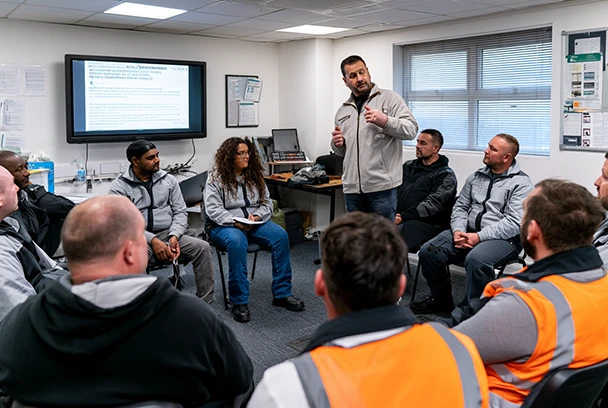
Standard tier venues are required to implement appropriate and reasonably practicable procedures for staff to follow in the event of a terrorist threat, including how to provide information to individuals on the premises and how to evacuate, invacuate, or lockdown the venue or site. Invacuation moving people to a safe area within the venue rather than outside may be the more appropriate emergency response when a threat exists immediately outside the perimeter.
Staff must be briefed on when each response is appropriate. All security staff should ideally hold ACT (Action Counters Terrorism) awareness training, a nationally accredited programme developed by counter terrorism experts specifically for front-line security operatives.
Communication Systems and the Show Stop Procedure
Clear communication is the backbone of any emergency response. Establish dedicated communication systems for staff, volunteers, and the emergency services, using radios and a public address system.
Pre-Agreed Scripts and Public Announcements
Pre-agreed wording for public announcements should be prepared well in advance, giving people clear direction without causing unnecessary alarm. The show stop procedure is a critical but often overlooked element of event emergency planning. A show stop is a rapid, controlled halt to a performance in order to protect the audience or initiate an evacuation. The key people involved in a show stop must be identified in advance those who can initiate the procedure, those who can communicate with performers, and those who can address the crowd.
Briefing Performers and Production Teams
Audience decisions during an emergency must be managed carefully. Pre-agreed wording for the show stop announcement should be rehearsed, and the production management of all performing acts must be fully briefed before the event begins. After a significant incident has been resolved, a performance may resume, but only after consulting all relevant stakeholders on site, including the emergency services, and confirming that all event staff are back in position.
First Aid and Medical Assistance
The Health and Safety Executive strongly recommends that the visiting public be included in all first aid and medical assessments, not just staff and volunteers.

On-Site Medical Provision
Ensure that there is enough medical assistance on site including first aiders, paramedics, and ambulances for the size and risk level of your event. For larger events, consider mobile medical units and designated casualty collection points. Medical emergencies can develop rapidly in crowd environments, and having established procedures in place for handling them quickly is essential.

Liaison with the NHS Ambulance Service
Liaise directly with your local NHS ambulance service before the event, so that they can factor your event into their capacity planning and clarify transport arrangements for anyone requiring hospital care. If no ambulances are on site, a formal plan must be drawn up with the local NHS ambulance service to determine how patients will be transported to hospital if needed.
Coordination with Local Authorities and Emergency Services
For all but the smallest events with low risks or those in fixed venues with established procedures, your emergency response planning should be discussed and shared with the police, fire and rescue service, ambulance service, local authority emergency planning department, and, for fixed venues, the venue management team.
The Safety Advisory Group
For larger or higher-risk events, submit your Event Management Plan to the local Safety Advisory Group for review. Building strong working relationships with local authorities and emergency services before the event is one of the most valuable things an event organiser can do. Early engagement means that roles and responsibilities are clearly understood by all parties, and that the emergency response to any incident is seamless rather than reactive.
Business Continuity and Post-Incident Planning
Organisers should also plan for business continuity considerations including how to communicate with the public and media in the aftermath of a significant incident. Prepare factual information about your event that can be released immediately, covering the nature of the event, the number of people attending, and the steps taken to respond. This protects both the public and the reputation of your organisation.
Testing, Validating, and Improving Your Plan
Writing a plan is only the first step. Before the event opens, test every element of it.

Tabletop Exercises and Live Drills
A tabletop exercise where key people work through a range of emergency scenarios in a structured discussion is a practical and widely used method for identifying areas for improvement. For larger events, a live exercise involving all relevant teams, including the emergency services, is strongly recommended. Teams that have run practice drills respond far more effectively in real emergency situations than those that have not.

Testing Communication Systems
Test all communication systems, including radios and public address equipment, in the actual event environment before the public arrive. Testing should confirm that everyone can hear announcements clearly from all areas of the site, that radio channels are functioning, and that the designated emergency control point is operational.

Continuous Improvement
After every event, conduct a thorough debrief. Review any incidents that occurred, however minor, and use those findings to refine your procedures. True resilience in event management is not achieved through documentation alone it is built through a continuous cycle of planning, testing, learning, and improving.
Final Thoughts
Emergency response planning is not an optional add-on for UK event organisers it is a legal requirement, a professional obligation, and, above all, a matter of public safety. With the arrival of Martyn's Law, the expectations on everyone responsible for public-facing events are higher than ever. The events sector has learned hard lessons from real-world tragedies. The responsibility now lies with every organiser of every event to ensure those lessons are embedded into every plan they write. With the right approach, the right training, and the right partnerships in place, it is entirely possible to deliver safe, successful events that attendees and communities can trust.