


From sold-out arena concerts in Manchester and London's glittering red-carpet premieres to corporate summits in Edinburgh and multi-day music festivals across the British countryside, the United Kingdom plays host to some of the world's most high-profile events. Behind every successful gathering of this kind invisible to most but indispensable to all stands a Close Protection Officer, or CPO.
More commonly known as a bodyguard, the close protection operative is the trained professional responsible for ensuring that VIPs, performers, executives, and dignitaries can move through public spaces safely, confidently, and without disruption. While the role of a CPO extends far beyond events, encompassing everyday travel, residential security, and corporate environments. The event space presents its own unique and heightened set of challenges.
Crowds, media attention, unpredictable atmospheres, and compressed timelines all combine to create an environment where the stakes are exceptionally high and the margin for error is almost nonexistent.
What Is a Close Protection Officer?
Understanding the Role and Its Legal Framework in the UK
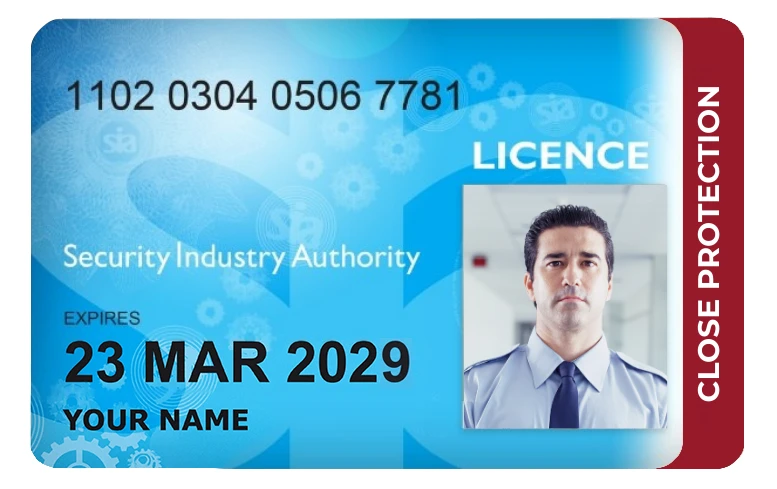
Before exploring the event-specific duties of a CPO, it is worth understanding who these professionals are. In the United Kingdom, all practising Close Protection Officers must be licensed by the Security Industry Authority (SIA). This licence is only awarded after completing a rigorous training programme typically 140 or more hours covering threat assessment, conflict management, first aid, surveillance awareness, and physical intervention.
Many CPOs also come from backgrounds in the British military, the police force, or specialist units such as the Metropolitan Police's Royalty and Specialist Protection command.
Why UK Close Protection Officers Do Not Carry Firearms
Importantly, UK-based close protection operatives do not carry firearms. Under UK law, those working within the private security industry operate using unarmed defensive tactics, situational awareness, and strategic planning rather than lethal force. Their effectiveness comes not from weaponry, but from specialist skills, preparation, and professionalism. This is a defining characteristic of close protection security in Britain, and it places even greater emphasis on the CPO's ability to anticipate and neutralise potential threats before they ever materialise.
| Event Phase | CPO Responsibility | Description | Risk Level |
|---|---|---|---|
| Pre-Event | Advance Planning | Mapping venue routes, crowd flow, escape points and secure arrival corridors ahead of time | 🟡 Medium |
| Arrivals & Departures | Movement Coordination | Managing secure entry/exit, vehicle checks and extraction through crowds at the highest-risk points of the event | 🔴 High |
| On-Site | Threat Assessment & Escorting | Continuous scanning for risks while coordinating safe movement between stage, sponsors and private areas | 🟡 Medium |
| On-Site | Access & Crowd Control | Securing restricted areas (backstage, dressing rooms) and managing fan interaction boundaries | 🟡 Medium |
| On-Site | Media Management | Controlling press and paparazzi access at public appearances | 🟢 Low |
| Emergencies | Emergency Response | First aid, medical response and evacuation via pre-planned routes during crises | 🔴 High |
The Event Environment: Why It Demands Specialist Protection
Comparing Event Work to Everyday Close Protection
General day-to-day close protection, whether accompanying a corporate executive to board meetings or managing residential security for high net worth individuals, operates in relatively controlled and familiar environments. Events, by contrast, are dynamic, densely populated, and inherently unpredictable.
At a concert or festival, a headline artist may be surrounded by tens of thousands of fans. At a film premiere in Leicester Square, a celebrity faces not only enthusiastic members of the public but also aggressive paparazzi and an uncontrolled perimeter. At a charity gala or political fundraiser, public figures and senior executives mingle in close proximity with unfamiliar faces in a setting that venue staff alone cannot adequately secure.
The Unique Risks That Events Create
In all of these scenarios, the CPO's role is not merely to stand beside their principal and look intimidating. It is to plan, assess, coordinate, communicate, and when necessary act quickly and decisively. Personal attacks, unwanted attention from members of the public, and intrusive media behaviour are among the most common threats close protection officers encounter at events. A successful CPO does not wait for these situations to develop they prevent them entirely through preparation and awareness.

Pre-Event Advance Work: The Foundation of Event Security
What Happens Before the Principal Arrives
One of the most critical and least visible aspects of a CPO's role at any event is the advance work carried out long before their principal arrives. In the close protection industry, this is handled by what is known as the Security Advance Party, or in smaller operations, by the close protection officer themselves.

Before a VIP or artist attends a venue, their vip event security CPO will have already visited the site. They map out every entry and exit route, assess crowd flow patterns, identify vulnerable bottlenecks, check escape routes, and liaise with venue staff and, where appropriate, local emergency services. They also scout private arrival corridors to keep the principal clear of public areas during arrival and departure moments that are statistically among the highest-risk points of any event attendance.
Advance Planning as a Cornerstone of Personal Security
This level of advance planning is what separates professional close protection from standard security guarding. A door supervisor or static guard protects a space; a close protection operative protects a person, and does so proactively rather than reactively. The intelligence gathering that takes place in the advance phase researching the venue, the surrounding area, known potential risks, and the principal's public profile forms the backbone of any effective security strategy on the day itself.
Managing Arrivals and Departures

The Highest-Risk Moments of Any Event
For performers and VIPs attending high-profile UK events, the moments of arrival and departure can be the most chaotic and exposed of the entire engagement. Red carpet arrivals, stage door gatherings, and post-show fan assemblies all create pinch points where crowds, press, and members of the public converge in an uncontrolled environment.
Coordinating Safe Movement on the Ground
A CPO managing an artist's arrival at a concert venue will have coordinated the route from the hotel or transport hub, confirmed secure parking or a drop-off point close to a private entrance, and briefed the driver on contingency routes should the primary path be obstructed. Vehicle checks are completed ahead of time, and evasive driving manoeuvres form part of the driver's repertoire should a threat emerge on the road. On exiting the vehicle, the close protection officer positions themselves to form a protective barrier, guiding the principal swiftly and purposefully through any assembled crowds without creating a scene that draws further unwanted attention.
Post-event departures require equal sometimes greater care. Crowds leaving a venue can be unpredictable. Fans who have identified their favourite artist may follow, rush forward, or become overwhelming even without any malicious intent. The CPO must extract the principal from the environment calmly, efficiently, and without incident, ensuring safety at every step of the journey.
On-Site Protection: Key Responsibilities During the Event

Real-Time Threat Assessment
Once inside the venue, the event close protection officers responsibilities shift into active, real-time protection. Depending on the scale of the event and the level of risk assigned to the principal, a close protection team may include a Team Leader, Personal Escort Section, and counter-attack or quick reaction units or a single operative may manage the assignment independently for lower-threat engagements.

Active Surveillance
A close protection officer continuously scans the surrounding environment for unusual behaviour, individuals who appear to be tracking the principal's movements, or situations that could escalate into physical threats. This is not passive observation it is constant, active threat assessment, running in the background of everything else the CPO does. Risk management at this level requires both sharp instinct and the ability to process multiple streams of information simultaneously.

Restricted Area Management
For performing artists, backstage zones are sacrosanct. The CPO works alongside venue staff to ensure that only authorised individuals can access dressing rooms, green rooms, production areas, and private hospitality spaces. Across the UK's busy live music circuit from the O2 Arena and Wembley Stadium to major festivals such as Glastonbury, Reading, and BST Hyde Park managing access control is an ongoing responsibility throughout the event, not simply a task carried out at the door.

CPO Access Control
Security protocols around these restricted areas must be clearly communicated to venue staff and event organisers. Clear communication ensures that everyone involved in the operation is on the same page, reducing the risk of an unauthorised individual slipping through unchecked.

Escorting Clients and Managing Movement
When the principal needs to move within the venue to the stage, to meet sponsors, or between private spaces the close protection operative orchestrates and accompanies that movement. This involves coordinating with venue staff and other members of the close protection team to ensure a clear and secure path exists before the principal moves along it. Escorting clients through high-density environments is one of the most visibly demanding aspects of event protection work, requiring calm authority and precise timing.

Crowd Interface
At events, enthusiastic fans will inevitably seek interaction with artists or VIPs. Protection officers manage these moments, maintaining a respectful but firm boundary that prevents situations from becoming unsafe. The best close protection operative achieves this without aggression de-escalation and interpersonal skill are as essential here as physical capability.

Media Management
In the UK, where the entertainment press is particularly active at public appearances, award ceremonies, and high-profile performances, CPOs also work to ensure that media activity does not compromise their client's safety or personal security. Managing paparazzi, controlling photographic access, and ensuring the principal is not overwhelmed by press at public events all fall within the scope of the role.
Emergency Response and Crisis Preparedness
First Aid, Medical Emergencies, and Evacuation Procedures
Large-scale UK events bring with them a range of potential emergencies that extend beyond direct physical threats to a principal. Medical emergencies, crowd surges, fire evacuations, and in an era of heightened awareness under legislation such as Martyn's Law counter-terrorism scenarios all fall within the scope of an event CPO's preparedness.

Close protection officers are trained in advanced first aid and, in many cases, trauma care, meaning they are equipped to act as first responders if the principal or someone in their immediate vicinity requires urgent medical assistance. In the event of a wider emergency requiring venue evacuation, the CPO's role is to prioritise and extract their principal using pre-planned exit routes identified during the advance phase, coordinating with venue security and emergency services simultaneously.
How Event Emergencies Differ from Day-to-Day Protection Scenarios
This is a dimension of close protection work that differs meaningfully from the day-to-day responsibilities of a CPO operating outside of the event space. When managing security in a residential or corporate environment, there is generally more time to assess and respond to evolving threats. At a venue packed with thousands of people, response must be immediate, instinctive, and coordinated. The ability to act quickly under pressure remaining composed while managing sensitive information, coordinating with emergency services, and physically guiding a principal to safety is what defines a highly trained close protection professional.
How Event Close Protection Differs from General CPO Work
The Compressed Intensity of Event-Based Security
In their broader role, close protection operatives may spend considerable time on longer-horizon security planning coordinating international travel itineraries, conducting counter-surveillance, managing residential security protocols, and working with personal assistants and family offices to integrate personal safety into a principal's daily life.

At events, much of this planning is compressed into a shorter, higher-intensity window. The relationships with drivers, venue staff, and event organisers must be established rapidly. Risk assessment and contingency planning that might unfold over days in a travel context must be executed in hours or even minutes. A sudden schedule change, an unexpected surge of fans at a side entrance, or an unvetted individual gaining proximity to the principal all of these represent high risk situations that require an immediate and measured response.
The Close Protection Team Structure at Events
Larger events may deploy a full close protection team with clearly defined roles a Team Leader overseeing the entire operation, a Personal Protection Operative positioned closest to the principal, and a Personal Escort Section forming an outer cordon that provides 360-degree coverage. This structure ensures that protecting individuals in complex, crowded environments is never the responsibility of a single person alone. Each member of the team understands their position, their role, and the security protocols they are expected to follow, with clear communication flowing between all parties throughout.
Discretion, Professionalism, and the Invisible Presence
Why the Best Close Protection Goes Unnoticed
Perhaps the defining quality of a skilled Close Protection Officer at any event is their ability to go effectively unnoticed. The finest protection is that which the principal and indeed the public barely registers. A CPO who draws attention to themselves, creates tension with fans or media, or disrupts the natural flow of an event is failing in a fundamental aspect of their role.
The Standard of Professionalism the UK Demands
In the UK, where red carpet events, live music, and major sporting occasions are deeply woven into the cultural fabric, this expectation of discretion is especially pronounced. Whether working a BAFTA ceremony, a corporate awards dinner in the City of London, or an after-show gathering following a headline Wembley performance, the close protection operative represents professionalism within the private security industry at its most refined. Their physical security expertise, their ability to safeguarding individuals in complex and unpredictable environments, and their commitment to their client's safety all of it operates quietly, in the background, exactly as it should.